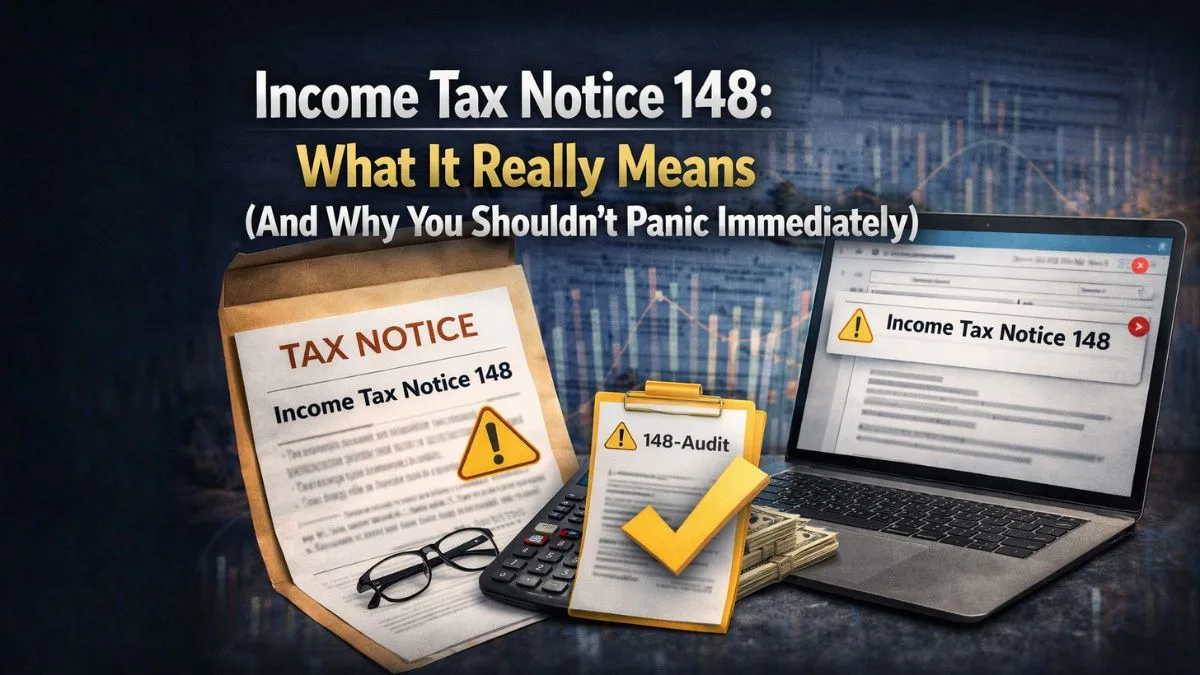
Income Tax Notice 148: What It Really Means (And Why You Shouldn’t Panic Immediately)
So… you saw that notice?
You open your email or check the income tax portal, and there it is—a notice under Section 148.
For a second, your brain jumps to worst-case scenarios. Penalty? Scrutiny? Trouble?
Let’s slow this down.
Because honestly, most people misunderstand what an income tax notice 148 actually is.
It’s serious, yes. But it’s also procedural.
And once you understand why it’s issued, things start making a lot more sense.
What exactly is Section 148?
At its core, Section 148 of the Income Tax Act is about one thing—reopening past tax assessments.
That’s it.
The law basically says that if the department believes some income slipped through the cracks, they can come back and take another look.
More formally, it gives authority to the assessing officer to send notice to a taxpayer when they suspect something wasn’t reported properly.
Or maybe not reported at all.
This is called the
“Issue of notice where income has escaped assessment.”
Sounds heavy, I know. But in simple terms—they think you missed declaring something.
Why do people receive this notice?
Here’s where things get interesting.
A Section 148 notice from the Income Tax Department is issued to reassess income that appears to have escaped assessment, meaning the Assessing Officer (AO) believes you underreported income or failed to file.
Now think about this.
You might feel like you filed everything correctly. But the department sees data, not your intentions.
And their data sources are… extensive.
We’re talking.
- AIS (Annual Information Statement)
- Form 26AS
- Bank transaction reports
- High-value investments
- Property purchases
- TDS mismatches
So if something doesn’t match, even slightly, it raises a flag.
And then comes the notice.
But wait—they can’t just send it randomly
Most people miss this part.
Before issuing the notice, the officer has to follow due process.
Specifically, before issuing it, the AO must follow the Section 148A process, which includes inquiry and giving you a chance to respond, ensuring fairness.
Let’s pause for a second.
That means:
- They first gather information
- Then they ask you for clarification
- Only after that, they proceed
So by the time you receive a Section 148 notice… the department has already formed a preliminary opinion.
That’s important.
What does the notice actually contain?
When you receive it, the notice outlines the alleged discrepancies in the reported income.
Not vague accusations.
Actual details.
It may mention:
- Undisclosed income
- Incorrect capital gains
- Missing business receipts
- TDS differences
- Foreign transactions
And then comes the key instruction.
The notice asks you to:
- File a return again for that specific year
- Explain what went wrong
- Submit supporting documents
In simple terms, the notice asks you to furnish a return for the relevant year, detailing why the income was missed, and specifies timelines and required documentation.
Let’s talk timelines.
This is where many people get confused.
There’s a legal limit.
No notice under section 148 shall be issued for the relevant assessment year beyond a certain time frame.
Typically:
- Notice is valid if it is issued within 3 years from the end of the relevant assessment year
But…
There’s a twist.
In serious cases (like high-value income escaping assessment), the limit can extend up to 10 years.
Yes, 10.
Now think about that.
That means something from years ago can still come back if the amount involved is significant.
What powers does the assessing officer actually have?
A lot, but not unlimited.
The law clearly says the following:
- authorizes the Assessing Officer to issue a notice
- 148 allows the Assessing Officer to issue a notice for reassessment
So essentially:
- They can reopen your case
- Ask for fresh returns
- Recalculate your income
But they must follow procedure.
And you have rights too.
That balance is often overlooked.
Common reasons people get Section 148 notices
Let’s make this practical.
Because theory is fine, but real life looks different.
Here are typical triggers:
1. Income mismatch
Salary, interest, or capital gains not matching AIS or 26AS.
2. High-value transactions
Buying property, shares, or luxury items without matching declared income.
3. Not filing return
Even when required.
4. Business income underreporting
Cash transactions especially.
5. Foreign income/assets
This is a big one now.
What should you do when you receive it?
First reaction? Panic.
Second reaction? Don’t.
Instead, do this step-by-step:
Step 1: Read the notice carefully
Don’t skim. Every word matters.
Step 2: Identify the issue
What exactly are they questioning?
Step 3: Gather documents
Bank statements, Form 16, capital gains reports, etc.
Step 4: Compare with AIS/26AS
This is where most discrepancies show up.
Step 5: Respond within deadline
Ignoring it is the worst thing you can do.
Here’s something people often get wrong
They think responding = admitting guilt.
Not true.
Sometimes, it’s just a mismatch.
A timing difference.
A reporting error.
Or even incorrect data from a third party.
So your response is simply your explanation.
Nothing more.
Can you ignore a Section 148 notice?
Short answer?
No.
Long answer?
Still no.
Ignoring it can lead to:
- Best judgment assessment
- Penalties
- Interest
- Possible prosecution
So even if you think it’s a mistake—respond.
Always.
What happens after you respond?
This part isn’t talked about enough.
After you submit your explanation:
- The officer reviews your response
- They may ask for additional documents
- Then they pass an order
It can go either way:
- Your explanation is accepted → Case closed
- Not satisfied → Reassessment continues
And yes, that can lead to additional tax demand.
A small but important observation
Most people don’t get into trouble because of fraud.
They get into trouble because of:
- Incomplete reporting
- Lack of understanding
- Ignoring notices
That’s it.
The system today is data-driven. Very sharp. Almost unforgiving.
So even small inconsistencies get picked up.
Let’s be honest for a moment
Filing taxes isn’t just about submitting a return anymore.
It’s about matching data across systems.
And that’s where things get messy.
Because:
- Banks report differently
- Employers sometimes make errors
- Brokers show different formats
And somewhere in between… your return gets flagged.
Unfair?
Maybe.
But that’s the system we’re dealing with.
A quick example (this happens more than you think)
You earned interest from an FD.
The bank reports ₹120,000.
You reported ₹105,000.
Difference: ₹15,000.
Seems small, right?
But for the system, that’s “income escaped assessment.”
And that’s enough to trigger action.
One last thing before you move on
If you’ve received an income tax notice 148, don’t treat it casually.
But also—don't overreact.
There’s a process. There are rules. And there’s always a way to respond properly.
Most cases don’t end in penalties if handled correctly.
Closing thought
Dealing with tax notices can feel overwhelming, especially when legal language and timelines start piling up. Sometimes you understand the issue, and sometimes you don’t—and that’s okay.
If things start getting unclear, or if the notice involves multiple years or large amounts, getting a second opinion helps more than people admit. Platforms like Callmyca.com can quietly step in at that stage — not to complicate things, but to simplify what already feels messy.