Why People Are Receiving Demand Notices from the Income Tax Department
Getting a demand notice from the income tax department can be alarming. Most people immediately think something serious has gone wrong.
But let’s pause for a moment and understand what this really means.
A notice from the tax department does not automatically mean you’ve committed a violation. Often, it simply means the department wants clarification about certain financial transactions.
In recent years, many taxpayers have received notices linked to credit card spending. That’s because financial institutions now share detailed transaction information with the government.
Here’s where things become important.
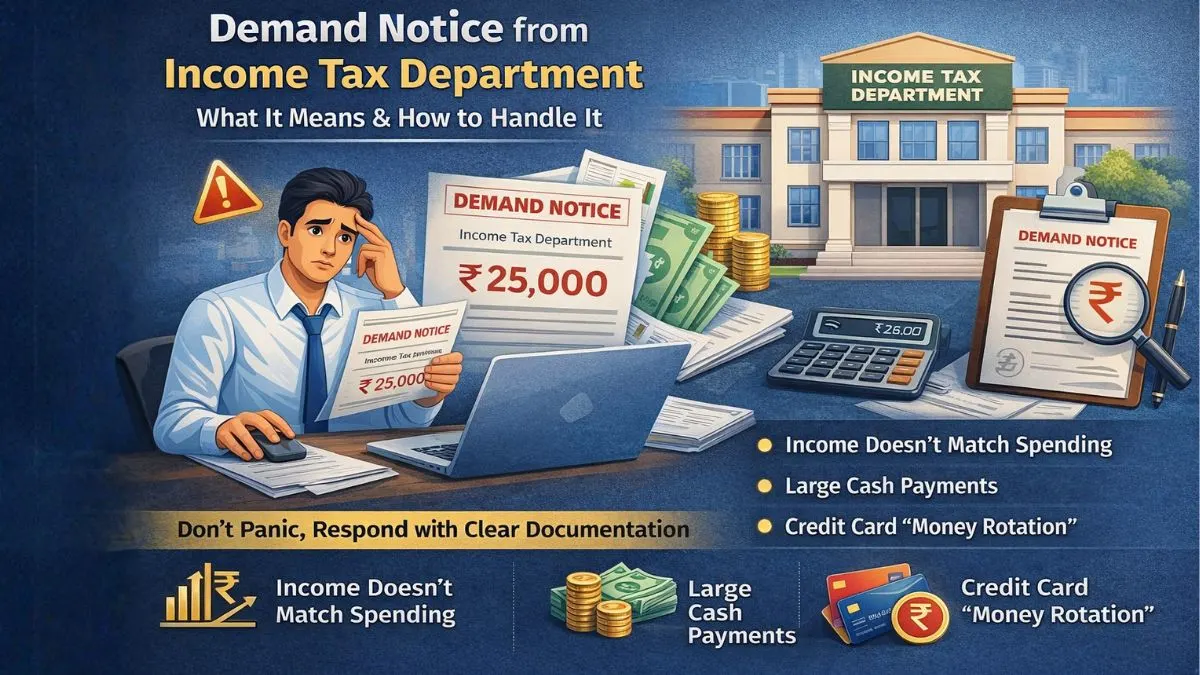
Income tax notices for credit card usage arise when annual spending exceeds ₹10 lakh or cash payments exceed ₹1 lakh, triggering mandatory bank reporting to the IT department.
This reporting allows authorities to compare your spending with the income declared in your tax return. If the numbers don’t match, the system may automatically trigger a notice.
And that’s how many taxpayers end up receiving a demand notice unexpectedly.
What Is a Demand Notice from the Income Tax Department?
A demand notice from the income tax department is a formal communication requesting payment of tax, interest, or penalties that the department believes are due.
Most commonly, an income tax notice is issued under Section 156 of the IT Act.
Under this provision, the tax department informs the taxpayer about outstanding dues after an assessment or adjustment.
The notice usually contains details such as the following:
-
The amount of tax payable
-
Interest or penalties added
-
The assessment year involved
-
The deadline to pay the amount
Now here’s something important.
Not every notice means you must immediately pay the amount mentioned. Sometimes the demand may arise due to data mismatches, incorrect reporting, or automated adjustments.
So the first step is always understanding why the notice was issued.
Credit Card Spending and Income Tax Scrutiny
In the past, credit card spending rarely attracted attention.
But today, things are different.
Financial transparency has increased significantly, and banks regularly submit transaction reports to authorities.
Because of this system, income tax notices for credit card usage arise when annual spending exceeds ₹10 lakh or cash payments exceed ₹1 lakh, triggering mandatory bank reporting to the IT Department.
This doesn’t mean spending ₹10 lakh automatically creates a tax liability.
Instead, it means the transaction becomes visible to the department.
If the spending appears inconsistent with your reported income, the system may flag the account.
And that’s when a notice can arrive.
When Credit Card Usage Leads to a Tax Notice
Let’s break this down in a practical way.
A demand notice from the income tax department related to credit cards usually appears when the department detects financial activity that doesn’t match declared income.
Some common triggers include:
1. Spending Higher Than Reported Income
If someone reports ₹5 lakh income but spends ₹20 lakh through credit cards, it raises questions.
Authorities may ask for an explanation regarding the source of funds.
2. Large Cash Payments Toward Credit Card Bills
Cash payments attract more scrutiny than digital transactions.
Remember this rule again:
Income tax notices for credit card usage arise when annual spending exceeds ₹10 lakh or cash payments exceed ₹1 lakh, triggering mandatory bank reporting to the IT department.
When banks report such payments, they automatically enter the tax department’s data system.
3. Frequent High-Value Transactions
Large or repetitive transactions can sometimes look unusual, especially if they don’t align with your income profile.
4. Suspicious Reward Generation
This is a relatively new issue.
Authorities have noticed patterns where people generate large volumes of transactions simply to earn reward points or cashback.
Credit Card Reward Misuse Under Scrutiny
Many credit card users try to maximize rewards. That’s normal.
But the problem starts when spending is artificially created to generate benefits.
Recently, income tax is cracking down on credit card reward misuse.
Here’s the interesting part.
Some individuals create a cycle of transactions where money moves repeatedly between accounts, wallets, and merchant platforms.
The purpose is simple: collect reward points without actual spending.
But such activity can look suspicious in financial records.
And this leads to another important point.
Using a credit card for 'money rotation' to earn rewards can result in a tax notice.
From the department’s perspective, repeated circular transactions may indicate undisclosed business activity or attempts to manipulate financial records.
So naturally, these cases attract scrutiny.
What Is “Money Rotation” Through Credit Cards?
Many people have heard about this practice but don’t fully understand it.
Money rotation generally means moving the same funds repeatedly through credit card transactions to generate reward points or cashback.
For example:
-
A user pays a merchant using a credit card.
-
The merchant transfers the money back through another channel.
-
The process repeats multiple times.
Each transaction generates rewards even though no real purchase occurs.
At first glance, it might seem harmless.
But remember this clearly:
Using a credit card for 'money rotation' to earn rewards can result in a tax notice.
Because such patterns look unusual in financial monitoring systems.
And when those patterns appear frequently, the department may issue a notice seeking explanation.
Steps to Take If You Receive a Demand Notice
Receiving a demand notice from the income tax department doesn’t mean you should panic.
Most cases can be resolved easily if you respond correctly.
Here’s what you should do.
Read the notice carefully.
Start by reviewing:
-
Assessment year mentioned
-
Amount demanded
-
Reason for the demand
-
Deadline for response or payment
Sometimes the Income Tax Notice is issued under Section 156 of the IT Act, which means the department believes tax is payable after assessment.
Verify Your Tax Return
Check whether the demand arises from:
-
Incorrect income reporting
-
Mismatch in TDS details
-
Incorrect tax calculations
Small mistakes in returns can lead to automated demands.
Check Your Credit Card Transactions
If the notice relates to credit card spending, review:
-
Total annual spending
-
Payment sources
-
Cash payments made toward the card
This helps you understand why the notice was generated.
Respond Through the Income Tax Portal
Taxpayers can submit explanations online.
Usually, you may need to provide:
-
Credit card statements
-
Bank statements
-
Income proof
Once the department reviews the documents, the demand may be revised or withdrawn if the explanation is valid.
How to Avoid Receiving a Tax Demand Notice
The best way to deal with a demand notice from the income tax department is to prevent it in the first place.
Thankfully, this is easier than most people think.
Follow these simple practices:
Maintain Consistency Between Income and Spending
Your credit card usage should roughly align with your declared income.
Huge differences attract attention.
Avoid Cash Payments for Card Bills
Large cash payments trigger mandatory reporting.
Digital transfers are safer and more transparent.
Don’t Use Cards for Reward Manipulation
Again, remember:
Using a credit card for 'money rotation' to earn rewards can result in a tax notice.
It might look clever initially, but it can lead to compliance issues later.
Keep Proper Financial Records
Always keep copies of:
-
Credit card statements
-
Bank records
-
Income documents
These help explain your transactions if a notice appears.
Why the Tax Department Is Increasing Monitoring
There’s a bigger shift happening in India’s tax system.
Financial data is now integrated across multiple institutions. Banks, mutual funds, and financial platforms share transaction details with authorities.
This system helps identify mismatches quickly.
That’s why income tax is cracking down on credit card reward misuse and unusual transaction patterns.
The goal is simple: ensure that spending reflects declared income.
For honest taxpayers, this system rarely causes problems.
But for people trying to manipulate transactions, it increases the chances of receiving a notice.
Final Thoughts
A demand notice from the income tax department can feel intimidating at first. But in many cases, it simply means the department needs clarification about certain financial transactions.
Remember these key points:
-
Income tax notices for credit card usage arise when annual spending exceeds ₹10 lakh or cash payments exceed ₹1 lakh, triggering mandatory bank reporting to the IT department.
-
Using a credit card for 'money rotation' to earn rewards can result in a tax notice.
-
An income tax notice is issued under Section 156 of the IT Act when the department believes tax is payable.
-
Income tax is cracking down on credit card reward misuse, especially where spending patterns look artificial.
The best strategy is transparency. Keep your financial activity aligned with your reported income, maintain records, and respond promptly if a notice arrives.
If you ever receive a demand notice and are unsure how to respond, it’s wise to seek professional help. The tax experts at Callmyca.com regularly assist taxpayers in handling notices and resolving tax demands smoothly before they become bigger problems.