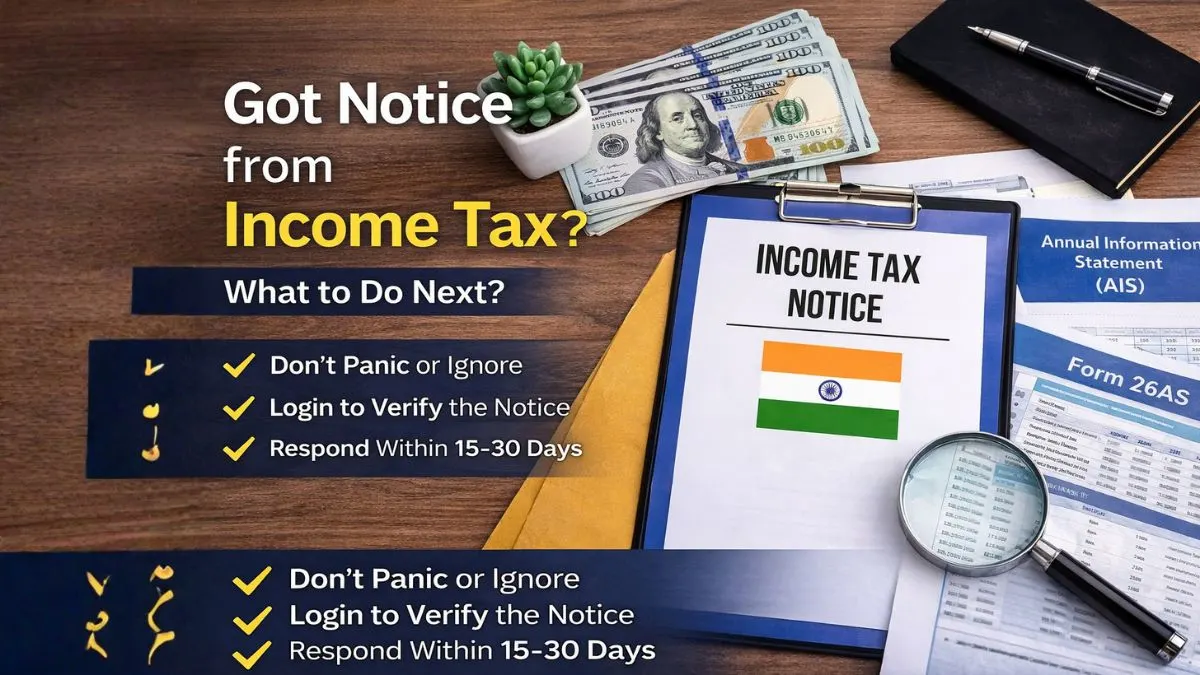
Got Notice from Income Tax? Meaning, Reasons & What You Should Do
Meta Description
Got notice from income tax department? Don’t panic. Many Income Tax notices are automated. Learn how to verify a Notice using your PAN and DIN (Document Identification Number) on the Income Tax portal, check mismatches in AIS or Form 26AS, identify issues like TDS Amount Error, and respond within 15 to 30 days to avoid penalties.
Introduction
You log into your tax portal just to check your income tax return status… and suddenly you see a Notice.
Your first reaction? Panic.
But take a breath.
Getting a notice from income tax is actually more common than people think. Every year thousands of taxpayers receive Income Tax notices for various reasons — and in many cases, they are generated automatically by the system.
The important thing to remember is simple:
Neither Panic nor Ignore.
Many notices are issued just to clarify small mismatches in data such as TDS records, reporting differences, or missing information in your income tax return.
However, ignoring the notice can lead to penalties or further scrutiny.
The best approach is to verify the authenticity of the Notice, understand the reason behind it, and respond within the given deadline — usually 15 to 30 days.
Let’s understand what it really means when you get a notice from income tax.
What Does It Mean When You Get a Notice from Income Tax?
A notice from income tax is an official communication sent by the Income Tax Department asking you to verify certain details related to your income tax return.
It does not automatically mean that you have committed an offense.
Often the notices are simply requests for clarification.
The department may want to confirm:
-
Whether your income was reported correctly
-
Whether TDS Amount Error exists
-
Whether deductions claimed are valid
-
Whether there is any mismatch with AIS or Form 26AS
In some cases, the Notice may also inform you that:
“Your return has been selected for detailed scrutiny by your Assessing Officer.”
This means the department wants to examine your tax return more closely.
First Rule: Neither Panic nor Ignore
The most important rule when you receive a notice from income tax is:
Neither Panic nor Ignore
Panicking leads to rushed decisions.
Ignoring the notice can lead to serious consequences.
Instead:
• Carefully read the Notice
• Identify the section mentioned
• Verify the information on the tax portal
• Respond within the given deadline
In most cases, responding correctly resolves the issue without penalties.
How to Verify the Notice is Genuine
Before taking any action, you should confirm whether the Notice is genuine.
Taxpayers should always verify the authenticity of a notice from income tax.
The easiest way is through the official portal.
Steps to Verify
-
Login into the income tax portal
-
Use your PAN credentials
-
Go to Pending Actions
-
Check the Document Identification Number (DIN)
Every genuine Income Tax notice contains a DIN.
If the notice does not have a DIN, it may not be authentic.
Common Reasons Why You Got a Notice from Income Tax
Many taxpayers assume that a notice from income tax means they made a serious mistake.
But often the reason is very small.
Let’s look at the most common triggers.
1. TDS Amount Error
One of the most frequent reasons for receiving Income Tax notices is a TDS Amount Error.
For example:
-
Employer reported incorrect TDS
-
Bank reported interest income
-
TDS claimed in return does not match Form 26AS
When the system detects this mismatch, it automatically generates a Notice.
2. Mismatch in AIS or Form 26AS
The Income Tax Department compares your return with data in:
-
AIS (Annual Information Statement)
-
Form 26AS
If the numbers don’t match, the system may send a notice from income tax asking for clarification.
3. High-Value Transactions
Large transactions such as:
• Property purchase
• Stock trading
• Foreign travel expenses
• High credit card payments
can trigger Income Tax notices if they appear inconsistent with reported income.
4. Incorrect Deductions
Claiming deductions without proper documentation can also generate a Notice.
For example:
-
Fake donation deductions
-
Incorrect housing loan interest claims
-
Wrong deductions under tax sections
5. Scrutiny Selection
In some cases, the department randomly selects returns.
This means:
“Your return has been selected for detailed scrutiny by your Assessing Officer.”
This type of notice requires detailed documentation.
How Much Time Do You Have to Respond?
Every notice from income tax contains a response deadline.
Generally:
-
You have 15 days to respond to this notice in certain cases
-
Or 15 to 30 days to reply depending on the type of notice
Missing the deadline can lead to:
• Penalties
• Additional tax demands
• Further scrutiny
So always respond before the due date.
Steps to Respond to Income Tax Notice
If you receive a notice from income tax, follow these steps carefully.
Step 1: Read the Notice Completely
Do not skim.
Understand:
-
The section mentioned
-
The issue raised
-
The documents required
Step 2: Reconcile Data
Compare your income tax return with:
-
AIS
-
Form 26AS
-
TDS certificates
Look for any TDS Amount Error or mismatch.
Step 3: Prepare Supporting Documents
You may need documents such as:
• Salary slips
• TDS certificates
• Investment proofs
• Bank statements
• Transaction records
These help clarify the situation.
Step 4: Respond Through the Portal
After verification:
Login into the income tax portal
Then upload your response and supporting documents.
Most notices can be handled entirely online.
What Happens If You Ignore the Notice?
Ignoring a notice from income tax is risky.
Possible consequences include:
• Penalties
• Interest on unpaid taxes
• Detailed scrutiny by the Assessing Officer
• Additional tax assessments
This is why tax experts always advise:
Respond within 15 to 30 days to reply.
Even if the issue seems small.
Tips to Avoid Income Tax Notices
The best way to deal with Income Tax notices is to avoid them in the first place.
Here are some simple precautions.
Before Filing Return
• Check Form 26AS carefully
• Review AIS statement
• Verify TDS entries
While Filing Return
• Report all income sources
• Avoid incorrect deductions
• Double-check TDS details
After Filing
• Track return status
• Save tax documents
• Keep records of transactions
These steps reduce the chances of receiving a notice from income tax.
Final Thoughts
Getting a notice from income tax can feel stressful at first.
But remember — many Income Tax notices are automated.
They are simply part of the tax verification process.
The key rule is simple:
Neither Panic nor Ignore.
Verify the Notice, login into the income tax portal, check the DIN, reconcile your data with AIS and Form 26AS, and respond within 15 to 30 days.
Most issues get resolved quickly once the correct documents are submitted.
💡 Got notice from income tax and unsure how to respond?
Experts at Callmyca.com help taxpayers understand Income Tax notices, fix TDS Amount Error, verify portal data, and respond correctly to the Income Tax Department — so you can resolve the issue quickly and avoid penalties.