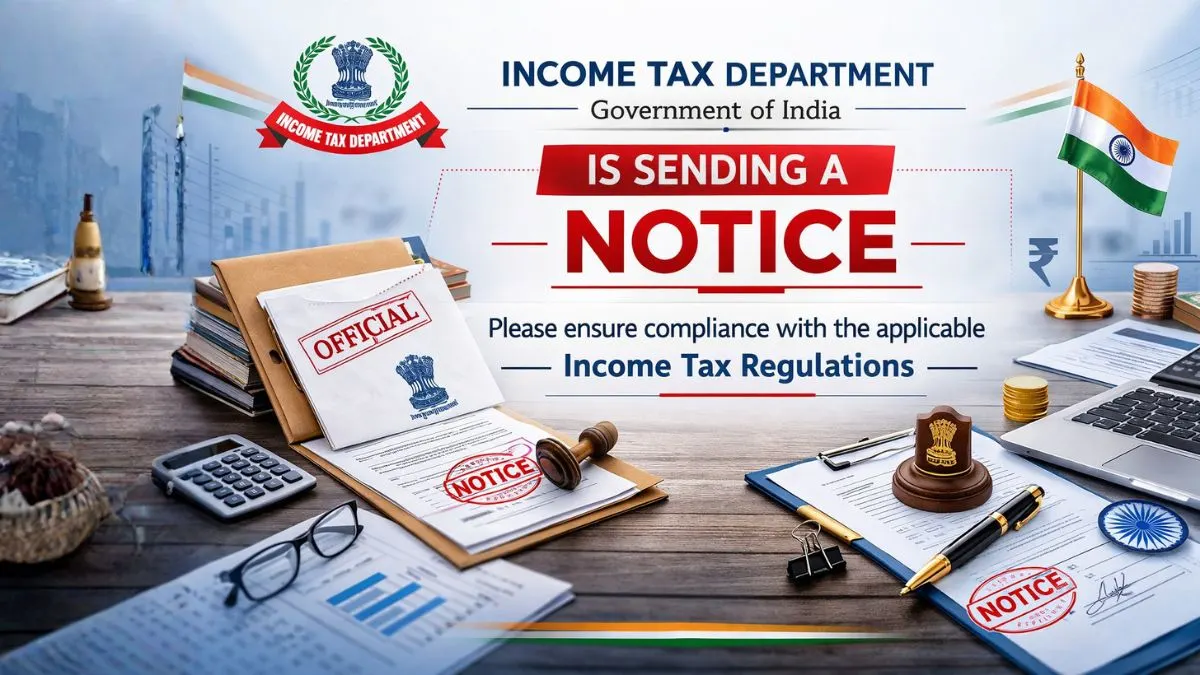
The Income Tax Department is sending a notice.
There’s a very specific kind of anxiety that hits when you see anything related to tax in your inbox.
Especially when it says… something like “Income Tax Notice”.
And suddenly your mind goes — “Wait… did I do something wrong?”
Let’s pause for a second.
Getting a Notice from the income tax department doesn’t automatically mean you’re in trouble. In fact, many times, it’s just a mismatch, a missing detail, or even a system-generated check. But yes, ignoring it? That’s where problems begin.
So let’s break this down like a normal conversation.
What does it actually mean when the income tax department sends a notice?
At its core, a Notice is just an official communication.
That’s it.
But here’s the formal definition you’ll often see:
“An Income Tax (IT) notice is an official communication from the Income Tax Department regarding discrepancies in your tax return, non-filing, or high-value transactions. Common causes include TDS mismatches, unreported income, or discrepancies in AIS/Form 26AS. Notices are typically served under sections like 142(1), 143(2), or 148, requiring a timely online response via the e-Filing portal.”
Now that sounds serious. And sometimes it is.
But not always.
Think of it like this — the system noticed something that didn’t align with their data. So the department sends you a message asking, “Hey… can you explain this?”
That’s all.
Why do people usually receive a notice?
Most people assume it’s because of tax evasion.
Honestly? That’s rarely the case.
Here’s where things get interesting.
Many notices are triggered by simple mismatches or overlooked entries. Things that don’t feel like mistakes… but technically are.
Some common reasons:
- TDS deducted by the employer doesn’t match your ITR
- Income shown in AIS but not reported in the return
- Interest income (FD, savings) was missed out
- High-value transactions like property, shares, crypto
- You didn’t file ITR at all
- Wrong deduction claims
Now think about this.
Have you ever ignored a small interest income because “it’s just ₹2,000”?
Yeah… the system doesn’t ignore it.
AIS, Form 26AS — the silent triggers
Most people overlook this part.
AIS (Annual Information Statement) and Form 26AS have quietly become the backbone of tax verification.
If your return doesn’t match what’s reported there… a Notice can be generated.
For example:
- Your bank reports ₹50,000 interest
- You report ₹30,000
- System flags the difference
Simple.
And boom — the income tax department has sent you a notice.
No drama. Just a data mismatch.
Types of notices you might receive
Not all notices are equal. Some are just informational; others need serious attention.
Let’s keep this simple:
1. Section 143(1) – Intimation
This is the most common one.
It’s basically a comparison between your filed return and the department’s data.
You’ll see:
- No demand (all good)
- Refund
- Or tax payable
Nothing scary here.
2. Section 142(1) – Inquiry Notice
Now this one needs attention.
The department sends this when:
- You didn’t file a return
- Or they need additional details
You’ll be asked to submit documents.
3. Section 143(2) – Scrutiny Notice
This is more detailed.
Your return is selected for scrutiny — meaning they want to verify everything.
Not common for everyone, but yes… it happens.
4. Section 148 – Income Escaped Assessment
This sounds heavy because it is.
It means the department believes some income was not reported.
How does the income tax department send a notice?
Here’s something many people misunderstand.
It’s not always a physical letter anymore.
The income tax department has sent most notices digitally now.
You might receive it through:
- Email
- SMS alert
- e-Filing portal
- Sometimes physical post
So if you’re only checking your mailbox… You might miss it.
And that’s risky.
How to check if a notice is issued?
Now think about this.
What if you already have a notice… and you don’t even know?
It happens more often than you think.
Here’s how to check:
- Log in to the Income Tax e-Filing portal
- Go to “Pending Actions”
- Click on “e-Proceedings”
- Check for any active Notice
Simple steps. But very important.
What should you do after receiving a notice?
First instinct? Panic.
Second instinct? Ignore.
Both are wrong.
Take a breath. Read it carefully.
Every Notice clearly mentions:
- Section under which it is issued
- Reason for notice
- Deadline to respond
And deadlines matter.
Miss it… and things can escalate.
Practical way to handle it:
- Read the notice fully (don’t skim)
- Identify the issue (mismatch, missing info, etc.)
- Gather supporting documents
- Respond through the e-Filing portal
That’s it.
No need to overcomplicate.
A small mistake that becomes a big problem
Here’s something people don’t realise.
Ignoring a notice doesn’t make it disappear.
It makes things worse.
For example:
- ₹5,000 mismatch ignored
- Turns into demand penalty
- Then interest added
And suddenly… it’s ₹12,000
All because you didn’t respond.
Real-life situation (you might relate)
Let’s say you changed jobs mid-year.
Two companies. Two Form 16s.
You forgot to include one.
Now your AIS shows full income… but your return doesn’t.
So the department sends a notice.
You panic.
But actually? It’s fixable.
You just need to revise or respond properly.
Can notices be wrong?
Yes.
Surprisingly often.
Sometimes data is incomplete. Sometimes reporting errors happen.
So don’t assume the department is always right.
But — and this is important — you still have to respond.
Silence is not a strategy here.
Deadlines… don’t ignore this part.
Every notice has a response timeline.
Usually:
- 15 days
- 30 days
Depends on the section.
And here’s the thing…
Even if you need more time, you can request it.
But don’t go quiet.
What happens if you don’t respond?
Let’s not sugarcoat this.
- Penalties
- Additional tax demand
- Best judgment assessment
- Legal action (in extreme cases)
So yeah… ignoring is not an option.
Small checklist before filing ITR next time
Honestly, avoiding a notice is easier than dealing with one.
Just do these:
- Match ITR with AIS & 26AS
- Report all income (even small amounts)
- Double-check TDS entries
- Don’t rush filing
It takes 10 extra minutes.
But saves weeks of stress.
One last thought
People fear notices because they don’t understand them.
But once you see how they actually work… It’s mostly about communication.
The income tax department has sent a Notice because something didn’t match.
Not because they’re targeting you.
There’s a difference.
And if you ever feel stuck — like the notice is too technical, or you're unsure how to respond properly — getting a second opinion helps. Not necessarily from a big firm, even a simple consultation can clear things up. Platforms like Callmyca.com are useful in that sense… not as a shortcut, but as a way to make sure you don’t accidentally make things worse while trying to fix them.
Because sometimes, it’s not about doing everything yourself.
It’s about doing it right. The