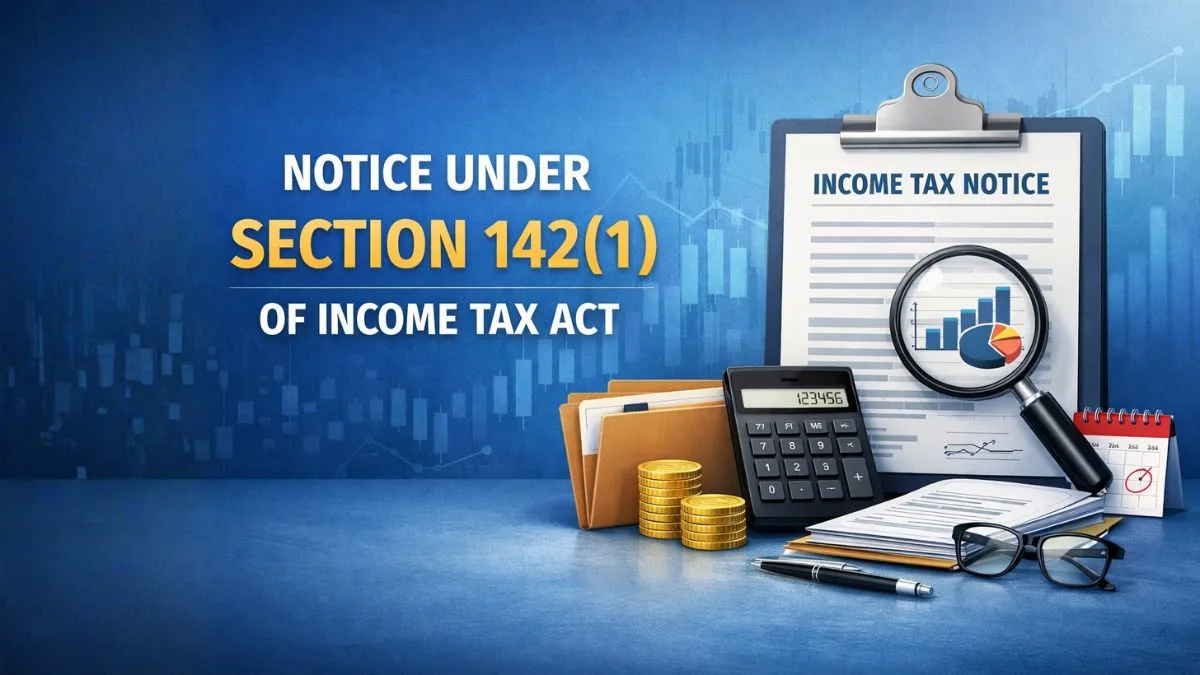
NOTICE UNDER SECTION 142(1) OF INCOME TAX ACT
That moment when you see this notice…
You open your email or log into the portal… and there it is.
At first glance, it feels serious. Maybe even scary.
But here’s the thing most people don’t realize — it’s not always a punishment.
Let’s slow down for a second.
A lot of times, it’s just the department asking questions. Yes, officially. But still… questions.
So what exactly is this notice?
Let’s put it in simple words.
Section 142(1) notice is an inquiry notice issued by the Income Tax Department to seek information or file a return, if not filed, before assessment is made. While not punitive in nature, it is mandatory to comply within the stipulated time frame (usually 30 days); failure to which a penalty, best judgment assessment, or prosecution.
Now think about this.
They are not accusing you right away.
They are asking you to explain.
That’s a big difference.
Why do people receive a notice under Section 142(1)?
There isn’t just one reason. And honestly, sometimes it’s triggered by small things.
Here are the common situations:
- You didn’t file your return at all"
- You filed it, but something looks incomplete"
- There’s a mismatch in income details
- High-value transactions need explanation
- The Assessing Officer needs additional documents"
- You received another notice earlier and didn’t respond
Who actually sends this notice?
Not some random automated system
It is issued by the Assessing Officer under the Income Tax Act, 1961.
Which basically means — a real authority is reviewing your case."
And when they send a formal request from the Income Tax Department, it’s expected that you respond properly.
No shortcuts here.
What does the notice usually ask for?
This part varies.
Some notices are simple. Some are detailed.
But generally, a Notice under sub-section (1) of Section 142 of the Income Tax Act, 1961. may ask for:
- Filing of pending return
- Books of accounts
- Bank statements
- Investment proofs
- Details of income sources
- Clarification on specific transactions
Sometimes it may feel like… “why so many details?”
But from their side, it’s just verification.
Let’s talk about the deadline
Most people ignore this part.
And that’s where mistakes happen.
Usually, you get around 30 days to respond to a notice under Section 142(1).
Sometimes less. Sometimes slightly more.
But don’t assume you have unlimited time.
Because once the deadline passes…
Things change.
What happens if you don’t respond?
Possible consequences:
- A penalty may be imposed
- Your case may go into best-judgment assessment
- The department decides your income on its own
- Legal complications can arise
- In extreme cases, prosecution
Let’s pause for a second.
Best-judgment assessment means they estimate your income… without your input.
And trust me, that estimate is rarely in your favor.
How to reply properly
Step-by-step approach:
- Read the notice carefully
- Identify what exactly is being asked
- Collect required documents
- Log in to the income tax portal
- Upload your response
- Double-check before submission
Common mistakes people make
This is where most people mess up.
Not because they don’t know… but because they delay.
- Ignoring the notice
- Missing the deadline
- Submitting incomplete documents
- Assuming “it will go away”
- Not understanding what is being asked
Most people overlook this part.
Even a correct response submitted late can still cause issues.
Is this notice something to panic about?
Honestly?
No.
It’s serious… but manageable.
A notice under Section 142(1) is more like a checkpoint.
The department is giving you a chance to explain before finalizing things.
And that’s actually helpful.
Because once the assessment is done, fixing things becomes harder.
One thing people rarely talk about
Here’s a thought.
Receiving a notice doesn’t mean you did something wrong.
Sometimes, it just means your case was selected.
Random selection. Data mismatch. System flags.
It happens.
So instead of panicking, focus on responding properly.
What if you don’t understand the notice?
And this is very common.
Tax language isn’t exactly… friendly.
If you’re confused:
- Read it twice
- Break it into parts
- Focus on “what is required”
- Ignore the complex wording
Or simply get help.
Because guessing your response is risky.
Final thoughts
If you’ve received a notice under Section 142(1), treat it as an opportunity.
Not a threat.
You still have control over your situation.
Respond on time. Provide correct details. Stay calm.
And if things feel unclear or overwhelming, getting professional help can save you a lot of time and stress. Platforms like Callmyca.com can guide you through the process in a simple, practical way — without making it feel like a legal maze.