Foreign Remittances Income Tax Notice: Why You Receive It and How to Handle It
Understanding a Foreign Remittances Income Tax Notice
Sending money abroad has become fairly common today. People transfer funds for education, investments, travel, property purchases, or even family support. But here’s something most people don’t realize: whenever you send large amounts outside India, the tax department already knows about it.
Yes, really.
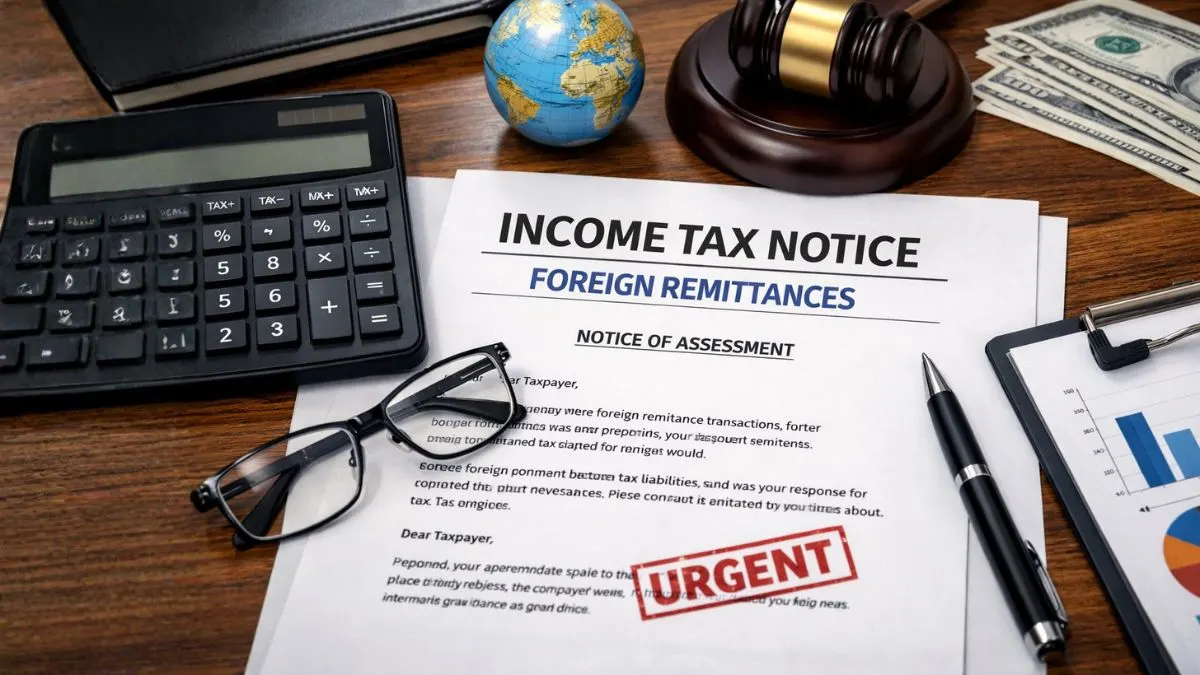
Banks report these transactions to the Income Tax Department. So if you have made foreign remittances and the numbers in your tax return don’t match what the system sees, you might receive a Foreign Remittances Income Tax Notice.
And the moment people see the word “notice,” panic usually kicks in.
But let’s slow down and understand this properly.
In most cases, the notice is simply a request for clarification. The department wants to ensure that your taxes and reported income match the money you are sending abroad.
Once you understand the rules, responding to the notice becomes much easier.
What Are Foreign Remittances Under LRS?
Before talking about notices, it’s important to understand what foreign remittances actually mean.
A remittance simply refers to sending money from one country to another. When Indian residents send money abroad, it generally happens under the Liberalized Remittance Scheme (LRS) issued by the Reserve Bank of India.
Under this scheme, individuals can legally transfer funds abroad for various purposes.
For example:
-
Foreign education expenses
-
Medical treatment overseas
-
Investments in foreign stocks
-
Buying property abroad
-
Travel or gifting money to relatives
-
International subscriptions or services
So anytime money leaves India through banking channels for these purposes, it is considered a foreign currency transfer or foreign remittance.
Now here’s the interesting part.
These transactions don’t stay private between you and the bank. They are automatically reported to tax authorities.
Which means the system already has the data.
The ₹7 Lakh Rule for Foreign Remittances
Currently, if foreign remittances from India exceeding ₹7 lakh per financial year are made under LRS, banks collect Tax Collected at Source (TCS).
From April 1, 2025, the limit increases to ₹10 lakh in many cases.
Let’s break this down in simple terms.
If your total remittance amount crosses the threshold during a financial year, the bank will collect 20% TCS on the excess amount.
However, there are some exceptions.
For example:
-
Education remittances funded through loans have lower TCS rates.
-
Certain foreign remittances for medical treatment may also have exemptions.
But for many other categories, the 20% TCS rule applies.
Here’s a quick example.
Suppose you send ₹9 lakh abroad for investment in foreign stocks.
The first ₹7 lakh is within the threshold.
The remaining ₹2 lakh attracts TCS.
So the bank collects 20% TCS on ₹2 lakh, which equals ₹40,000.
That amount appears in your tax records.
And that’s where things start linking with your income tax return.
Why You Receive a Foreign Remittances Income Tax Notice
Now let’s come to the real question.
Why does the Income Tax Department send a Foreign Remittances Income Tax Notice?
Usually, the reason is a mismatch between reported income and your foreign remittances.
The department uses advanced data analytics to track financial activity. Banks, financial institutions, and authorized dealers report outward remittance transactions.
If the system detects something unusual, a notice may be issued.
Common triggers include:
-
Large foreign remittances but low declared income
-
Remittances not reported in the income tax return
-
Mismatch with Form 15CA/CB filings
-
TCS claimed but remittance not explained
-
AIS or Form 26AS data mismatch
Let’s understand this with a simple situation.
Imagine a taxpayer sends ₹20 lakh abroad but reports only ₹5 lakh annual income.
The system immediately flags this.
Naturally, the tax department wants to understand where the money came from.
That’s when the Foreign Remittances Income Tax Notice is sent.
The Role of Form 15CA and Form 15CB
Whenever money is sent outside India, certain documentation may be required.
This is where Form 15CA and Form 15CB come into the picture.
These forms are declarations confirming whether taxes have been deducted on the transaction.
In simple words:
-
Form 15CA – A declaration filed online by the remitter.
-
Form 15CB – A certificate issued by a Chartered Accountant.
These documents help confirm that the remittance complies with Indian tax laws.
But here’s the catch.
If the details in these forms don’t match your tax return or AIS data, the system may raise questions.
And that’s another reason for receiving a Foreign Remittances Income Tax Notice.
How the Tax Department Tracks Foreign Remittances
Many taxpayers assume international transactions are difficult to trace.
Actually, it’s quite the opposite.
The government receives detailed reports from banks and financial institutions.
These transactions appear in multiple databases, including:
-
Annual Information Statement (AIS)
-
Form 26AS
-
Statement of Financial Transactions (SFT)
-
Bank reporting systems
So every major foreign remittance is already recorded somewhere.
Which means if you ignore it in your income tax filing, the system will eventually detect it.
Sooner or later.
That’s when the notice comes.
What To Do If You Receive a Foreign Remittances Income Tax Notice
First thing: don’t panic.
A notice doesn’t automatically mean wrongdoing.
Most notices are simply requests for explanation.
Let’s understand the steps.
Step 1: Read the notice carefully.
Identify the reason for the Foreign Remittances Income Tax Notice.
Check:
-
Assessment year mentioned
-
Transaction details
-
Amount of foreign remittances flagged
Step 2: Verify Your Records
Review your documents, including:
-
Bank remittance receipts
-
Form 15CA/CB filings
-
AIS data
-
Form 26AS
-
Income tax return
Confirm whether the remittance amount matches these records.
Step 3: Prepare a Proper Explanation
Explain the source of funds clearly.
Possible sources could include:
-
Salary savings
-
Sale of property
-
Gifts from family
-
Loan proceeds
-
Business income
The tax department mainly wants clarity.
Step 4: Respond Through the Income Tax Portal
Notices usually require a reply through the official portal.
Attach supporting documents and provide a clear explanation.
In many cases, once the department understands the transaction, the issue gets resolved.
Common Mistakes That Trigger Foreign Remittances' Income Tax Notice
Many notices happen simply because of small compliance errors.
Here are some common ones.
Ignoring AIS data
Taxpayers sometimes file returns without checking AIS.
Incorrect source of funds
Large foreign remittances without explaining the source.
Not reporting TCS credit properly
Banks collect TCS, but taxpayers forget to claim it.
Mismatch in Form 15CA/CB
Incorrect remittance classification can trigger scrutiny.
Under-reporting income
When the income declared is too low compared to the remittance amount.
Most people don’t realize this.
But even genuine transactions can create red flags if reporting is incomplete.
How to Avoid Future Foreign Remittances Income Tax Notice
The easiest way to avoid notices is simple: keep your tax records aligned.
Here are a few practical tips.
-
Always review AIS before filing returns.
-
Ensure foreign remittances match reported income.
-
Maintain documentation for every remittance.
-
File Form 15CA/CB correctly.
-
Report TCS credits in your ITR.
It’s not complicated.
But consistency matters.
Once your data is aligned across systems, notices become far less likely.
Final Thoughts
International money transfers are becoming more common every year. People send money abroad for education, investments, travel, and business opportunities.
But with increasing digital reporting, every foreign remittance now leaves a clear data trail.
So if you receive a Foreign Remittances Income Tax Notice, it usually means the department just wants to verify the transaction.
Nothing more.
The key is simple.
Keep your taxes transparent, maintain proper records, and ensure that your foreign remittances match your declared income.
Do that, and notices become much easier to handle.
If you’ve received a foreign remittances income tax notice or need help handling foreign remittances compliance, the experts at Callmyca.com can guide you through the process and help you resolve the issue smoothly without unnecessary stress.