If you’ve ever searched for tax-saving options toward the end of the financial year, you’ve surely come across ELSS funds. They sit right at the intersection of tax planning and wealth creation — a combination most other investment options cannot match.
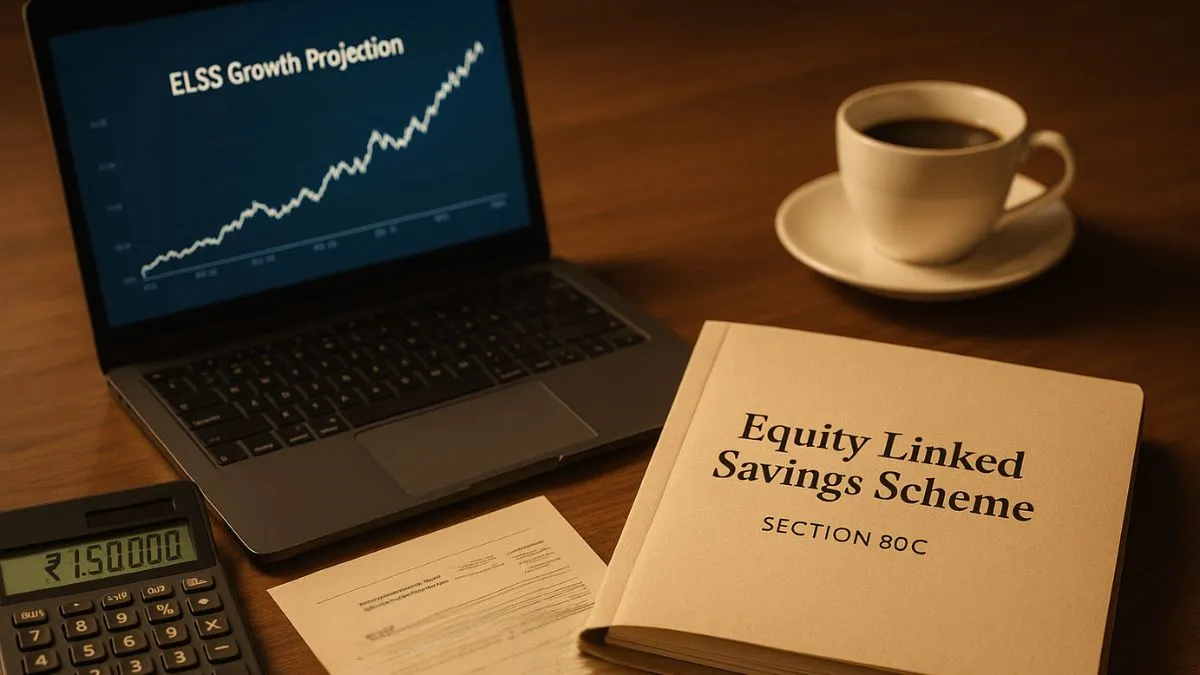
In simple terms, ELSS (Equity Linked Savings Scheme) is a diversified equity mutual fund where the majority of the investment is allocated to equity markets. What makes it even more attractive is that ELSS funds fall under Section 80C of the Income Tax Act, enabling taxpayers to claim a deduction of up to ₹1.5 lakh in a financial year.
While the product sounds straightforward, most people still hesitate because they are unsure about two things:
- How the tax benefit actually works, and
- Whether ELSS is safe enough to include in a long-term portfolio.
Let’s simplify everything, just like we do for our own clients at CallMyCA.
How Section 80C Applies to ELSS Investments
Under Section 80C of the Income Tax Act, 1961, investments made in eligible instruments qualify for a maximum deduction of ₹1.5 lakh from taxable income. ELSS is one of the approved investments under this section, and that’s where the tax advantage begins.
Here’s what it means in practical terms:
- If you invest ₹1.5 lakh in ELSS in a financial year,
your taxable income decreases by ₹1.5 lakh. - Your investment in ELSS is eligible for tax exemption up to `150,000 (₹1.5 lakh)."
- This deduction is available only if you opt for the old tax regime, as Section 80C deductions are not allowed under the new regime.
- The tax benefit applies whether you invest lump sum or through SIP.
For many salaried individuals, ELSS becomes the final link in their tax-planning chain, especially when they want both growth potential & tax savings.
Also Read: LTCG or STCG? One Date Can Double Your Tax
Why ELSS Is Considered the Most Efficient Section 80C Investment
There are multiple options under Section 80C — PPF, LIC premiums, NSC, Sukanya Samriddhi Yojana, 5-year FD, home loan principal, and more. But ELSS stands apart for several reasons.
- Shortest Lock-In Period
ELSS has a lock-in of 3 years, the lowest among all Section 80C instruments.
PPF locks your money for 15 years.
NSC: 5 years.
Tax-saving FDs: 5 years.
A 3-year lock-in offers better liquidity and flexibility.
- Market-Linked Returns
Because it invests in equity markets, ELSS has historically delivered higher long-term returns compared to fixed income tax-saving products.
This is why many young earners prefer ELSS over traditional options.
- Double Benefit: Tax Saving Wealth Growth
Most other Section 80C instruments prioritize safety over growth. ELSS does both — it reduces your tax liability & builds long-term wealth.
How ELSS Returns Are Taxed
Even though ELSS helps you save tax during investment, it is important to understand how your gains will be taxed when you redeem your units.
Long-Term Capital Gains (LTCG) apply
Since ELSS carries a compulsory 3-year lock-in, the gains are always classified as long-term capital gains.
- LTCG up to ₹1 lakh in a financial year is tax-free.
- Gains above ₹1 lakh are taxed at 10% (without indexation).
Even after paying LTCG tax, many investors still find ELSS more rewarding than other Section 80C products.
Also Read: The Hidden LTCG Exemption Most Investors Forget to Claim
Who Should Consider Investing in ELSS?
ELSS works best for:
- Salaried individuals planning tax savings under the old regime
- First-time investors wanting a simple equity product
- Young earners with long-term goals
- Anyone looking for tax savings inflation-beating returns
- People who want flexibility & lowest lock-in among 80C options
Even conservative investors can start with a small SIP and gradually build confidence in equity-based products.
Common Mistakes People Make With ELSS
Over the years, we’ve seen several misunderstandings about ELSS while reviewing client portfolios. Here are the top ones to avoid:
Mistake 1 — Investing only at the end of the year
Most taxpayers rush to invest in February or March, which defeats the purpose of disciplined wealth creation.
Mistake 2 — Redeeming exactly after 3 years
While the lock-in period is 3 years, it doesn’t mean the investment must be redeemed on day 1. ELSS works best when held for 7–10 years.
Mistake 3 — Selecting funds purely based on star ratings
A solid long-term track record, fund manager consistency, & portfolio quality matter more.
SIP vs Lump Sum: Which Is Better for ELSS?
Both methods work, but SIP offers extra advantages:
- Reduces risk through averaging
- Helps maintain discipline"
- Smoothens market volatility
- Perfect for salaried individuals budgeting monthly
Lump sum works well when you receive bonuses or want immediate Section 80C relief.
Also Read: Travel First. Claim Tax Later. The LTC Benefit Under Section 10(5)
A Simple Example to Understand ELSS Tax Benefit
Suppose your taxable income is ₹10,00,000.
You invest ₹1.5 lakh in ELSS under Section 80C.
Your new taxable income = ₹8,50,000
This single move can save you around ₹46,800 in taxes (approx., depending on your slab).
Final Thoughts — Is ELSS Worth It?
Absolutely. ELSS remains one of the most balanced tax-saving options — short lock-in, potential high returns, & full eligibility under Section 80C. Whether you’re a new investor or someone reviewing old tax-saving habits, ELSS deserves a place in your portfolio. And in a world where inflation keeps rising, an equity-based tax-saving option becomes even more important.
Need help choosing the right ELSS fund or planning your tax strategy? Talk to a qualified CA at CallMyCA.com — your tax-saving journey starts with expert guidance.