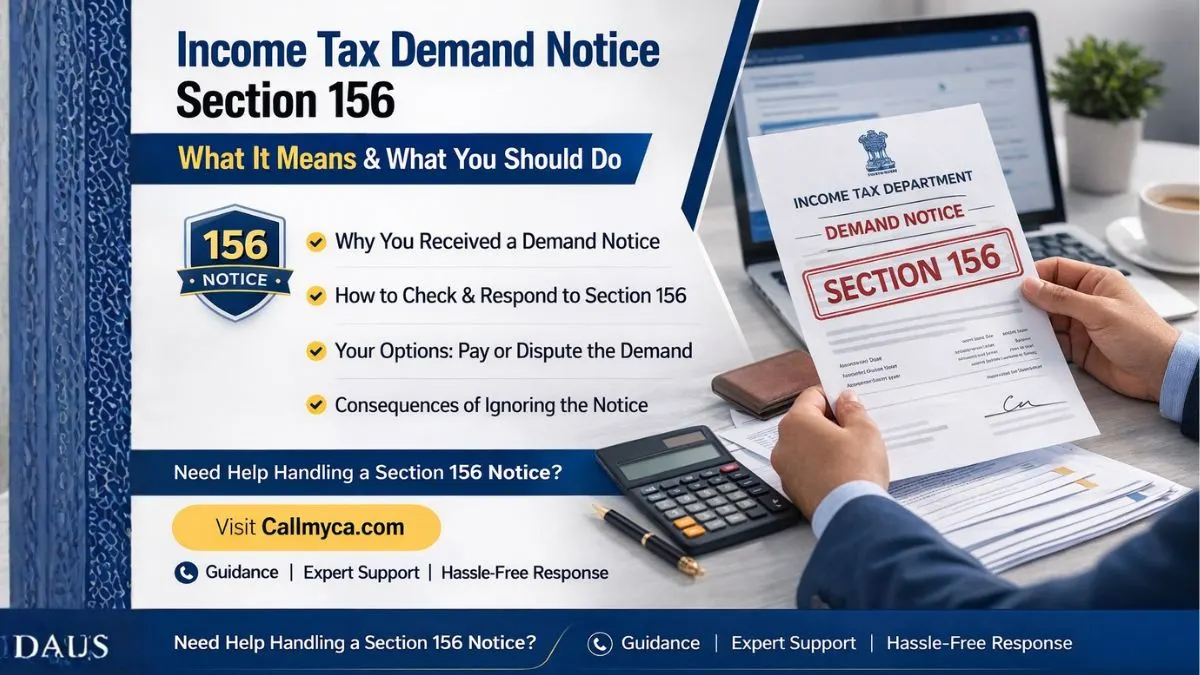
Income Tax Demand Notice Section 156 – What It Means and What You Should Do
So You Got a Section 156 Notice?
Let’s be honest.
Getting a message from the tax department rarely feels good.
Most people instantly start thinking something has gone wrong with their tax filing. But when it comes to an income tax demand notice Section 156, the situation is often simpler than it looks.
A Section 156 notice is basically the Income Tax Department informing you that, according to their records, there is some outstanding tax that still needs to be paid. This could include the original tax amount, interest, penalties, or other charges that were calculated after reviewing your return.
The law calls this communication Section 156: Demand notice. It formally tells the taxpayer that a demand has been raised and payment should normally be made within 30 days from the date the notice is served.
Now here’s the important part: receiving such notices does not automatically mean you did something wrong. Sometimes it’s just a difference in calculation or missing tax credit.
What Exactly Is Section 156: Demand Notice?
A Section 156 notice is issued when the Income Tax Department determines that a taxpayer still owes some tax.
This usually happens after the department reviews your return or passes an order during assessment. If the officer finds that the tax paid by the taxpayer is less than what should have been paid, a demand is raised.
At that point the department sends an income tax demand notice Section 156 explaining:
- the amount of tax demand
- the assessment year involved
- interest or penalties added
- instructions on how to pay or respond
The purpose of Section 156: Demand notice is simple — to officially inform the taxpayer about the outstanding tax demand.
Why a Demand Notice Is Issued
Many taxpayers assume these notices only appear when someone hides income. In reality, that’s not always true.
Sometimes a Section 156 notice appears simply because of small mismatches in financial records.
For example, the department compares your tax return with data reported by banks, employers, and financial institutions. If those numbers don’t match perfectly, the system may generate a demand.
Some common reasons include:
- tax calculation errors in the return
- TDS credit not appearing correctly
- advance tax payments not reflected in the system
- additional tax demand after reassessment
- interest charged for delayed payment
In short, the department believes some tax is still due, so it raises a demand under Section 156: Demand notice.
The 30 Day Rule
One thing that many taxpayers fail to notice is the time limit.
Once a Section 156 notice is served to the taxpayer, it is expected that the taxpayer will respond within 30 days. This period is the time within which the taxpayer will make a decision on what to do with the tax demand.
For a taxpayer, there are three main options:
• Accept the tax demand and pay the outstanding tax amount
• Partially agree with the tax demand notice Section 156
• Disagree with the income tax demand notice Section 156
Checking the Demand Online
The good news is that checking an income tax demand notice Section 156 is very easy today.
Instead of visiting tax offices, taxpayers can simply log into the Income Tax e-filing portal.
Here’s what people usually do:
- visit the official Income Tax portal
- log in using PAN and password
- go to Pending Actions
- click Response to Outstanding Demand
- view details of the tax demand
Once you open the notice, you’ll see the exact amount of tax demand and the reason the Section 156 notice was issued.
What If the Demand Is Correct?
Sometimes after checking the notice, taxpayers realize the tax demand is actually correct.
Maybe there was a small mistake while filing the return. Or maybe some income was missed.
In that situation, the easiest solution is to simply pay the tax demand online through the portal.
After the payment is made, the system updates the status of the income tax demand notice Section 156 automatically.
Paying within the deadline helps avoid extra interest or penalties.
What If the Demand Is Wrong?
This situation happens more often than people think.
Sometimes the Section 156 notice is issued even though the taxpayer has already paid the tax. This can happen if the department’s system did not record the payment correctly.
If you believe the demand is incorrect, you can respond to the notice online and submit supporting documents.
These documents may include:
- tax payment challans
- TDS certificates
- bank statements
- copies of filed returns
Once submitted, the department reviews the response and may reduce or remove the tax demand.
What Happens If You Ignore the Notice
Ignoring an income tax demand notice Section 156 can create unnecessary trouble.
If the tax demand remains unpaid after the deadline, the department may begin recovery proceedings.
Possible actions include:
- adding additional interest on the tax demand
- adjusting the demand against future refunds
- starting recovery procedures through tax authorities
That’s why responding to Section 156 notice within the time limit is always the safest option.
How to Reduce the Chances of Demand Notices
While it’s impossible to guarantee you’ll never receive tax demand notices, a few good habits can reduce the risk significantly.
For example:
- always verify tax calculations before filing returns
- match income details with Form 26AS and AIS
- check whether TDS credits are correctly reflected
- keep records of all tax payments
When financial records are accurate, the chances of receiving a Section 156: Demand notice become much lower.
Final Thoughts
An income tax demand notice Section 156 may sound alarming at first, but it’s simply the Income Tax Department informing you about an outstanding tax demand.
Under Section 156: Demand notice, taxpayers are given time to review the demand, verify their records, and either pay the tax or dispute the notice.
Most issues can be resolved easily once the notice is checked carefully and the correct response is submitted.
If you’ve received a Section 156 notice and aren’t sure how to handle the tax demand, the experts at Callmyca.com can review your case and help you respond to such notices correctly.