The Income-tax Act, 1961 not only lays down rules for individuals and businesses but also recognizes the importance of charitable and religious activities in society. To promote these causes, the law offers special tax exemptions to trusts and institutions working for public welfare. Section 11(1a) of Income Tax Act is one of the most significant provisions in this area.
It deals with the income from property held for charitable or religious purposes & provides tax relief to such organizations. Through this section, the government ensures that more funds are available for genuine charitable activities instead of being lost in taxes.
What is Section 11(1a) of Income Tax Act?
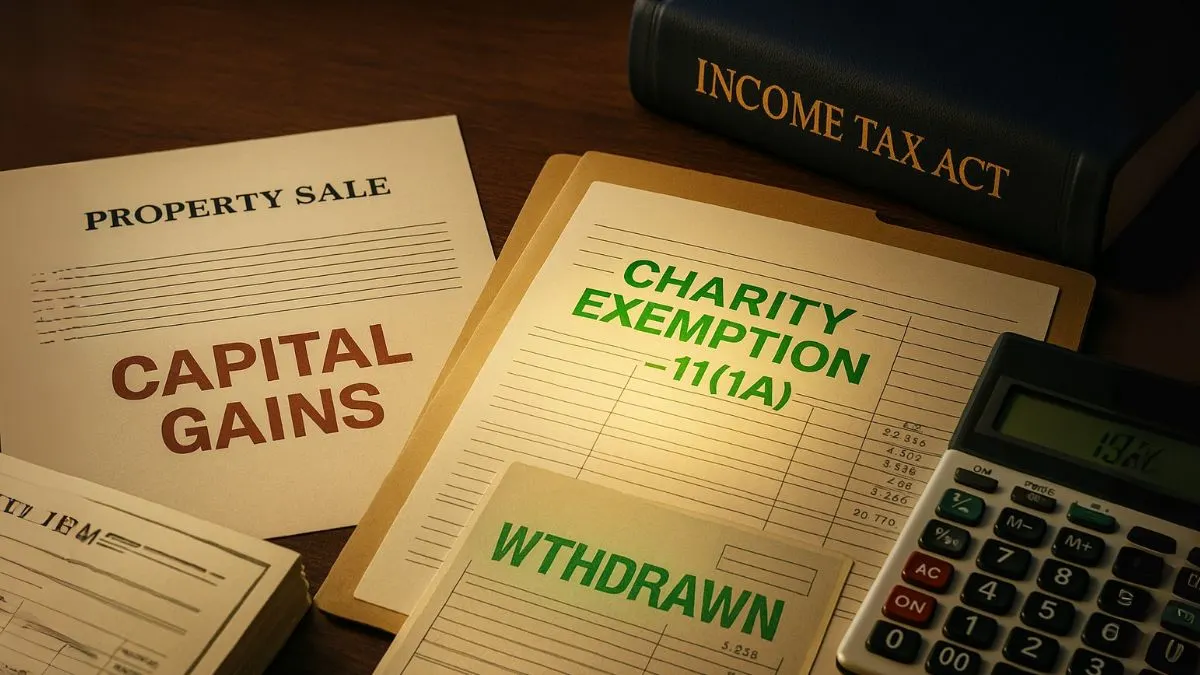
Section 11(1a) specifies that if a charitable or religious trust sells a capital asset and reinvests the sale proceeds in another capital asset, then the income from such a transfer will not be taxable.
In simpler words:
- If a trust sells a property & uses that money to buy another property for charitable purposes, the capital gain is exempt.
- This ensures that trusts can restructure or realign their assets without losing money to tax.
Thus, the Income-tax Act provides an exemption from tax for income derived from property under charitable trusts & institutions if applied properly.
Objective of Section 11(1a)
The purpose of this section is twofold:
- Support charitable activities – Trusts & institutions should not hesitate to sell or replace assets due to fear of tax.
- Provide exemptions fairly – To ensure only genuine charitable/religious organizations benefit.
This way, income from property held for charitable or religious purposes continues to remain available for the intended cause.
Also Read: A Deep Dive into Charitable and Religious Income Exemptions
Key Provisions of Section 11(1a)
- Applies to capital gains earned by charitable or religious trusts.
- Exemption available if proceeds are reinvested in another capital asset.
- Ensures that short-term capital gains (STCG) and long-term gains are treated as applied to charitable purposes if reinvested.
- Protects charitable funds from being reduced by tax liabilities.
Income from Property Held for Charitable or Religious Purposes
This section specifically refers to income from property held for charitable or religious purposes. Property here doesn’t mean just land or buildings—it can also include investments and other assets held by trusts.
For example:
- A trust owning a building may sell it & use the money to buy another property used for running schools or hospitals."
- In such cases, Section 11(1a) provides an exemption from income tax on the capital gain, as the purpose remains charitable.
Treatment of Short-Term Capital Gains (STCG)
A common question arises—how are short-term capital gains (STCG) treated under this section?
- If a trust earns STCG by selling a property, and the proceeds are reinvested in another property for charitable use, the exemption applies.
- This ensures that trusts are not penalized for short-term financial decisions, provided their intent is charitable.
Thus, Section 11(1a) is related to the taxation of short-term capital gains (STCG) as well, ensuring consistency in exemptions.
Example of Section 11(1a) Application
Suppose a charitable trust sells land for ₹50 lakh & reinvests ₹50 lakh in a new hospital building.
- The profit made from the sale (capital gain) would normally attract tax.
- However, under Section 11(1a), since the proceeds were reinvested in another asset for charitable purposes, the gain is exempt.
This provision ensures the continuity of charitable funds without tax leakage.
Also Read: Tax Treatment of Charitable Trusts & Institutions
Importance for Charitable and Religious Institutions
- Preserves capital – Trusts can realign assets without losing funds to tax.
- Encourages growth – Institutions can expand into new areas of social work.
- Ensures transparency – Exemption is allowed only when reinvestment is verifiable & aligned with charitable objectives.
In essence, the Income-tax Act provides an exemption from income tax to ensure that charitable and religious bodies can keep supporting public welfare.
Compliance Requirements for Section 11(1a)
For claiming exemption, trusts must:
- Be registered under Section 12AA/12AB of the Income Tax Act.
- Reinvest the sale proceeds within the prescribed time frame.
- Maintain proper accounts & records of property transactions."
- File income tax returns detailing specific filing requirements for such entities.
Non-compliance can result in loss of exemption.
Judicial Views on Section 11(1a)
Courts have consistently supported the spirit of this section. They’ve ruled that as long as the intent and action of the trust are genuinely charitable, the exemption must be granted. However, misuse of funds or diversion of proceeds for non-charitable purposes results in denial of benefits.
Challenges in Section 11(1a)
- Some trusts misuse exemptions by diverting funds.
- Lack of awareness among smaller NGOs about compliance.
- Complexity in rules related to capital gains sometimes leads to confusion.
Government’s Role in Strengthening Charitable Exemptions
The government frequently issues notifications to clarify how exemptions work, especially for short-term capital gains (STCG) & reinvestment conditions. This ensures transparency and fairness while promoting genuine charitable work.
Benefits of Section 11(1a) to Society
- Encourages philanthropy by ensuring contributions are maximized.
- Strengthens charitable infrastructure like hospitals, schools, orphanages.
- Supports religious institutions in maintaining heritage and community services.
Also Read: When Charitable Trusts Lose Tax Exemption
Conclusion
Section 11(1a) of Income Tax Act is a crucial provision that allows charitable and religious trusts to carry out their work without worrying about tax deductions on capital gains. By ensuring that income from property held for charitable or religious purposes is exempt when reinvested, the law strengthens the foundation of India’s non-profit sector.
👉 Want to know how your trust or institution can claim maximum exemptions under Section 11(1a) and other provisions? Visit Callmyca.com today and let our experts help you save tax while focusing on your charitable goals.