Advance tax sounds simple: pay tax as the income flows in. But life is hardly predictable. Maybe a sudden freelance project came in, or a surprise capital gain bumped up your income. When your advance tax paid is less than a certain percentage of the total assessed tax, Section 215 kicks in.
This section ensures that taxpayers pay interest on the shortfall—not as a penalty, but as compensation for the delay in payment. Understanding it can help you plan better, avoid unnecessary interest, & stay in control of your financial year.
What Is Section 215 of the Income Tax Act?
Section 215 deals with the interest payable by an assessee if the advance tax paid is less than a specified percentage of the total assessed tax.
It applies when:
- You were liable to pay advance tax,
- But the advance tax you actually paid was too low compared to the final tax assessed.
The idea is simple:
When you underpay your advance tax, the government charges interest for the period during which your money was due.
How much interest is charged?
There are two key benchmarks mentioned over the years:
- Interest at 9% per annum is payable in many classic interpretations of the section.
- As the law evolved, Section 215 Income Tax Act charges 15% interest if advance tax falls below 75% of the assessed tax.
Depending on the assessment year & applicable provisions, the rate varies, but the intention stays the same—timely payment leads to lower tax burden.
Also Read: The Interest Penalty That Silently Drains Your Refund
Understanding the Threshold
The section becomes applicable when:
- The advance tax paid is less than 75% of your total tax liability (in older provisions), or"
- When the shortfall is significant enough to be considered a delayed payment.
This shortfall is calculated after the assessment is completed. That’s why sometimes taxpayers get an unexpected interest demand after filing their return—the assessed tax turned out higher than the estimates used for advance tax.
How the Interest Is Calculated
Interest under Section 215 is calculated on:
- The difference between the advance tax paid & the assessed tax,
- For the period from April 1 of the assessment year to the date of regular assessment,
- At 9% or 15% per annum, depending on the relevant rule.
Let’s say you estimated your tax to be ₹80,000 & paid advance tax accordingly. But the actual assessed tax turned out to be ₹1,20,000.
The shortfall is ₹40,000.
Interest is applied to this difference.
It’s not a punishment—it’s essentially a cost for delayed tax payment.
Why Do Taxpayers Often Miss This?
Because income is unpredictable.
A bonus, stock sale, lottery win, sudden capital gains, or big professional receipts—any of these can push you into a higher tax bracket or increase your taxable income unexpectedly.
The tax law expects you to revise and pay advance tax accordingly. But in reality, many people only realize this during filing season.
This is where Section 215 quietly steps in.
Also Read: Interest Penalty for Late Filing of ITR
A Common Confusion: Foreign Exchange Capital Gains
You might come across references linking Section 215 to “capital gains on transfer of foreign exchange assets not to be charged in certain cases.”
This belongs to earlier or context-specific interpretations & does not affect the core principle of Section 215 today.
The heart of the section remains focused on interest for shortfall of advance tax.
Can the Interest Be Reduced or Waived?
In certain genuine hardship cases, the Assessing Officer may consider:
- Reasonable cause for the shortfall
- Bona fide estimates of income
- Situations outside the taxpayer’s control (like business downturns, delayed payments, etc.)
While waivers are not common, they are possible when the shortfall wasn’t intentional or avoidable.
Real-Life Scenario: When Section 215 Sneaks In
A client once told me, “I didn’t know I had to update my advance tax after I sold my shares.”
When his assessment was done, he was shocked to see the interest charged.
That’s exactly how most people discover Section 215—not through reading the law, but through lived experience.
Also Read: The Rule That Makes Advance Tax Payment Compulsory
How to Avoid Section 215 Interest
Here are simple, practical steps:
- Track your income every quarter.
- Revise your advance tax if income increases.
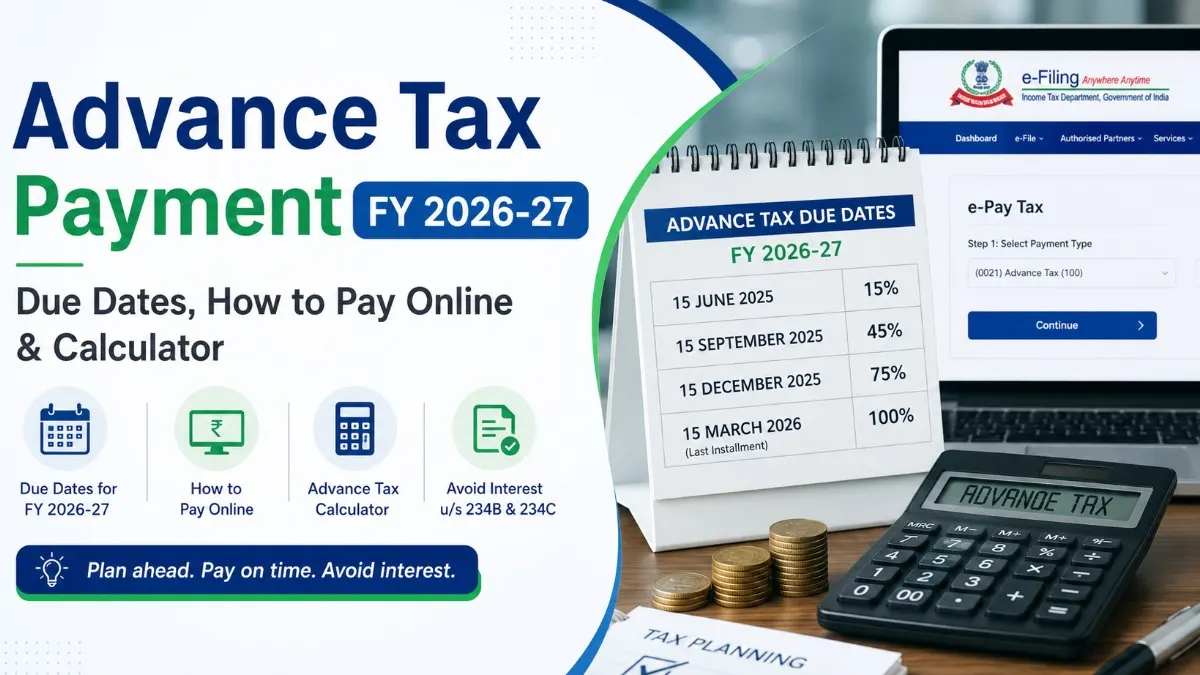
- Remember due dates (June, September, December, March)."
- Work with a CA if your income sources vary.
- Don’t ignore capital gains—they count too.
Small habits can save a surprising amount of tax interest.
Conclusion
Section 215 may sound technical, but its message is simple: Stay updated with your income flow & pay advance tax wisely.
A little planning can prevent those unwelcome interest surprises from the Income Tax Department. And if your income varies unpredictably, you’re not alone—thousands face the same challenge. Understanding this section empowers you to stay compliant, reduce financial stress, and make smarter tax decisions.
If you’d like help planning your advance tax or avoiding such interest charges, visit Callmyca.com—expert guidance is just a click away.