Before diving into the technicalities, let’s understand the intent of the law.
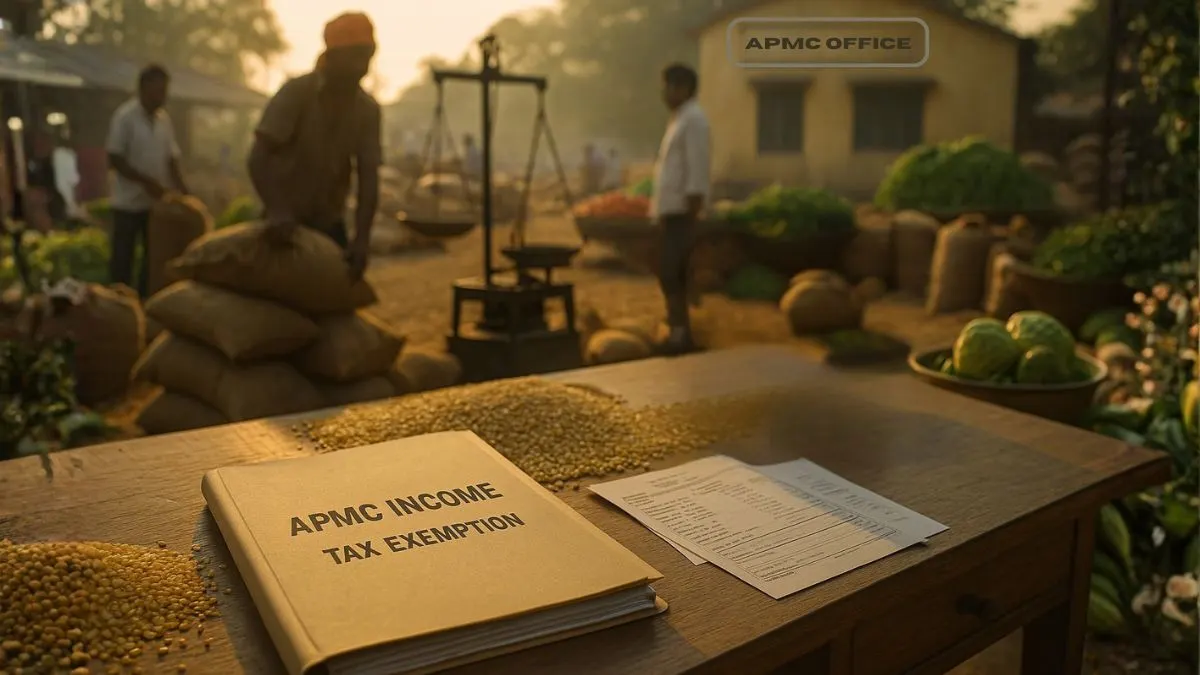
Agriculture is the backbone of India. Millions depend on mandis to sell their produce. The government wanted to ensure that the institutions responsible for agricultural trade regulation—Agricultural Produce Market Committees (APMCs) or Agricultural Market Committees (AMCs)—retain every rupee they earn, so they can reinvest into farmer-centric infrastructure instead of paying tax on income.
Thus came Section 10(26aab).
The core idea:
If the purpose of the institution is to regulate agricultural marketing, then taxation should not become a burden.
What Exactly Does Section 10(26aab) Say?
Section 10(26aab) provides a full exemption for any income of an Agricultural Produce Market Committee / Agricultural Produce Marketing Committee (APMC).**
Where does this income come from?
- Market fees
- License fees from traders
- Charges for use of mandi infrastructure
- Other fees received for regulating market dealing with agricultural produce
In simple words:
✅ Any income earned by the agricultural produce marketing committee is exempt.
There is no tax on income generated from operations because APMCs are statutory bodies created not to earn profit, but to facilitate fair trade between farmers & buyers.
Also Read: The Tax Exemption Fund Managers Don’t Talk About: Section 10(23FBA)
Understanding the Purpose Behind the Section
Let’s break the purpose into 3 real-world implications:
|
Objective |
Why it matters |
|
💰 Exempts income of Agricultural Market Committees (AMCs) |
So they don’t lose money to tax & can reinvest in better infrastructure |
|
🚜 Supports farmers financially |
Lower operational cost → Cheaper mandi services → Higher income retained by farmers |
|
🏛 Ensures transparency in agricultural trade |
Farmers avoid exploitation by middlemen due to formal mandi regulation |
This section ensures that APMCs function like public service institutions rather than revenue-generating businesses.
Who Can Claim Exemption Under Section 10(26aab)?
✅ An Agricultural Produce Market Committee (APMC)
✅ A marketing board or committee constituted under State APMC laws
As long as the committee is:
✔ Established under State Agricultural Marketing legislation
✔ Created for regulating agricultural produce trade
✔ Earning income primarily from such regulation activities
👉 the exemption applies automatically.
There is no need for a special approval from the Income Tax Department.
The exemption is built into the law.
Revenue Streams Covered Under Exemption
Here’s how APMCs earn money—and how Section 10(26aab) applies:
|
Income Source of APMC |
Covered under Section 10(26aab)? |
|
Market fee on agricultural produce |
✅ Fully exempt |
|
License fee collected from agents |
✅ Fully exempt |
|
Penalty / fines collected from traders |
✅ Fully exempt |
|
Income from renting market sheds / shops |
✅ Fully exempt |
|
Interest on funds used for mandi development |
✅ Fully exempt |
APMC Farmers — How the Exemption Helps
Example 1 — Infrastructure Development
An APMC collects ₹2 crores as market fees in a year."
Instead of paying 30% tax (₹60 lakhs), it uses the money to build new auction platforms, lighting, & storage facilities.
Without Section 10(26aab), that ₹60 lakhs would have gone into income tax instead of farmer welfare.
Example 2 — Reducing Farmer Charges
APMC reduces mandi fee from ₹1,000 per truck to ₹800 per truck.
This is possible because the committee doesn’t pay income tax & can reduce costs.
Farmers benefit directly.
Also Read: Capital Gain Exemption on Sale of Agricultural Land
APMC vs Private Market — Tax Impact
|
Parameter |
APMC (covered under Section 10(26aab)) |
Private Market Yard |
|
Tax on income |
❌ No tax |
✅ Taxable |
|
Operates for |
Public welfare |
Profit motive |
|
Who benefits |
Farmers |
Private investors |
Misuse Prevention Safeguards
To ensure exemption isn’t misused:
- Funds must be used only for mandi development
- Activities must remain agricultural-trade focused
- Commercial activities unrelated to mandi regulation may not be exempt
If an APMC starts running hotels, malls, or unrelated profit ventures—that income may not be exempt.
How It Relates to the Bigger Tax Ecosystem
Section 10(26aab) is part of the government’s policy to keep agriculture tax-neutral:
- Farmers don’t pay tax on agricultural income (Section 10(1))
- APMC doesn’t pay income tax on market regulation activities (Section 10(26aab))
👉 The theme is clear:
Protect the agricultural value chain from tax burden.
Quick Checklist — Does Your APMC Qualify?
Answer these questions:
|
Question |
Yes / No |
|
Is the body created under State APMC law? |
|
|
Is it regulating agricultural produce marketing? |
|
|
Is income received from fees or activities associated with agricultural trade? |
If all answers are YES, the exemption applies.
Practical Takeaway
If you handle compliance for an APMC / AMC:
Do not file income tax returns as a taxable entity for market fee income."
Claim exemption clearly under Section 10(26aab).
This ensures zero tax liability & correct treatment under law.
Also Read: Expenditure on Agricultural Extension Projects
Conclusion
Section 10(26aab) of the Income Tax Act isn't just a tax exemption. It reflects India’s commitment to keeping agriculture tax-free and farmer-focused.
- It exempts any income of Agricultural Produce Market Committees (APMCs).
- Income from fees received for regulating market dealing with agricultural produce is exempt.
- The exemption ensures APMCs reinvest funds for infrastructure & farmer welfare, not taxes.
More money stays within the mandi ecosystem → direct benefit to farmers.
Need Help Claiming Tax Exemptions for APMCs? Whether you're preparing accounts, responding to notices, or handling audits, our CA team simplifies tax compliance for committees and boards.
👉 Click here to consult a CA on CallMyCA.com — your tax clarity starts here.