You Open the Letter… And Your Stomach Drops
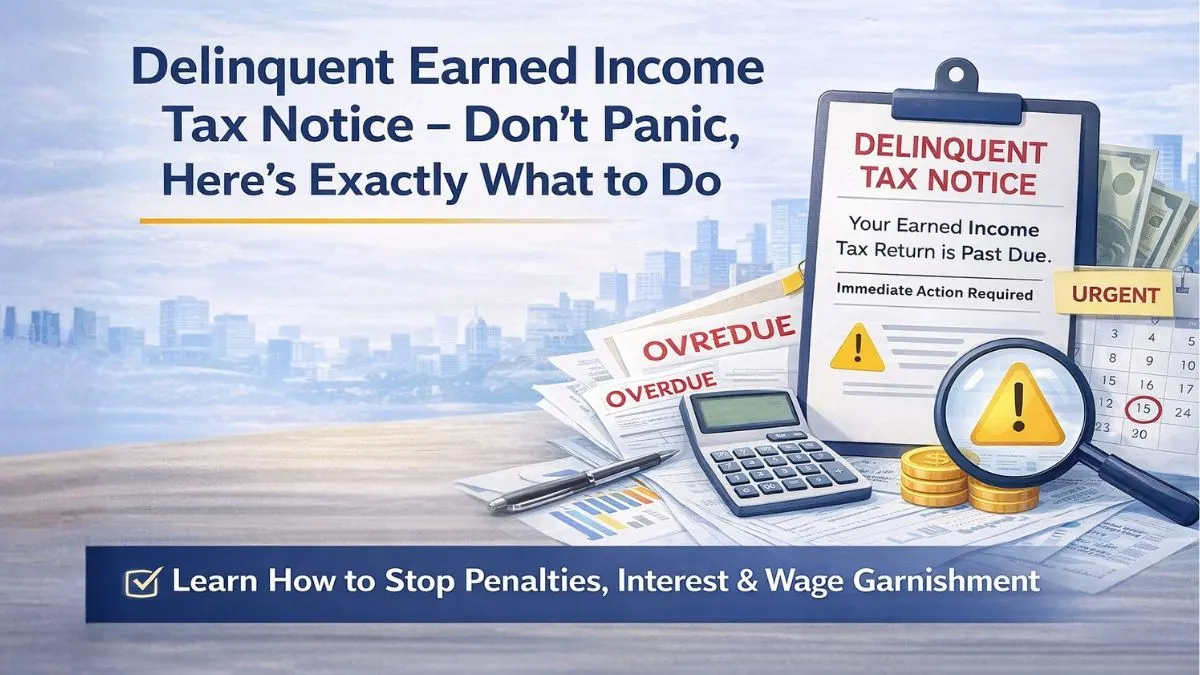
There are very few envelopes that create instant stress. A delinquent earned income tax notice is one of them.
The wording feels serious. The tone feels urgent. You might see phrases like “past due,” “immediate response required,” or “failure to comply may result in enforcement.”
Your first instinct might be to set it aside.
Don’t.
A delinquent earned income tax notice does not mean you are in criminal trouble. It usually means one simple thing: the local tax authority believes you either did not file your earned income tax return or did not pay the full amount owed.
That’s it.
And while that sounds intimidating, it is completely fixable—if you act quickly.
What Does "Delinquent Earned Income Tax" Actually Mean?
Let’s simplify the language.
“Delinquent” means overdue.
“Earned income tax” refers to local tax imposed on wages, self-employment income, or other earned income.
So delinquent earned income tax simply means your local tax obligation is unpaid or unfiled past the deadline.
Most municipalities require residents and sometimes non-residents who work there to file an earned income tax return annually. Even if your employer withholds some tax, filing may still be mandatory.
When the system does not receive your return, it automatically triggers delinquent notices.
These notices are procedural. They are compliance reminders. But if ignored, they escalate.
Why You May Have Received This Notice
There are surprisingly common reasons people receive delinquent notices.
You may have:
-
Moved and missed mail updates.
-
Changed employers mid-year.
-
Assumed withholding covered everything.
-
Forgotten to file because no balance was due.
-
Started freelance work without realizing local filing was required.
Life happens. People relocate. Jobs change. Deadlines slip.
The tax system, however, is automated. If it doesn’t see your earned income tax return, it assumes non-compliance.
That’s when delinquent taxes appear on your account.
It doesn’t mean fraud. It means missing paperwork.
What Happens If You Ignore Delinquent Notices?
Ignoring a delinquent earned income tax notice is the worst decision you can make.
At first, the consequences are small. A reminder notice. A late fee. Some interest.
But over time, delinquent taxes grow due to:
-
Accrued interest
-
Late filing penalties
-
Collection fees
-
Administrative charges
If no response is received, the case may be transferred to collections. Eventually, wage garnishment becomes possible.
That doesn’t happen overnight. It happens after multiple delinquent notices are ignored.
The earlier you respond, the easier it is to fix.
How Many Years Can They Go Back?
This is where many people feel overwhelmed.
In many jurisdictions, authorities can require filing of past-due earned income tax return forms going back up to six years.
Six years sounds heavy. But remember: it’s paperwork, not punishment.
Start with the oldest missing year. Gather income documents such as W-2s, 1099s, or employer summaries. File accurately. Move forward one year at a time.
Once all required returns are filed, the true balance becomes clear.
Sometimes, the amount owed is far lower than estimated in delinquent notices.
What If You Actually Don’t Owe Anything?
Here’s something important.
You can receive a delinquent earned income tax notice even if you owe zero tax.
If the system shows no earned income tax return filed, it flags your account automatically.
Filing a zero-balance return resolves the issue.
Many taxpayers panic, thinking they owe large delinquent taxes, only to discover they simply needed to submit paperwork.
That’s why reviewing before reacting is critical.
Step-by-Step: How to Respond Calmly
Step 1: Read the notice fully. Check the tax year, estimated balance, and deadline.
Step 2: Confirm whether you filed that year. Look for proof such as confirmation numbers or copies.
Step 3: If you did not file, prepare the missing earned income tax return immediately.
Step 4: Submit returns for all required years.
Step 5: Review actual tax due. The estimated delinquent taxes may decrease once real numbers are reported.
Step 6: Arrange payment if needed. Many municipalities offer installment plans.
Acting quickly reduces penalties and shows good faith compliance.
Can Penalties Be Reduced?
In certain cases, yes.
If your delinquent earned income tax issue resulted from reasonable cause—medical emergency, relocation, natural disaster, or genuine misunderstanding—you may request penalty relief.
Authorities are often more flexible when you communicate early rather than after enforcement begins.
Submitting past-due earned income tax return forms voluntarily strengthens your position.
Silence weakens it.
When Does Wage Garnishment Happen?
Wage garnishment is not immediate.
Before that stage, authorities send multiple delinquent notices and provide opportunities to respond.
However, if months pass without filing or payment, enforcement actions may begin.
Once wage garnishment starts, stopping it requires urgent intervention and often professional assistance.
The smartest strategy is simple: resolve delinquent taxes before escalation.
Early action saves stress.
Why Local Earned Income Tax Is Often Forgotten
People focus heavily on federal and state returns.
Local earned income tax obligations often feel secondary.
But local tax compliance is legally enforceable.
Even if your employer withholds local taxes, filing your own earned income tax return may still be required.
Many delinquent notices are triggered because taxpayers assume withholding equals compliance.
It doesn’t.
Filing confirms compliance.
The Emotional Side of Tax Stress
A delinquent earned income tax notice carries emotional weight.
Stress. Embarrassment. Fear of the unknown.
But tax issues are more common than people admit.
You are not alone.
And most delinquent earned income tax cases are resolved through simple corrective steps.
Once the first return is filed, anxiety drops significantly.
Momentum creates relief.
Avoidance creates pressure.
Final Thoughts—Fix It Before It Grows
A delinquent earned income tax notice is not a disaster.
It is a signal.
It signals that an earned income tax return was not filed or delinquent taxes remain unpaid.
It signals that action is required.
But it also signals opportunity—the opportunity to correct, comply, and close the chapter.
File missing returns.
Clarify balances.
Arrange payments if necessary.
Communicate proactively.
Tax problems grow in silence. They shrink with action.
And once resolved, they stop occupying your thoughts.
If you’ve received delinquent notices and feel unsure where to begin, the experienced professionals at Callmyca.com can help you file back earned income tax return forms, reduce penalties on delinquent taxes, and stop enforcement before it impacts your paycheck—because fixing a delinquent earned income tax issue today is always cheaper than ignoring it tomorrow.