If you have ever heard your CA say, “You need to pay advance tax,” and wondered how that figure magically appears, Section 209 is where the magic actually begins. This provision deals with the computation of advance tax. It outlines the exact method for calculating how much tax a taxpayer (called an assessee) must pay in advance during a financial year before filing their ITR.
In simple words, advance tax means paying your tax bit by bit throughout the year instead of paying it all at the end. Section 209 tells you how to compute the correct amount so that there is no underpayment, no excessive payment, and definitely no unwanted penalty.
Why Advance Tax Matters More Than You Think
Advance tax is like pre-paying your dues so that the final settlement isn’t overwhelming. This system ensures continuous tax collection for the government & smoother cash flow for taxpayers. If you are a freelancer, business owner, consultant, landlord, or even someone earning large interest income — you probably fall under the advance tax category.
Section 209 gives a straightforward method to compute it, and understanding this calculation can save you from penalties, notices, and surprises at year-end. It also helps you estimate your financial position better. Once you get the logic of Section 209, the entire concept becomes remarkably easy.
How Section 209 Helps: The Core Rule for Computation of Advance Tax
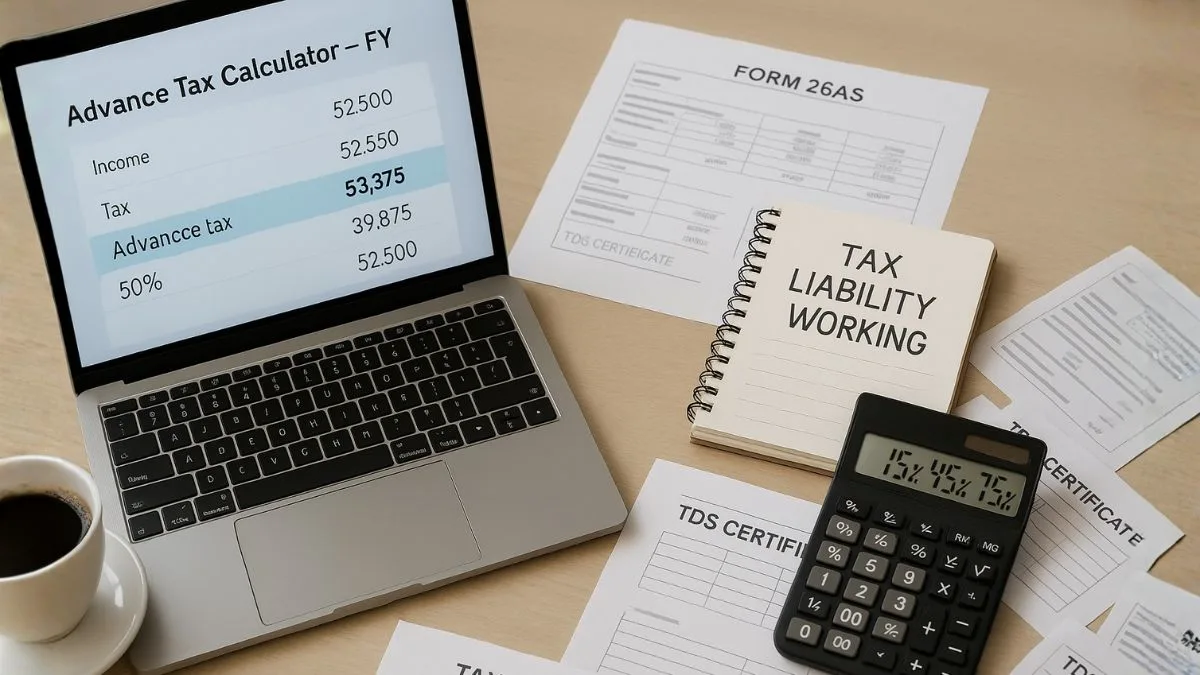
Section 209 breaks the entire calculation into a structured formula. First, you estimate your total income for the year. Then you compute the tax on that income. After that, you reduce TDS already deducted (if any). The remaining tax amount is what you must pay as advance tax.
This clarity is what makes Section 209 such an important provision. Whether you are a salaried person earning extra income, a business owner earning profits, or an investor receiving interest & dividends, Section 209 is applicable if your tax liability exceeds ₹10,000 for the year.
The beauty of this section is that it is built to guide taxpayers step by step, without confusion.
Who Needs to Pay Advance Tax? Check the Person Definition First
Before computing advance tax, understanding the person definition in income tax section is important. The Income Tax Act uses the word “person” in a very broad way. It includes individuals, HUFs, companies, firms, LLPs, AOPs, trusts, & more. Advance tax applies to every person whose estimated tax liability crosses the threshold limit.
This wide definition ensures that almost everyone earning taxable income — whether structured, passive, or business-based — may need to compute advance tax under Section 209.
Also Read: Capital Gains, Property Sales & Real Value Rules
Section 209 and Scientific Research Deductions: Why They Matter Here
Many businesses claim deductions for scientific research. The Income Tax Act allows multiple deductions for scientific research while computing taxes, such as:
- deductions for expenses relating to scientific research
- deduction for expenses incurred on scientific research & development activities"
- deduction for expenditure of a capital nature on scientific research
- provision that allows taxpayers to claim deductions for expenses incurred in scientific research and development
These deductions reduce the total taxable income & therefore directly affect the computation of advance tax. If these deductions apply to you, your advance tax liability can significantly decrease. This is why businesses engaged in research-heavy work often rely heavily on Section 209 calculations.
Other Important Sections Connected With Advance Tax Calculations
Several sections indirectly influence how advance tax is computed, because they either reduce taxable income or affect tax liability. A few important ones include:
- Sukanya Samriddhi Yojana Income Tax Section
Deposits made under SSY qualify for Section 80C, reducing advance tax liability.
This affects the taxation of income received from an AOP or BOI & may change the tax payable.
This provision exempts certain incomes, affecting taxable income and advance tax computation.
- Section 15H
A senior citizen who submits Form 15H may avoid TDS, which changes the TDS-credit calculation for advance tax.
Even though these sections seem unrelated, they ultimately influence the real figure you compute under Section 209.
Understanding Advance Tax Installments: Where Section 209 Plays a Role
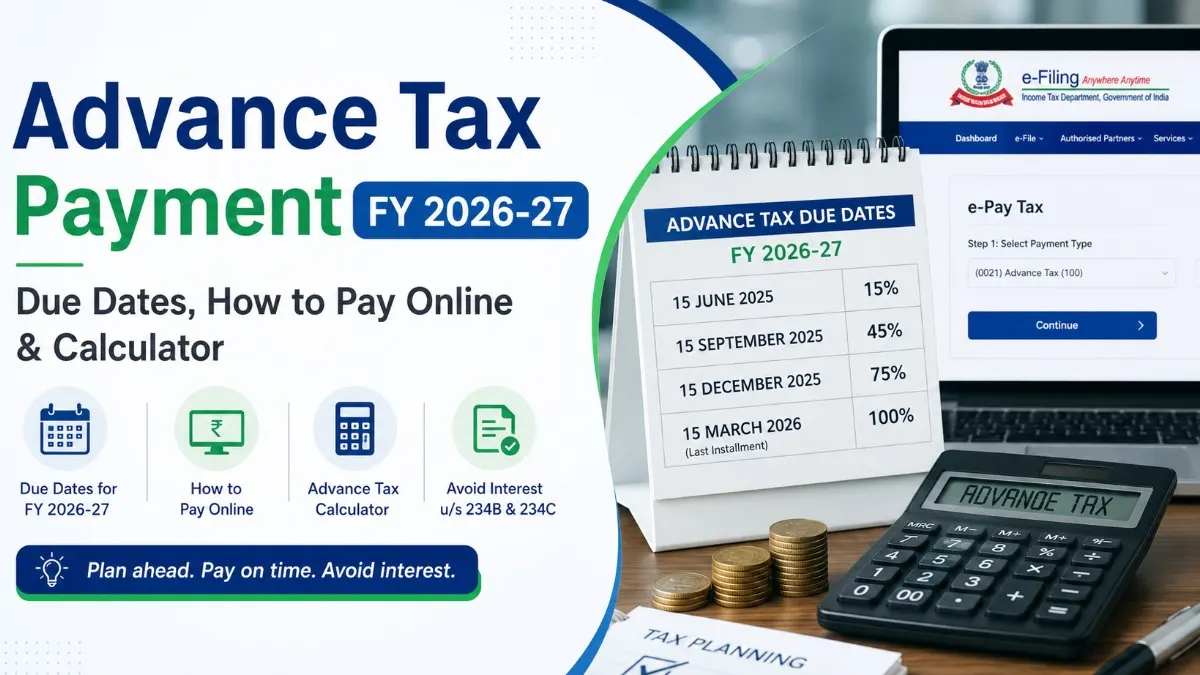
Advance tax is not paid in one shot (unless you miss earlier deadlines). It is paid in installments:
- 15% by 15 June
- 45% by 15 September
- 75% by 15 December
- 100% by 15 March
When computing the amount for each installment, Section 209 guides the process. It ensures you calculate tax correctly after estimating your income & subtracting TDS. If income changes during the year, you can revise your estimate and pay accordingly.
That flexibility is what makes advance tax practical & manageable.
Also Read: Section 276CC of Income Tax Act: Penalties, Offences, and Consequences
Why Section 209 Helps Prevent Penalties
A major benefit of understanding Section 209 is avoiding penalties under Section 234B & 234C. Incorrect or insufficient advance tax payments can lead to interest charges. But when you compute tax correctly using the method mentioned in Section 209, you stay safe from these penalties.
Many taxpayers make the mistake of assuming TDS is enough. But for people earning interest, rent, side-business income, capital gains, or professional income — TDS is usually not enough. Section 209 helps you bridge the gap accurately.
Practical Example: How Section 209 Works in Real Life
Imagine you’re a freelance designer earning ₹12 lakh a year. You also earn ₹1 lakh interest income from a fixed deposit. Your bank has already deducted TDS on the fixed deposit, but your freelance income has no TDS.
You calculate your tax for the year based on your estimated income. Then you subtract the TDS already deducted. Whatever is left must be paid as advance tax in installments.
This simple process is exactly what Section 209 describes."
Whether you are a freelancer, landlord, consultant, trader, or small business owner — this logic remains the same.
How Section 209 Impacts Businesses and Individuals Differently
- For businesses, advance tax is an essential part of annual financial planning. Cash flow, quarterly profits, deductions, depreciation, & research spending all affect advance tax.
- For individuals, it depends mainly on non-salary income. Salaried people often skip advance tax because most of their tax is covered through TDS. But the moment they earn rental income, digital income, freelance income, trading profits, or interest — Section 209 becomes relevant.
This is why understanding this section isn’t just for accountants; it is for everyone who wants to avoid tax surprises.
Section 209: A Backbone of Yearly Tax Planning
Advance tax isn’t just a payment rule; it is a discipline. When taxpayers compute & pay advance tax correctly, they avoid unnecessary penalties, reduce stress at year-end, and maintain clean financial records.
Section 209 gives the blueprint for this. It tells you what income to consider, what deductions to subtract, how to adjust TDS, and what remains as your advance tax liability.
With this clarity, you can plan your year confidently.
Also Read: Interest on Default in Advance Tax Instalments
Final Thoughts
Section 209 of the Income Tax Act may look technical, but once you understand it, it becomes one of the most practical tools for financial planning. It helps you calculate your advance tax accurately, avoid penalties, manage cash flow, & stay fully compliant with tax laws. When you also keep in mind deductions for scientific research, SSY benefits, Section 86, Section 10(46A), Section 15H eligibility, and the broad person definition in the Income Tax Act, you get a complete picture of how advance tax fits into your yearly tax strategy.
Want an expert to calculate your advance tax or handle your quarterly payments? Visit Callmyca.com — get your own CA who manages everything for you, hassle-free!