
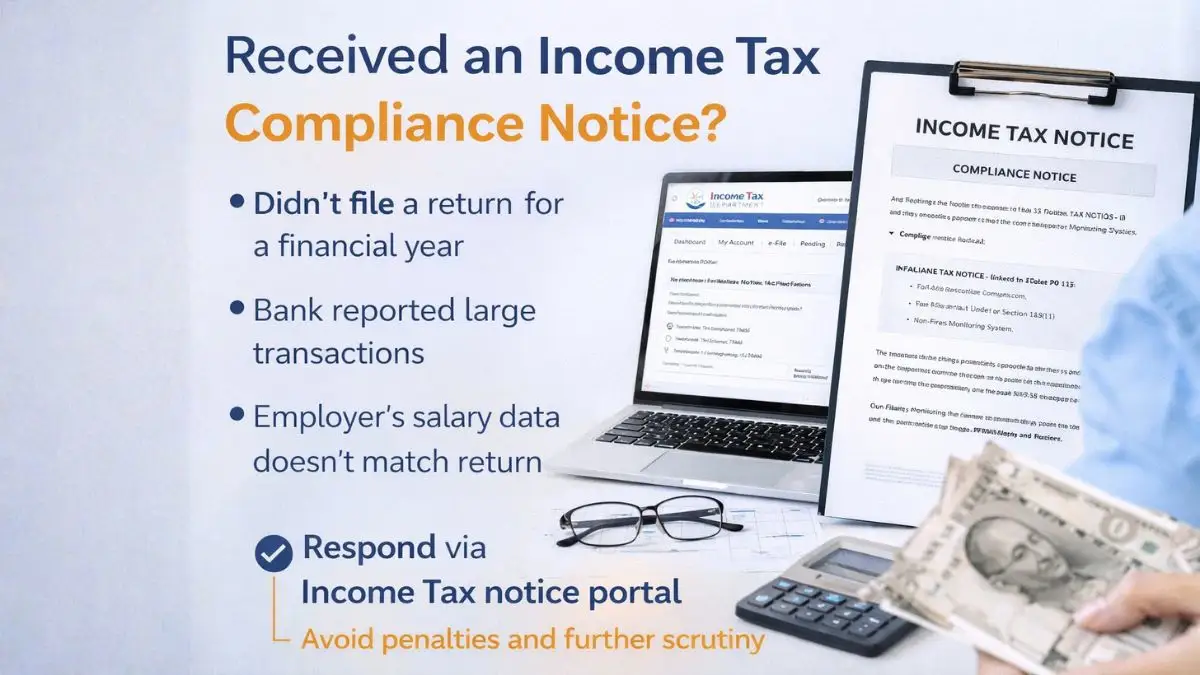
So, You Received an Income Tax Compliance Notice?
Let’s start with the obvious truth — getting a message from the tax department never feels good.
Even if the message simply says Income Tax Compliance Notice, most people immediately assume they’re in trouble.
But here’s the thing many taxpayers don’t realize.
In most cases, these Income Tax notices are not accusations. They’re simply requests for clarification.
The Income Tax Department collects financial information from multiple sources every year. Banks, employers, mutual funds, and even property registration offices report financial transactions linked to your PAN. When the department compares this information with your Income Tax Return, sometimes the numbers don’t match perfectly.
That mismatch is often the reason a compliance notice is generated.
And honestly, many times the issue turns out to be something small — maybe a missing entry, a reporting difference, or a transaction that just needs explanation.
Why the Income Tax Department Sends These Notices
Think of the tax system today as a huge data comparison machine.
Every financial transaction linked to your PAN — salary, investments, deposits — eventually appears in government databases. When the system compares this data with your Income Tax Return, it checks whether everything aligns.
If something looks unusual, the Income Tax Department may send one of several Income Tax notices asking you to clarify the situation.
Some of the common reasons include:
-
You didn’t file an Income Tax Return for a year where financial activity exists
-
A bank reported a large transaction
-
Investment income appears in tax records but not in your return
-
Salary information reported by your employer doesn’t match your return
None of these situations automatically mean wrongdoing. They simply mean the department wants to maintain proper compliance.
Situations That Commonly Trigger Income Tax Notices
From what tax professionals often see, certain situations lead to notices more frequently than others.
For example, high-value transactions can easily trigger attention. If a person suddenly deposits a large amount of money or makes a significant investment, the transaction may be reported by the bank.
When that information doesn’t match the income declared in the Income Tax Return, the system may generate an Income Tax Compliance Notice.
Another common situation involves non-filing of returns.
Sometimes taxpayers believe they don’t need to file a return because their income is below the taxable limit. But if their PAN is linked to transactions like property purchases, investments, or large bank deposits, the Income Tax Department may still send Income Tax notices asking why the return was not filed.
And then there are simple mismatches — salary data, TDS entries, or interest income differences. Even small discrepancies can sometimes trigger a compliance query.
How to Check an Income Tax Compliance Notice
Years ago, tax notices usually arrived by post. Today things are much simpler.
Most Income Tax notices are available online through the Income Tax notice portal.
If you receive an email or message about a notice, you can log in to the portal and check the details directly.
Here’s how people usually do it:
-
Visit the official Income Tax e-filing website
-
Log in with your PAN and password
-
Open the Pending Actions section
-
Go to the Compliance Portal
-
Check the notice linked to your PAN
Once inside, you’ll see exactly what information the Income Tax Department is asking about.
Responding to the Notice
Many people imagine responding to tax notices will be complicated.
In reality, the process is usually straightforward.
After opening the notice in the Income Tax notice portal, you simply read the issue mentioned and choose the correct response option.
Sometimes the portal asks whether the transaction belongs to you. Other times, you may need to explain the source of funds or confirm that the income was reported in your Income Tax Return.
Occasionally, supporting documents may be required.
For example:
-
bank statements
-
salary slips
-
investment records
-
property documents
Submitting accurate information usually resolves the compliance issue quickly.
What Happens If You Ignore the Notice
Ignoring Income Tax notices rarely helps.
If the Income Tax Department doesn’t receive a response within the deadline, they may proceed based on the information they already have.
This could lead to:
-
further scrutiny of your Income Tax Return
-
estimated tax assessments
-
penalties for non-compliance
Most of these problems can be avoided simply by responding on time through the Income Tax notice portal.
How to Reduce the Chances of Getting a Notice
While it’s impossible to guarantee you’ll never receive an Income Tax Compliance Notice, there are a few habits that make a big difference.
Before filing your Income Tax Return, always compare your income details with official tax records such as Form 26AS or AIS. Make sure all sources of income are reported, even smaller ones like interest from savings accounts.
Keeping proper documentation also helps. When records are organized, responding to Income Tax notices becomes much easier.
And of course, filing returns on time always improves your compliance record.
Final Thoughts
An Income Tax Compliance Notice might sound intimidating, but in most situations it’s simply a request for clarification from the Income Tax Department.
Usually the department just wants to verify information related to your Income Tax Return or financial transactions.
The best approach is simple:
-
read the notice carefully
-
understand the issue
-
provide the correct explanation
-
respond through the Income Tax notice portal
Most of the time, a clear response resolves the matter quickly.
If you’ve received Income Tax notices and are unsure how to respond, the professionals at Callmyca.com can review your case and help you submit the correct compliance response quickly and safely.









