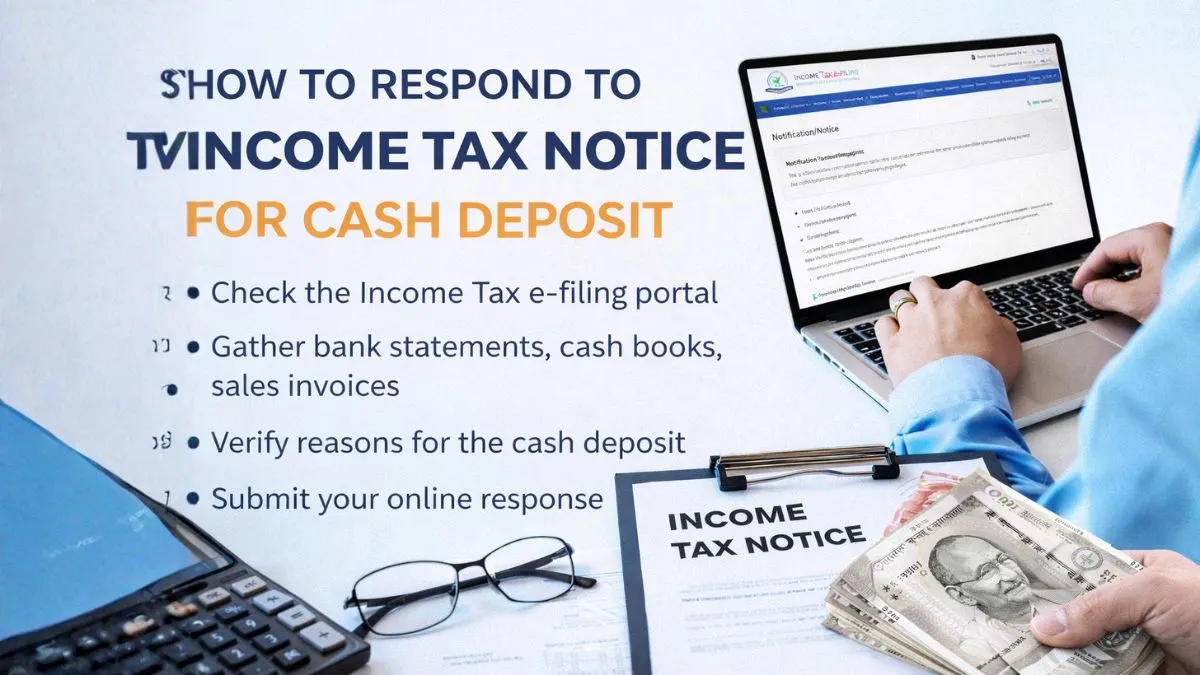
How to Respond to an Income Tax Notice for Cash Deposit
Introduction
Opening your email or SMS and seeing a message from the Income Tax Department can instantly create stress. Especially when it mentions a cash deposit notice, income tax, or a high-value transactions notice from income tax. Many taxpayers panic at this point.
But here’s the reality: receiving a notice doesn’t automatically mean you’ve done something wrong.
In most situations, the department wants clarification. Maybe your bank reported a large deposit. Maybe the system noticed a mismatch between your income and the transactions linked to your PAN.
That’s when the department sends a notice asking for an explanation.
Understanding how to Respond to Income Tax notice properly can solve the issue quickly. A clear explanation and proper documentation are usually enough to close the matter.
What Is a Cash Deposit Income Tax Notice?
A cash deposit notice income tax is issued when the department observes unusually large deposits in your bank account.
Banks regularly report high-value transactions to the Income Tax Department. When deposits cross certain thresholds, the system flags them for verification.
This does not automatically mean tax evasion. It simply means the department wants to confirm the source of the money.
Common situations where a high value transactions notice from income tax may be issued include:
-
Cash deposits above the reporting limit
-
Transactions not matching declared income.
-
Large deposits during demonetization periods
-
Frequent deposits in savings accounts
-
Sudden increase in financial activity
The department may ask you to explain the source and confirm whether the amount was already declared in your Income Tax Return.
Why Do High Value Transaction Notices Happen?
Many people receive a high value transactions notice reply request because of automatic reporting by banks and financial institutions.
Under financial reporting rules, institutions must inform the department when certain transactions occur.
Examples include:
-
Cash deposits above ₹10 lakh in savings accounts
-
High credit card spending
-
Property purchases
-
Large investments in mutual funds or shares
If the system detects a mismatch between these transactions and the income reported in your ITR, it may generate a high value transactions notice from income tax.
This is why taxpayers sometimes wonder about the penalty for high-value transactions income tax, even when the money was legitimate.
First Thing To Do After Receiving the Notice
When you receive the notice, the worst thing you can do is ignore it.
Many taxpayers delay responding because they feel nervous. But ignoring notices can lead to bigger complications later.
Instead, follow these steps calmly.
Step 1: Read the notice carefully
Identify whether it relates to:
-
Cash Deposit
-
High value transactions notice
-
ITR mismatch
-
Income verification
Understanding the exact issue is the first step in preparing your Response.
Step 2: Check your financial records
Before replying, gather documents that explain the source of funds.
These may include:
-
Bank statements
-
Cash book or ledger
-
Salary slips
-
Business invoices
-
Loan documents
-
Gift declarations
These records help justify the deposits.
Step 3: Verify your ITR
Sometimes the issue is simply that you forgot to report certain income or transactions.
Checking your return helps you prepare an accurate high value transactions notice reply.
How to Respond to Income Tax Notice Online
The government has made responding to notices easier by providing an online portal.
Here is the exact process to Responding to an income tax notice for cash deposits.
Step-by-Step Process
-
Visit the Income Tax e-filing portal
-
Log in using your PAN or Aadhaar
-
Go to Compliance Portal
-
Click e-Campaign
-
Locate the transaction mentioned in the notice
-
Select the appropriate response option
-
Upload explanation and documents
-
Submit your reply
Once submitted, the department reviews your Response.
If the explanation is satisfactory, the case may be closed without further action.
Documents Required to Justify Cash Deposits
When replying to a cash deposit notice income tax, supporting documents play a crucial role.
These documents help prove that the money came from legitimate sources.
Common documents include:
Financial Documents
-
Bank statements
-
Income tax return copies
-
Cash book entries
Business Proof
-
Sales invoices
-
Business receipts
-
GST records
Other Sources
-
Loan agreements
-
Gift deeds
-
Property sale documents
Providing clear evidence makes your high value transactions notice reply stronger.
How to Show Cash Deposit in ITR Properly
One common reason for notices is incorrect reporting in the return.
Many taxpayers are unsure how to show cash deposit in ITR correctly.
Here are some general guidelines.
If the deposit is from business income
Declare it as part of business turnover.
If the deposit is from salary savings
Ensure your salary income matches the deposits.
If the deposit is from asset sale
Report it under capital gains.
If the deposit is from loans or gifts
Maintain documentation proving the source.
Correct reporting prevents future cash deposit notice income tax issues.
What Happens If You Ignore the Notice?
Ignoring an Income Tax notice is risky.
Initially, the department may send reminders. But if there is no Response, the matter may escalate.
Possible consequences include:
-
Additional scrutiny of your financial records
-
Demand notices
-
Penalties
-
Assessment proceedings
This is why responding promptly to a high value transactions notice from income tax is important.
Is There a Penalty for High Value Transactions?
Many taxpayers worry about penalty for high-value transactions income tax.
The truth is, penalties are not automatic.
Penalties usually apply only when:
-
Income is intentionally hidden
-
Incorrect information is provided
-
Notices are repeatedly ignored
If the deposit has a genuine source and you provide a clear explanation, penalties are unlikely.
Transparency is the best protection.
Common Mistakes People Make While Responding
While preparing a high value transactions notice reply, some mistakes can make things worse.
Avoid these common errors:
-
Submitting incomplete explanations
-
Ignoring supporting documents
-
Providing inconsistent information
-
Missing response deadlines
A simple but accurate Response works better than a rushed reply.
Practical Tip: Always Keep Financial Records
Here’s something experienced taxpayers already know.
Keeping organized records saves a lot of stress.
Maintain files for:
-
bank statements
-
invoices
-
investment proofs
-
loan documents
If a cash deposit notice income tax ever arrives, you will already have everything needed for a quick reply.
Final Thoughts
Receiving a notice from the tax department may feel intimidating at first. But most notices are simply requests for clarification.
Understanding How to Respond to Income Tax notice makes the entire process much easier.
If you received a Cash Deposit notice or a high value transactions notice from income tax, the solution is simple:
-
Stay calm
-
Check your financial records
-
Submit a clear Response
-
Provide proper documentation
Most cases get resolved once the department understands the source of funds.
If you’ve received an income tax notice and want expert help preparing a proper response, visit Callmyca.com, where professionals can guide you step-by-step and handle your notice reply quickly and safely