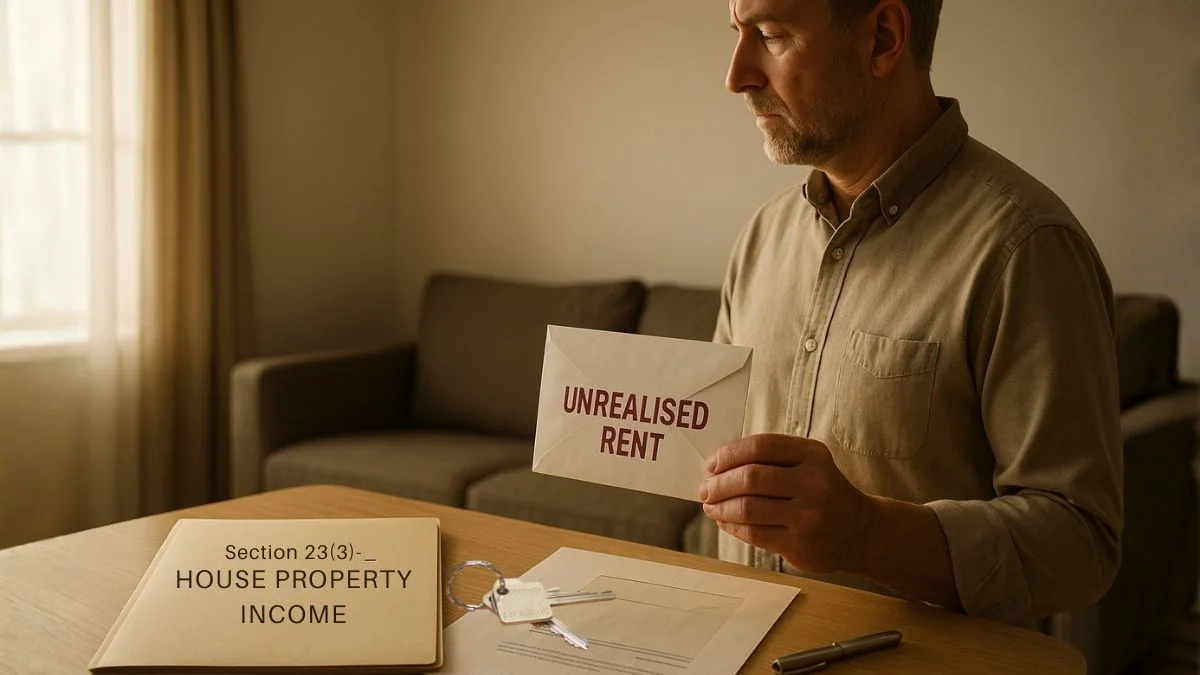
House property taxation is one of those topics that looks simple from the outside but becomes layered the moment you move beyond basic self-occupation. Most people know that a self-occupied house has a nil annual value, so no notional rent is taxed. But what many don’t realise is that this “nil value” benefit comes with conditions. And when those conditions break, the taxation rules change as well.
That’s where Section 23(3) steps in.
In simple words:
Section 23(3) specifies the conditions under which a self-occupied house property will not have a ‘nil’ annual value. It outlines what happens when the property is not fully self-occupied or when the owner earns (or enjoys) any benefit from it.
What Does Section 23(3) Really Say?
Section 23(3) says that the nil annual value benefit under Section 23(2) does not apply if:
- The house or part of the house is let out during the whole or any part of the previous year
- Any other benefit is derived from the house by the owner
In these situations, the annual value must be computed using standard valuation rules, not treated as nil.
In simple language, If you earn anything from the property — rent, benefit, advantage — you cannot treat it as purely self-occupied.
Also Read: Tax on Deemed Rent for Unsold Flats and Its Two-Year Relief
Why This Rule Exists
Self-occupation benefits are meant for genuine residential use only.
But homeowners sometimes:
- Rent out a portion while living in the rest
- Claim to be living there but actually let family stay rent-free
- Receive a benefit (like company-paid accommodation)
- Use the home for a purpose that is more than personal use
Section 23(3) ensures fairness and prevents misuse.
It outlines exceptions to the self-occupied belongings rule, giving the law a clear boundary between real self-occupation & partial commercial use.
A Small, Real-Life Story
A friend of mine lived on the first floor of his home & rented out the ground floor to a student.
He proudly told me at the end of the year,
“My house is self-occupied, so no tax on house property income!”
But the moment he filed his return, his CA smiled gently & said,
“You live upstairs, but downstairs is let out. The property isn’t 100% self-occupied.”
That’s when Section 23(3) entered the conversation — and suddenly everything made sense.
When Annual Value Cannot Be Nil
Let’s understand the two situations in detail.
1. When the House or Part of the House Is Let Out
Even renting out a single room, floor, or portion means:
- That part becomes let-out property
- Annual value must be computed based on reasonable rent
- Only the portion you actually occupy can be considered self-occupied
- Mixed-use rules apply
This prevents underreporting or treating profitable portions as tax-free.
2. When the Owner Derives Any Other Benefit from the Property
This is where people often get confused. “Benefit” doesn’t always mean money.
It can include:
- Letting a company use the house in exchange for perks
- Allowing relatives to use the home in return for services"
- Enjoying non-monetary compensation
- Any indirect gain linked to the property
If there is any benefit, the annual value cannot be treated as nil.
Also Read: No Rent Received? Still Taxable. Blame Section 23(1)(a)
How Annual Value Is Calculated When Section 23(3) Applies
Once the property loses its self-occupied status (fully or partially), the annual value is determined based on:
- Expected rent
- Municipal valuation
- Fair rent
- Standard rent (if applicable)
- The higher of the above, subject to rent control regulations
In simple terms, the law tries to find what the property should earn if rented fairly.
What Happens in Mixed-Use Properties?
This is extremely common today.
- People living upstairs & renting out the ground floor
- Owners living in one bedroom and renting the rest to students
- Families living in one half of the house and using the other as a home office or hostel
Here’s what the law says:
- The self-occupied portion gets nil annual value
- The let-out portion must be valued normally
- Deductions like 30% standard deduction & interest apply proportionately
Section 23(3) ensures clarity here.
Why Section 23(3) Matters So Much
Because it protects both:
✔ Taxpayers (ensuring clear rules)
✔ The system (preventing misuse of self-occupation claims)
This sub-section prevents confusion & ensures that homeowners pay tax fairly when they earn benefits — but also gives full relief when the house is genuinely used only for living.
Also Read: How the Tax Department Decides Your Home’s ‘Annual Value’
Common Misconceptions About Section 23(3)
Let’s clear a few misunderstandings:
Myth 1: Even if I rent for one month, NIL value continues
- No — even part-year letting removes the self-occupied status.
Myth 2: If I don’t take rent, it is self-occupied
- Not always. “Benefit” can include non-monetary gains.
Myth 3: Only entire houses count
- Even renting out a single room triggers Section 23(3).
Myth 4: Family living there means it’s still self-occupied
- If you derive a benefit, the exemption may not apply.
Key Takeaways About Section 23(3)
- Section 23(3) specifies conditions where self-occupation does not result in nil annual value
- It applies when the house (or part) is let out
- It also applies when any benefit is derived from the house"
- It outlines exceptions to the basic self-occupied belongings rule
- Even partial letting out affects annual value
- Mixed-use properties must be split proportionately
Also Read: Understanding Annual Value of Self-Occupied House Property
Conclusion
Section 23(3) may look like a small paragraph in the law, but it plays a crucial role in defining when a house is truly self-occupied. It brings clarity, fairness, and consistency to house property taxation. Whether you rent out a portion, earn a benefit, or use your home partly for another purpose, understanding this provision helps you stay compliant — and avoid unpleasant surprises at tax time.
If you ever feel confused about house property taxation, annual value rules, or mixed-use property treatment, the experts at CallMyCA.com are always ready to help with clarity & genuine support.