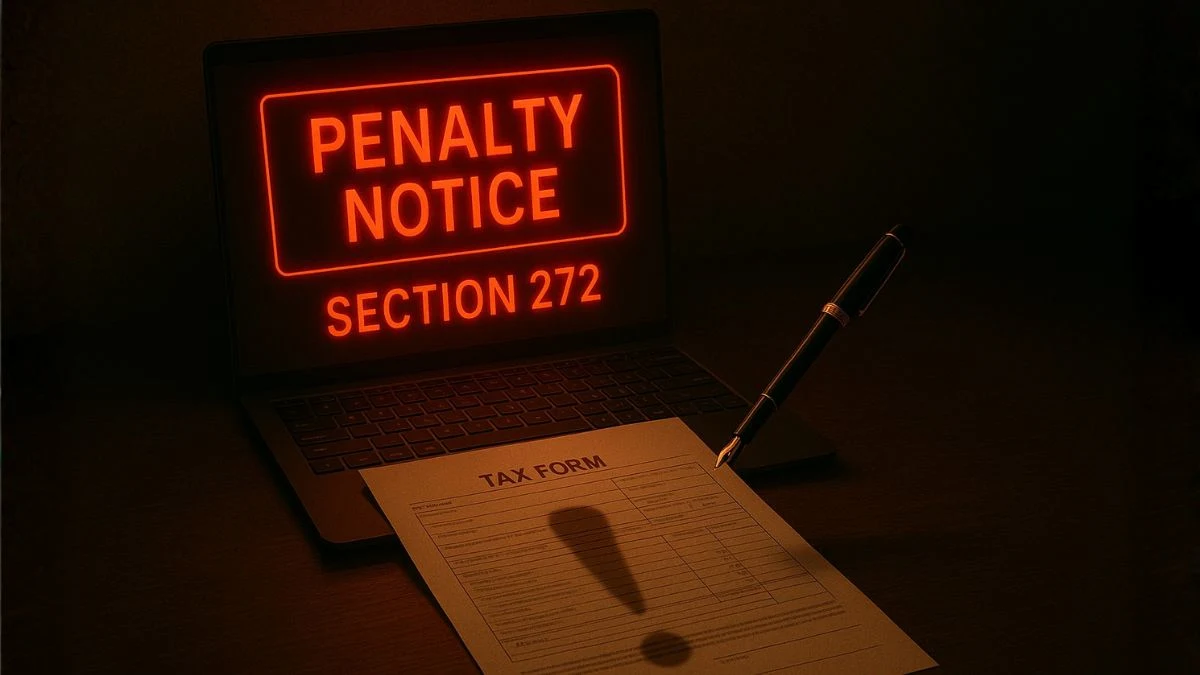
There’s a strange kind of silence around penalty provisions in tax laws. Nobody talks about them, yet when one notice lands unexpectedly in your inbox, it can shake you up for days. I’ve seen small business owners panic just because they missed sending a simple notice or didn’t respond to a department query on time. Section 272 is one such rule — quiet, unnoticed, but powerful.
If you run a business or practice a profession, deadlines, notices, and compliance routines become part of life. But it’s easy to slip. Maybe you were shifting your shop, or your accountant changed, or you genuinely forgot. The Income Tax Act understands these things, but it also expects responsibility. That’s where Section 272 comes in. This provision imposes a penalty for failure to give notice of the discontinuance of a business or profession & also covers situations where taxpayers don’t cooperate during proceedings.
You may have seen references like Section 272A penalty for failure to answer questions or furnish information/returns/statements. All these fit into a broader framework where Section-272 empowers the Joint Commissioner to issue directions & levy penalties when compliance is ignored.
What Is Section 272 of the Income Tax Act?
Section 272 primarily deals with penalties for specific kinds of non-compliance. The most common one is:
- Failing to give notice of the discontinuance of a business or profession.
Imagine shutting down your shop, or pausing your freelancing work permanently, but forgetting to inform the tax department. For the department, your business still “exists” on paper unless informed. This creates confusion, wrong assessments, and compliance issues.
That’s why the law imposes a penalty."
How Much Penalty?
The penalty may result in a penalty of at least 10% of the tax payable on the income of the previous year.
This isn’t a small amount, especially for small businesses — which is why understanding this section is so important.
Also Read: Section 272A(1)(d): The Overlooked Rule That Could Cost You ₹10,000 per Day
What About Section 272A?
When people search for Section 272, they often land on Section 272A, because both sections deal with penalties.
Here’s how they differ:
Section 272 — Non-disclosure of discontinuance
Failing to inform the department that your business or profession has been discontinued.
Section 272A — Failure to cooperate
This includes situations like:
- Not answering questions during an inquiry
- Not appearing when required
- Not furnishing returns, information, or statements
- Ignoring specific directions issued
So when you see phrases like Section 272A penalty for failure to answer questions or furnish information/returns/statements, it refers to this part of the Act.
Both these sections ensure accountability and transparency — not to scare taxpayers, but to keep the system functional.
Section-272 Empowers the Joint Commissioner
What does this mean in real life?
The law states that Section-272 empowers the Joint Commissioner to issue directions & impose penalties under certain circumstances.
In simple terms:
- The Joint Commissioner can ask for information.
- They can direct you to appear or submit records.
- If you don’t comply, they can levy a penalty.
I’ve personally seen many cases where the taxpayer wasn’t intentionally avoiding compliance. Sometimes they didn’t understand the notice. Sometimes they missed the deadline because they thought it wasn’t urgent.
But ignorance rarely saves anyone from penalty.
Why These Penalties Exist
At first glance, penalty provisions feel harsh. But they’re based on a simple idea:
the tax administration needs accurate & timely information to function smoothly.
- If someone shuts down their business but doesn’t inform the department, assessments become inaccurate.
- If someone refuses to answer questions or submit records, cases can’t move forward.
So the purpose isn’t punishment — it’s to keep the system working.
Also Read: Missed a Simple Compliance Step? Section 272(1)(d) Imposes Instant Penalty.
Real-Life Situations Where Section 272 May Apply
1. Closing a Business Without Notice
- A shopkeeper retires and shuts down his textile shop. He forgets to file the “discontinuance” notice. Months later, he receives a penalty notice under Section 272.
2. Not Responding to an Income Tax Notice
- A freelance designer receives an email asking for additional documents but ignores it thinking it’s “not important.” This triggers Section 272A.
3. Missing Audit or Statement Submission
- Some businesses don’t submit required statements on time — sometimes due to staff turnover. Penalties may apply here too.
4. Not Appearing for Inquiry
- The officer calls the taxpayer for a hearing. They don’t appear. Again, Section 272A applies.
These aren’t fictional stories — these happen every year, especially with smaller businesses.
How to Avoid Penalties Under Section 272
Here are practices that actually help:
- Inform the department when you discontinue your business or profession.
- Respond promptly to notices — even if it’s just to request more time.
- Keep your email & mobile number updated on the portal."
- Use a professional CA’s help if you don’t understand what a notice means.
- Maintain a simple compliance calendar with due dates.
These small steps save you from big penalties.
Quick Checklist
Before ignoring or delaying any tax communication, ask yourself:
- Is this asking for documents or information?
- Is this a notice about non-compliance?
- Is the Joint Commissioner issuing directions?
- Will ignoring this cause a penalty of at least 10% of the tax?
If yes — don’t delay.
Also Read: The Penalty Rule for Wrong or Missing PAN
Conclusion
Section 272 might not be the most talked-about provision, but it’s one of those rules that silently protects the structure of tax compliance. Whether it’s informing the department about shutting down your business, or cooperating during an inquiry, your responsiveness matters. And honestly, once you understand what the law expects, avoiding penalties becomes surprisingly simple. A little attention today saves you from unnecessary fines tomorrow.
If you're ever confused about notices, discontinuance, or penalty provisions, the experts at CallMyCA.com can guide you with clarity & care — so you never face penalties just because of missed information.