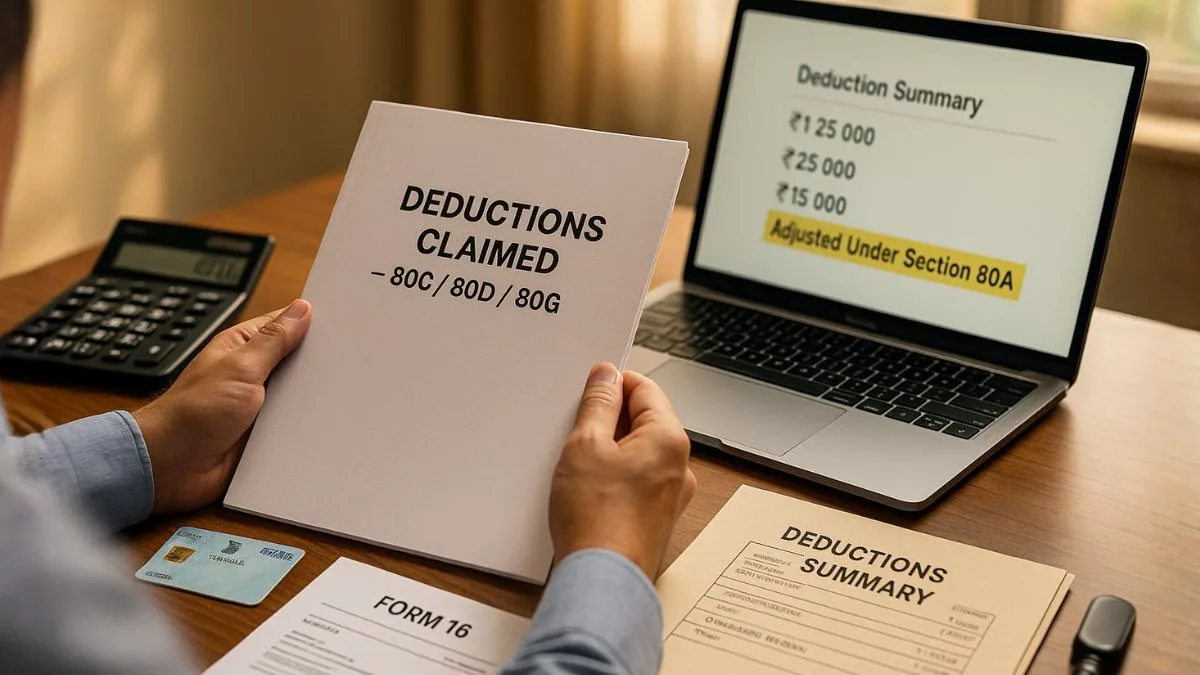
Section 80A might look like a short definition at first glance, but it holds the entire structure of Chapter VI-A deductions together. In simple words, this section provides the overarching principles and conditions that govern the claiming of deductions under Sections 80C to 80U. So, whether you are claiming an 80C deduction for ELSS, an 80D deduction for health insurance, an 80G donation deduction, or any other benefit — Section 80A silently sits behind the scenes making sure everything is computed fairly & legally.
It also ensures that taxpayers cannot claim more than the permitted limit, that deductions don’t exceed income, and that internal adjustments between business units don’t artificially inflate claims. In short, Section 80A is the backbone that keeps the entire deduction system clean, balanced, and transparent.
Why Section 80A Exists – A Simple Human Explanation
Before Section 80A was introduced, the tax law had several deduction-related loopholes. Businesses with multiple units often inflated profits in one unit & transferred losses to another, especially when certain units enjoyed tax benefits under Chapter VI-A. Individuals too could misuse deductions by over-claiming beyond what the law intended."
To fix all these issues, Section 80A lays down the rules for computing the total income of an individual or entity in a clean & standardized way. It ensures that deductions are genuinely earned and not created artificially through clever bookkeeping. This safeguards the tax system while still giving taxpayers the full benefit of deductions they rightfully qualify for.
Section 80A and Internal Transactions Between Units
One of the most important parts of Section 80A concerns internal transactions between various units or undertakings of the same taxpayer. When a business has multiple units, it may transfer goods, services, or even profits between them. This can be perfectly legal if done at fair market value. But the Income Tax Act must ensure that such transfers do not artificially boost deductions or reduce taxable income.
That’s why Section 80A insists that internal transactions should be valued on reasonable, market-based principles. It prevents manipulation while still allowing genuine, everyday business operations to continue normally.
Section 80A and Internal Transactions With More Than One Undertaking
Things get even more interesting when a business has several units, especially if some units are eligible for special deductions (for example, Section 80-IA for infrastructure undertakings, Section 80JJAA for employment-based deductions, etc.). Section 80A makes it clear that taxpayers cannot play with the numbers by generating fake profits in one unit & pushing losses somewhere else.
By regulating internal transactions with more than one undertaking or unit, the law ensures that each unit’s deduction is based on real income, not artificial adjustments. Without this safeguard, the entire system of tax incentives would collapse.
Also Read: Tax Deductions for Infrastructure and Power Sector
How Section 80A Controls Excessive Claims
Section 80A(2) is one of its most significant parts. It states that the total amount of deductions claimed under Chapter VI-A cannot exceed the gross total income. This directly stops taxpayers from going into negative taxable income using only deductions. The law wants to encourage savings, investments, and social contributions — but not to the extent that deductions reduce tax liability beyond income itself."
This limit keeps the tax system fair & predictable. And it makes tax planning simpler because taxpayers can calculate exactly how much deduction they are entitled to.
How Section 80A Connects With Scientific Research Deductions
Even though scientific research deductions fall outside Chapter VI-A (they come under Section 35), Section 80A still plays an indirect role. Many businesses engage in research & development and take advantage of deductions such as:
- deduction of expenses relating to scientific research
- deduction of expenses incurred on scientific research and development activities
- deduction for expenditure of a capital nature on scientific research
- provision that allows taxpayers to claim deductions for expenses incurred in scientific research & development
While these are not Chapter VI-A deductions, they affect the computation of gross total income — which then influences how Section 80A limits apply. A business claiming large R&D deductions must still compute income carefully to comply with Section 80A restrictions on Chapter VI-A deductions.
Other Sections That Interact With Section 80A
- Sukanya Samriddhi Yojana Income Tax Section
Contributions under SSY fall under Section 80C, and Section 80A ensures these claims stay within legal limits.
- Section 86 of Income Tax Act
When incomes from AOP or BOI are involved, Section 80A ensures deductions do not create artificial tax benefits.
- Section 10(46A)
If income is exempt under Section 10(46A), then deductions cannot be double-counted alongside exclusions — Section 80A ensures this balance.
- Section 15H
Senior citizens who file Form 15H to avoid TDS must still follow deduction limits under Section 80A.
- Person Definition in Income Tax Section
The definition of “person” determines who can claim deductions under Chapter VI-A in the first place — individuals, HUFs, companies, firms, LLPs, and more. Section 80A applies to all of these categories uniformly.
Also Read: Deductions for Industrial Undertakings
A Real-Life Example That Makes Section 80A Easy
Imagine a manufacturing company with three units:
• Unit A – profitable & eligible for deduction under Section 80-IA
• Unit B – new and incurring losses
• Unit C – normal unit with moderate profit
Without Section 80A, the company might transfer expenses from Unit A to Unit C to inflate Unit A’s profit artificially, or it might increase internal transfer pricing to generate more income in Unit A to claim higher deductions.
But because of Section 80A’s rules on internal transactions, all profits must reflect fair market value. Also, deductions under Chapter VI-A cannot exceed gross total income. This prevents misuse and ensures only legitimate deductions are claimed.
Section 80A Helps Individuals Too, Not Just Businesses
When a taxpayer claims deductions like:
• 80C (investments)"
• 80D (health insurance)
• 80G (donations)
• 80TTA / 80TTB (interest income)
Section 80A makes sure these deductions do not cross the allowed limit & that the computation of income is correct. This ensures fairness and consistency for all taxpayers.
Why Section 80A Matters in Modern Tax Planning
In today’s world, people have several income sources — salary, business, rent, interest, capital gains, partnerships, and even digital income. Similarly, businesses operate complex structures with multiple units, branches, and operations. Section 80A brings all of this under one umbrella by providing uniform principles for deduction claims.
With proper understanding, Section 80A becomes a powerful tool in tax planning, helping taxpayers claim the full benefit they are entitled to without stepping outside the boundaries of the law.
Also Read: Claim Rent Deduction Even If You Do Not Get HRA
Final Thoughts
Section 80A might not be as famous as 80C or 80G, but it is the section that ensures the entire deduction ecosystem works smoothly. It provides the conditions for claiming deductions under Chapter VI-A, regulates internal transactions between units, and sets limits so that total deductions do not exceed gross total income. When combined with related provisions like scientific research deductions, Section 10(46A), Section 86, the SSY tax section, & Form 15H rules, it becomes essential for every taxpayer who wants to optimize their tax liability legally and smartly.
Want to maximise your deductions under Section 80A without mistakes? Get expert help at Callmyca.com — your CA is just one click away!