Section 177 of the Companies Act, 2013: Why Every Serious Company Needs an Audit Committee
Most people think corporate compliance is about forms, filings, and deadlines.
But the truth is—
The real strength of a company is tested internally, not on the MCA portal.
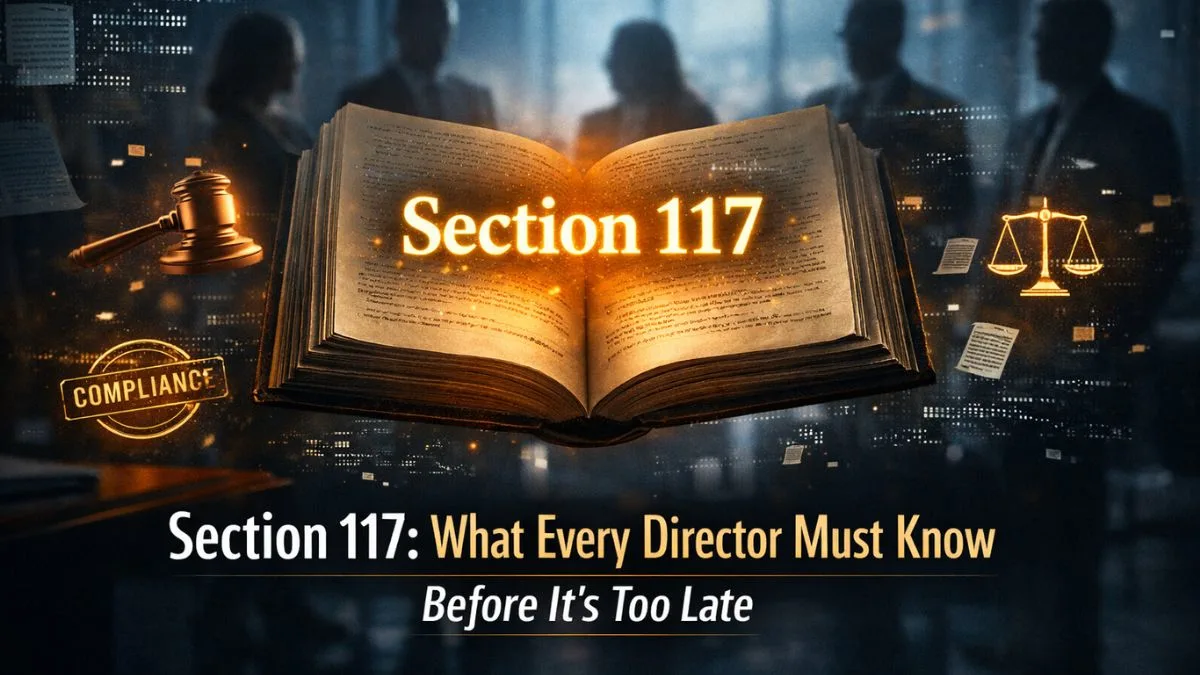
That’s exactly where Section 177 of the Companies Act, 2013, comes in.
This section is not about penalties.
It’s not about paperwork.
It’s about who keeps the company honest from the inside.
If Section 447 is what punishes fraud after it happens,
Section 177 is what tries to stop fraud before it even starts.
What Is Section 177—Without Legal Jargon
In very simple words, Section 177 requires certain companies to:
- Create an Audit Committee
- Give it real authority
- Set up a Vigil Mechanism (Whistleblower Policy)
- Allow uncomfortable questions to be asked internally
Think of Section 177 as the law saying:
“Management cannot be the only judge of its own actions.”
Someone independent must watch over:
- Financial reporting
- Auditor performance
- Related party dealings
- Internal controls
- Ethical complaints
That “someone” is the Audit Committee.
Why Was Section 177 Even Needed?
Because history showed us something uncomfortable.
Most corporate failures didn’t happen because:
- Auditors didn’t know
- Employees didn’t notice
- Numbers suddenly went wrong
They happened because:
- Nobody had the power to question
- People were afraid to speak up
- Oversight existed only on paper
Section 177 was introduced to fix this exact gap.
It strengthens internal democracy inside a company.
Does Section 177 Apply to Every Company?
No—and that’s important.
Section 177 applies mainly to:
- All listed companies
- Certain prescribed public companies (based on size, borrowings, turnover)
Private limited companies are generally not covered unless specifically notified.
The idea is simple:
The larger the public impact, the stronger the internal checks must be.
The Audit Committee: Not a Rubber Stamp
Let’s be honest.
In many companies, committees exist only because the law demands them.
Meetings happen. Minutes are signed. Nobody challenges anything.
Section 177 tries to break that habit.
What the Law Requires
An Audit Committee must:
- Have at least 3 directors
- Be dominated by independent directors
- Be chaired by an independent director
- Include members who actually understand finance
This is deliberate.
The law wants people who can read between the lines, not just sign papers.
Why Audit Committee Matters More Than People Think
When something goes wrong in a company, investigators always ask:
“What did the Audit Committee do?”
Because that committee is supposed to:
- Question management
- Challenge assumptions
- Ask “why” when something feels off
A strong audit committee can prevent:
- Accounting manipulation
- Related party misuse
- Auditor compromise
- Governance collapse
A weak one quietly allows all of it.
Real Powers, Not Decorative Authority
Section 177 does not create a powerless committee.
The Audit Committee can:
- Demand information from management
- Call auditors directly
- Seek external professional advice
- Investigate any matter within its scope
Management cannot legally brush them aside.
That’s a big shift in the power balance.
What the Audit Committee Actually Reviews
This is where Section 177 becomes very practical.
1. Financial Statements
Not just whether numbers “match,” but:
- Are assumptions reasonable?
- Are estimates aggressive?
- Are adjustments justified?
This is about quality of reporting, not just compliance.
2. Auditors—Yes, Auditors Are Reviewed Too
Auditors are not unquestionable.
The Audit Committee looks at:
- Auditor independence
- Scope of audit
- Quality of work
- Red flags raised (and ignored)
Auditors report to the committee, not to management.
That’s intentional.
3. Related Party Transactions (The Danger Zone)
This is where most governance issues hide.
Loans to group companies.
Services from promoter entities.
Transactions that “look normal” but aren’t.
Section 177 ensures:
- Such transactions are reviewed independently
- They are not prejudicial to the company
- Promoters don’t quietly benefit at company cost
4. Internal Controls & Risk
The committee also looks at:
- Weak internal systems
- Compliance gaps
- Risk exposure
Not after damage happens—but before.
Vigil Mechanism: The Most Human Part of Section 177
This is the heart of the section.
Section 177 requires companies to set up a Vigil Mechanism, commonly known as a Whistleblower Policy.
Why?
Because most wrongdoing is known internally long before it becomes public.
But people stay silent because:
- They fear losing their job
- They fear harassment
- They fear retaliation
The law finally acknowledged this reality.
What a Vigil Mechanism Actually Does
It allows:
- Employees
- Directors
To report concerns like
- Fraud
- Ethical misconduct
- Accounting manipulation
- Abuse of authority
Safely. Confidentially. Without fear.
Protection Against Victimisation (Very Important)
Section 177 doesn’t just allow whistleblowing.
It protects whistleblowers.
- Their identity must be safeguarded
- Retaliation is prohibited
- Complaints must be taken seriously
This changes the power dynamics inside a company.
Audit Committee’s Role in Whistleblower Complaints
The Audit Committee:
- Oversees the entire vigil mechanism
- Reviews complaints
- Ensures fair investigation
- Prevents suppression by management
This ensures complaints don’t “disappear.”
Section 177(9) and (10)—The Legal Backbone
- Section 177(9) makes vigil mechanism mandatory
- Section 177(10) mandates protection for complainants
Together, they make ethics legally enforceable, not optional.
Section 177 and Section 188: A Powerful Combination
Section 188 regulates related party transactions.
Section 177 ensures:
- Audit Committee approval
- Independent oversight
- Transparent disclosure
Without Section 177, Section 188 would be easy to bypass.
What Happens If Section 177 Is Ignored?
This is not harmless neglect.
Consequences include:
- Regulatory penalties
- Adverse audit remarks
- SEBI scrutiny (for listed companies)
- Weak defence in fraud cases later
In many investigations, poor Section 177 compliance becomes indirect evidence of negligence.
Common Reality-Based Mistakes Companies Make
From real experience:
- Audit Committee exists only on paper
- Independent directors are sidelined
- The whistleblower policy is copied from Google
- Auditor red flags are ignored
- Meetings are rushed and superficial
These mistakes don’t show immediately—but they explode later.
From a Director’s Point of View
For independent directors, Section 177 is also protection.
If you:
- Asked the right questions
- Raised concerns
- Recorded dissent
- Followed due process
Courts take that seriously.
Silence, however, is dangerous.
Section 177 Is About Culture, Not Compliance
This is the most important thing to understand.
Section 177 does not exist to create:
- Another committee
- Another policy
- Another checklist
It exists to create a culture where:
- Questions are allowed
- Transparency is expected
- Ethics are protected
- Power is balanced
Companies that respect Section 177 usually:
- Avoid scandals
- Handle risks early
- Earn investor trust
- Survive longer
Final Thoughts on Section 177 of the Companies Act, 2013
Let’s strip it down to its essence:
- Section 177 creates internal accountability
- It mandates an Audit Committee
- It protects whistleblowers
- It strengthens corporate governance
- It prevents problems instead of reacting to them
Good companies don’t fear Section 177.
They use it.
Because strong governance is not a cost—it’s insurance.
If your company needs help setting up a meaningful audit committee, drafting a real vigil mechanism, or strengthening governance before issues arise, professional guidance matters.
For practical support in corporate compliance and governance advisory, you can explore callmyca.com—because problems caught early rarely become scandals later.