Section 234 of Income Tax Act: Complete Guide to Interest on Tax Defaults
If there is one thing the Income Tax Department never compromises on, it is time.
Time to file your return.
Time to pay your tax.
Time to pay advance tax installments.
Miss these timelines, and Section 234 of the Income Tax Act steps in quietly—not with penalties, not with notices initially, but with interest that keeps adding up month after month.
Many taxpayers realize this only when they see an unexpected interest amount added to their tax payable at the time of filing ITR. This blog will help you understand Section 234 clearly, practically, and without legal jargon.
What Is Section 234 of the Income Tax Act?
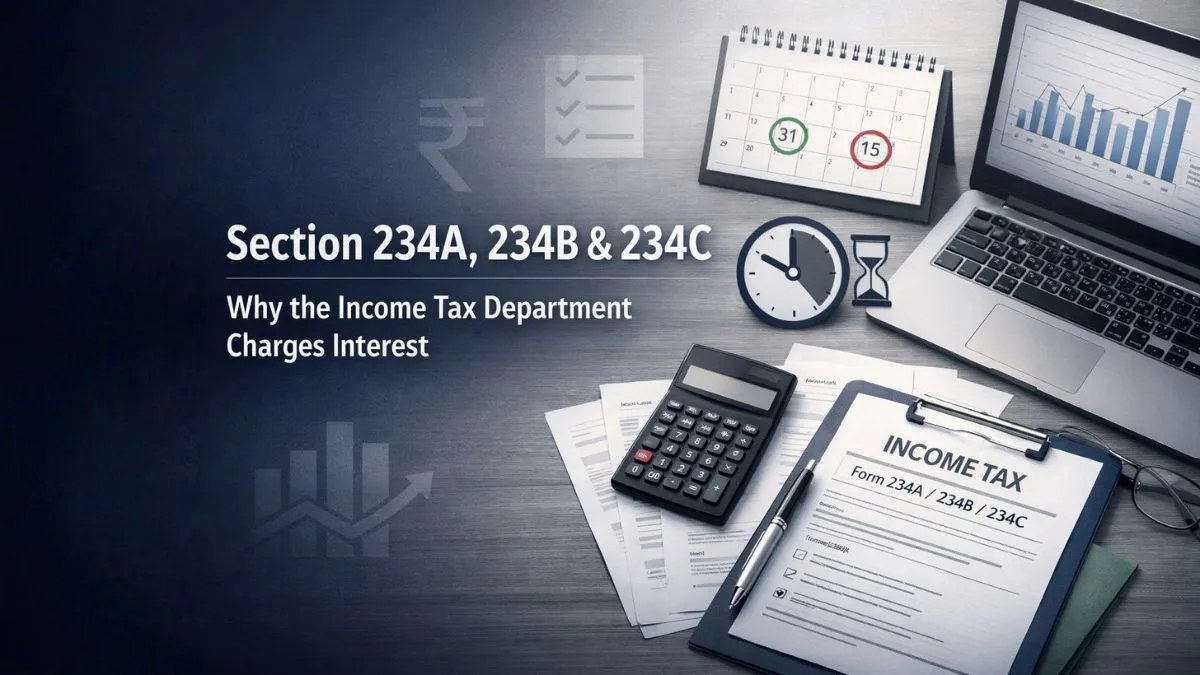
Section 234 of the Income Tax Act deals with interest on defaults by taxpayers.
In simple words, if you delay or default in meeting your income tax obligations, the law charges you interest for using the government’s money beyond the permitted time.
This section covers three types of defaults, broadly divided into:
- Late filing of income tax return
- Short payment or non-payment of advance tax
- Deferment of advance tax installments
Each default has a separate sub-section, rate, and logic.
Why Section 234 Exists
A common question people ask is
“Why interest? I am already paying tax.”
The logic is simple.
The government expects taxes to be paid on time. When you delay payment or filing, you are effectively using money that should have reached the government earlier. Section 234 ensures compensation for that delay.
It is not discretionary.
It is not negotiable.
It is automatic.
Structure of Section 234
Although people casually say section 234, it actually works through three main sub-sections:
- Section 234A – Interest for late filing of return
- Section 234B – Interest for default in payment of advance tax
- Section 234C – Interest for deferment of advance tax
Together, they form the backbone of interest provisions under income tax.
Section 234A – Interest for Late Filing of ITR
Let us start with the most common mistake.
What Does Section 234A Cover?
Section 234A provides for levy of interest on account of default in furnishing return of income.
In simple terms:
If you file your ITR after the due date, interest under this section applies.
Rate of Interest
You will be charged an interest amount of 1% per month or part of a month.
Even a delay of one day is counted as a full month.
On What Amount Is Interest Calculated?
Interest is calculated on:
- Tax payable
- Less: TDS, TCS, advance tax, reliefs
Only the net tax payable attracts interest.
Example of Section 234A
Due date of ITR: 31 July
Actual filing date: 10 October
Tax payable after TDS: ₹50,000
Delay = August, September, October = 3 months
Interest = 1% × 3 × 50,000 = ₹1,500
This interest is mandatory under Section 234A.
Section 234B – Interest for Default in Advance Tax
This is where confusion usually starts.
What Is Covered Under Section 234B?
Interest under section 234B is levied in the following two cases:
- You did not pay advance tax at all, or
- You paid advance tax, but it was less than 90% of your total tax liability
If either of these conditions is met, Section 234B applies.
Who Is Liable?
- Business owners
- Professionals
- Freelancers
- Investors with large capital gains
- Salaried individuals with high other income
Basically, anyone whose tax liability exceeds ₹10,000 in a year.
Rate of Interest
You will be charged an interest amount of 1% per month or part of a month.
Period of Interest
Interest is calculated:
- From 1st April of the assessment year
- Till the date of actual payment of tax
Example of Section 234B
Total tax liability: ₹120,000
Advance tax paid: ₹60,000 (only 50%)
Balance tax paid on 31 July
Interest period: April to July = 4 months
Interest = 1% × 4 × (120,000 – 60,000)
= 1% × 4 × 60,000
= ₹2,400
This interest comes under Section 234B of the Income Tax Act.
Section 234C – Interest for Deferment of Advance Tax
Now comes the most technical part.
What Is Section 234C?
Section 234C deals with interest for deferment of advance tax installments.
Even if you pay advance tax, but not as per the prescribed schedule, interest applies.
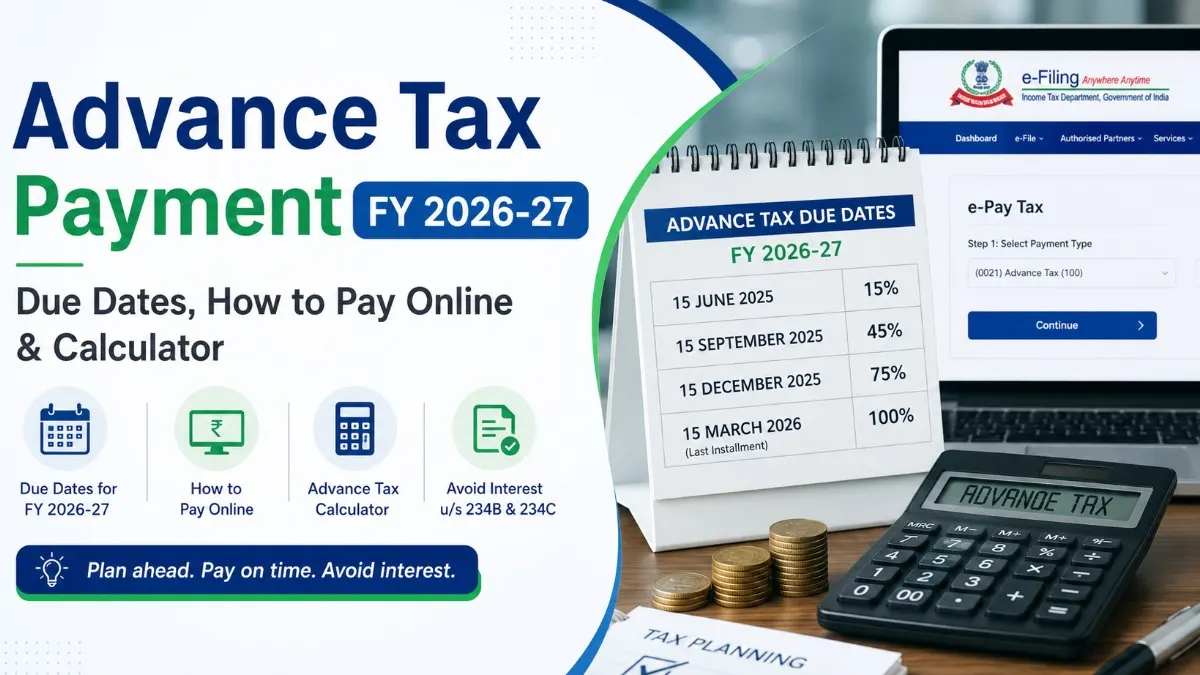
Advance Tax Due Dates
For non-corporate taxpayers:
- 15 June – 15%
- 15 September – 45%
- 15 December – 75%
- 15 March – 100%
Failing to meet these percentages triggers Section 234C.
Rate of Interest
You will be charged an interest amount of 1% per month.
Period of Interest
- 3 months for June, September, December installments
- 1 month for March installment
Example of Section 234C
Tax liability: ₹1,00,000
By 15 September, you should have paid 45% = ₹45,000
Actual paid = ₹25,000
Shortfall = ₹20,000
Interest = 1% × 3 months × 20,000
= ₹600
This is charged under Section 234C.
Combined Impact of Section 234A, 234B, and 234C
Many taxpayers are shocked when they see interest under all three sections.
Yes, that is possible.
For example:
- Late filing → Section 234A
- Insufficient advance tax → Section 234B
- Wrong advance tax timing → Section 234C
All three can apply simultaneously.
Common Misconceptions About Section 234
“Interest can be waived.”
In most cases, no. Interest under Section 234 is mandatory.
“Only businesses pay advance tax.”
Wrong. Even salaried individuals may fall under Section 234B or 234C if TDS is insufficient.
“A small delay does not matter.”
Even a one-day delay counts as one month.
How to Avoid Interest Under Section 234
From practical experience, here are simple steps:
- File your return before due date
- Estimate income realistically
- Track advance tax installments.
- Pay self-assessment tax early
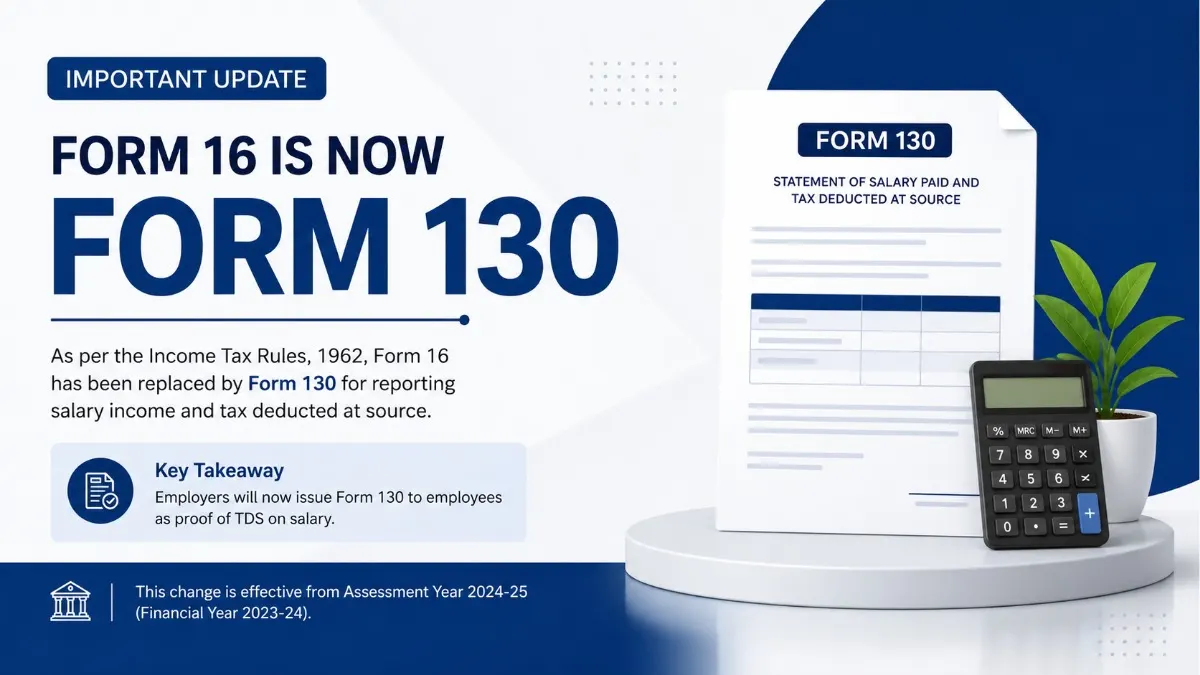
- Do not rely blindly on Form 16
A little planning saves a lot of interest.
Why Section 234 Is Often Ignored
The reason is simple.
Interest under Section 234 of the Income Tax Act is not demanded upfront. It is auto-calculated by the system during ITR filing.
By the time you notice it, it is already too late.
Final Thoughts on Section 234 of Income Tax Act
To summarize:
- Section 234 of Income Tax Act addresses interest on defaults by taxpayers
- It covers late filing, short payment, and deferment of advance tax
- You will be charged an interest amount of 1% per month
- It is automatic, mandatory, and non-negotiable
Understanding this section is not about fear. It is about awareness.
When you know how Section 234 works, you can plan better, pay smarter, and avoid unnecessary interest outgo.
If you want professional help in calculating interest, planning advance tax, or avoiding costly mistakes, platforms like callmyca.com can help you connect with the right tax experts—before interest starts quietly ticking.