Section 234A, 234B & 234C – Why the Income Tax Department Charges Interest
Interest under income tax law feels unfair to many people.
“I paid the tax later; why extra money?”
“I didn’t know advance tax applied to me.”
“My CA never warned me.”
These are things professionals hear every single day.
But the truth is simple.
The Income Tax Act does not like delays.
And that’s exactly why Sections 234A, 234B, and 234C exist.
They are not penalties.
They are interest charges for time lost by the government.
Let’s break them down calmly. No legal drama. No jargon overload.
First, One Important Thing You Must Understand
Before going section by section, understand this clearly:
- 234A → late filing of return
- 234B → not paying enough advance tax
- 234C → delay in advance tax installments
Different mistakes.
Different consequences.
Same interest rate: 1% per month.
Section 234A – Interest for Late Filing of ITR
Let’s start with the most common one.
Section 234A applies when you file your income tax return late.
That’s it.
No tricks. No complex interpretation.
When does Section 234A apply?
If:
- you had tax payable, AND
- you filed your return after the due date
Then Section 234A charges interest at 1% per month.
This interest is calculated on the outstanding tax amount.
Simple Example of Section 234A
Suppose:
- Tax payable after TDS = ₹50,000
- Due date = 31 July
- You file ITR on 30 November
Delay = 4 months
Interest:
₹50,000 × 1% × 4 = ₹2,000
This is Section 234A interest.
Even one day late = full month interest.
Important Point Most People Miss
If your tax payable is zero (after TDS and advance tax),
Section 234A will not apply, even if the return is late.
The late filing fee under 234F is different.
Don’t confuse the two.
Section 234B – Interest for Not Paying Advance Tax Properly
This section hits salaried employees, businesses, and freelancers alike.
Section 234B applies when you did not pay sufficient advance tax.
When is Section 234B triggered?
If:
- total tax liability > ₹10,000, AND
- advance tax paid is less than 90% of final tax
Then Section 234B imposes 1% monthly interest.
Interest is calculated from 1st April of the assessment year till payment.
Example of Section 234B (Very Common)
Let’s say:
- Total tax liability = ₹100,000
- Advance tax paid = ₹60,000
You should have paid at least ₹90,000.
Shortfall = ₹40,000
Interest under Section 234B:
₹40,000 × 1% per month
From 1 April till date of payment
This can quietly become a big amount.
Salaried People Think They’re Safe (They’re Not Always)
Many salaried individuals think:
“TDS is the employer’s job.”
Mostly true. But not always.
Section 234B can apply if:
- you have interest income
- capital gains
- crypto income
- foreign income
- multiple employers
TDS mismatch = advance tax shortfall.
Section 234C – Interest for Delay in Advance Tax Installments
This one confuses people the most.
Section 234C applies when you delay advance tax installments, even if total tax is eventually paid.
Yes, timing matters.
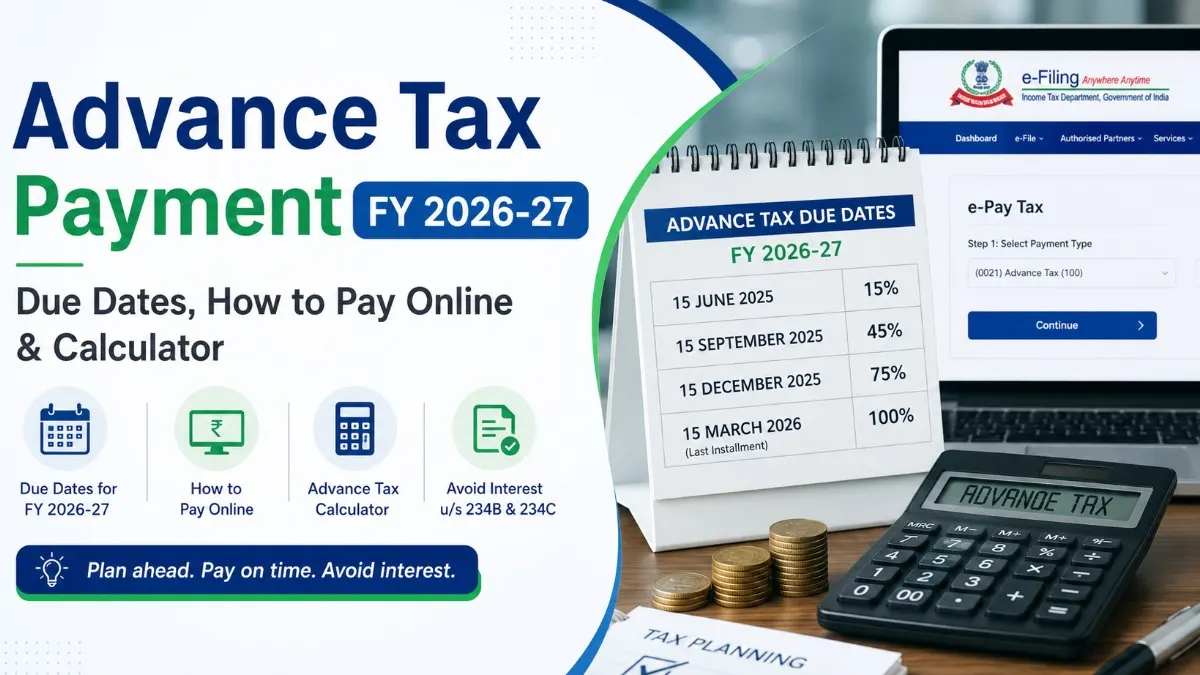
Advance Tax Installments (Non-Corporate)
Advance tax is paid in installments:
- 15% by 15 June
- 45% by 15 September
- 75% by 15 December
- 100% by 15 March
Miss any of these? → Section 234C interest applies.
Example of Section 234C
Suppose your total advance tax liability is ₹100,000.
By 15 September, you should have paid ₹45,000.
But you paid only ₹20,000.
Shortfall = ₹25,000
Interest under Section 234C:
₹25,000 × 1% × 3 months = ₹750
This applies even if you later pay everything.
Sections 234A, 234B, and 234C—Can They Apply Together?
Yes. And very often, they do.
A person can:
- file return late → 234A
- not pay enough advance tax → 234B
- delay installments → 234C
All three can apply in the same year.
That’s why tax computation suddenly looks higher than expected.
Is This Interest Mandatory?
Short answer: Mostly yes.
Interest under Sections 234A, 234B, and 234C is mandatory and automatic.
The tax portal calculates it on its own.
The assessing officer has very limited discretion.
Can CBDT Waive or Reduce Interest?
Yes, but only in specific situations.
The CBDT has the power to waive or reduce interest under certain conditions, such as:
- natural calamities
- genuine hardship
- departmental delays
- court orders
This is not routine and requires proper representation.
Why the Government Is So Strict About These Sections
Think from the government’s side.
Tax is revenue.
Delay means loss of time value of money.
These sections are not meant to punish.
They are meant to discipline timelines.
That’s why:
- rate is flat
- calculation is mechanical
- no emotional consideration
Common Mistakes That Trigger These Interests
From experience, these are the biggest mistakes:
- assuming TDS covers everything
- ignoring capital gains tax
- not paying advance tax on crypto
- filing return after due date casually
- not tracking installment deadlines
Small negligence → compound interest impact.
Practical Tip to Avoid Section 234A, 234B, 234C
Very simple habits:
- track income quarterly
- estimate tax conservatively
- pay advance tax even if unsure
- file return early, not on last day
Most interest is avoidable with planning.
Final Thoughts
Sections 234A, 234B, and 234C are silent wealth killers.
No notices.
No warnings.
Just automatic interest.
Understanding them early saves:
- money
- stress
- refund delays
Late filing, advance tax mistakes, and installment delays may look small—but the system never forgets.
🔗 Dealing With Interest Notices or Tax Mismatch?
If you’ve received an income tax notice for interest under Sections 234A, 234B, or 234C, or your tax demand looks higher than expected, one wrong reply can make things worse. Before responding, it’s safer to understand the calculation and your options properly. You can explore professional help for income tax notices, interest disputes, and return corrections at Callmyca.com.