Section 234C of the Income Tax Act: Advance Tax Interest Explained Like a Human
If you’ve ever checked your income tax calculation & wondered,
“Where did this interest come from?”
There’s a very good chance Section 234C is the reason.
This section quietly comes into play when advance tax is paid late or paid less than what was expected—installment by installment. No notices first. No warnings. Just interest added at the end.
And the frustrating part?
Most people don’t even realize when they defaulted.
So let’s slow this down and understand Section 234C the way a normal taxpayer actually experiences it—not the way a statute book explains it.
What Is Section 234C, in Simple Words?
Section 234C deals with interest for the deferment or shortfall in the payment of advance tax installments.
In plain language:
👉 If you were supposed to pay advance tax in installments
👉 And you either paid late or paid less
👉 The Income Tax Department charges interest at 1% per month
👉 On the shortfall amount, for the period of delay
No discretion. No negotiation. It’s automatic.
Why Does Section 234C Exist at All?
From the government’s point of view, tax is not meant to be paid in one lump sum at the end of the year.
The system expects you to:
- Estimate your income
- Pay tax throughout the year
- Not hold on to the money till March
Section 234C exists to ensure discipline in this system.
It’s not a penalty.
It’s a time-value-of-money charge.
Who Does Section 234C Apply To?
Section 234C applies to any taxpayer liable to pay advance tax, including:
- Salaried individuals with additional income
- Freelancers & consultants
- Business owners
- Professionals
- Investors with capital gains
- Anyone whose tax payable (after TDS) exceeds ₹10,000
If advance tax doesn’t apply to you, Section 234C doesn’t either.
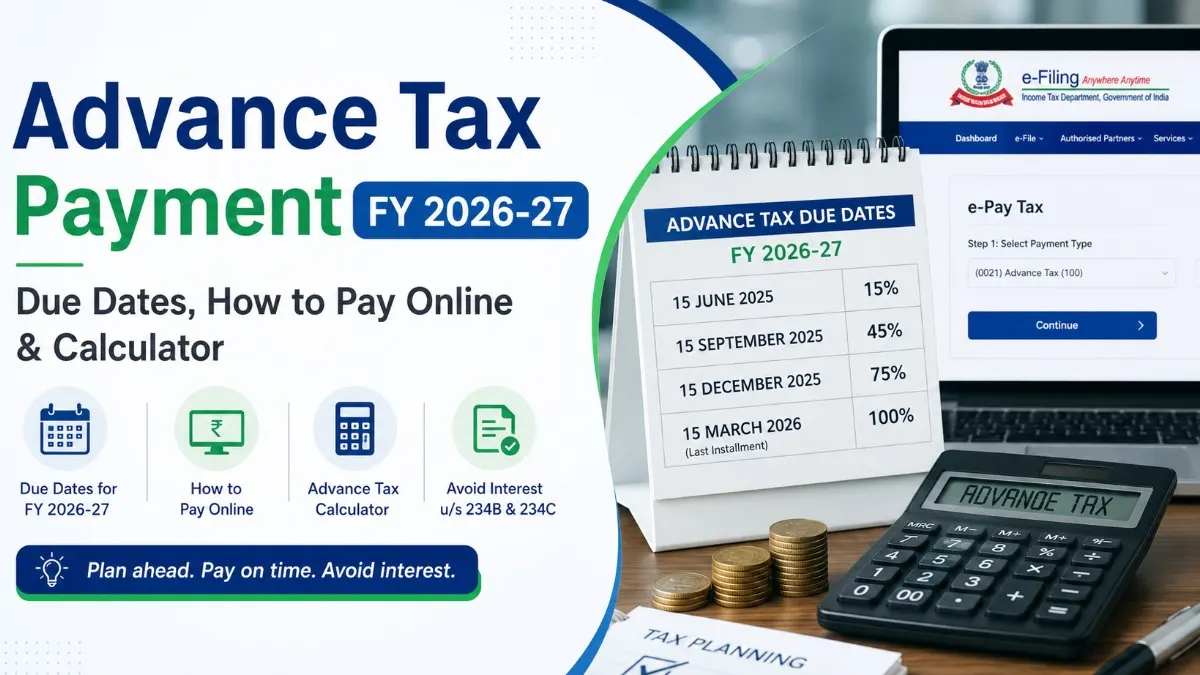
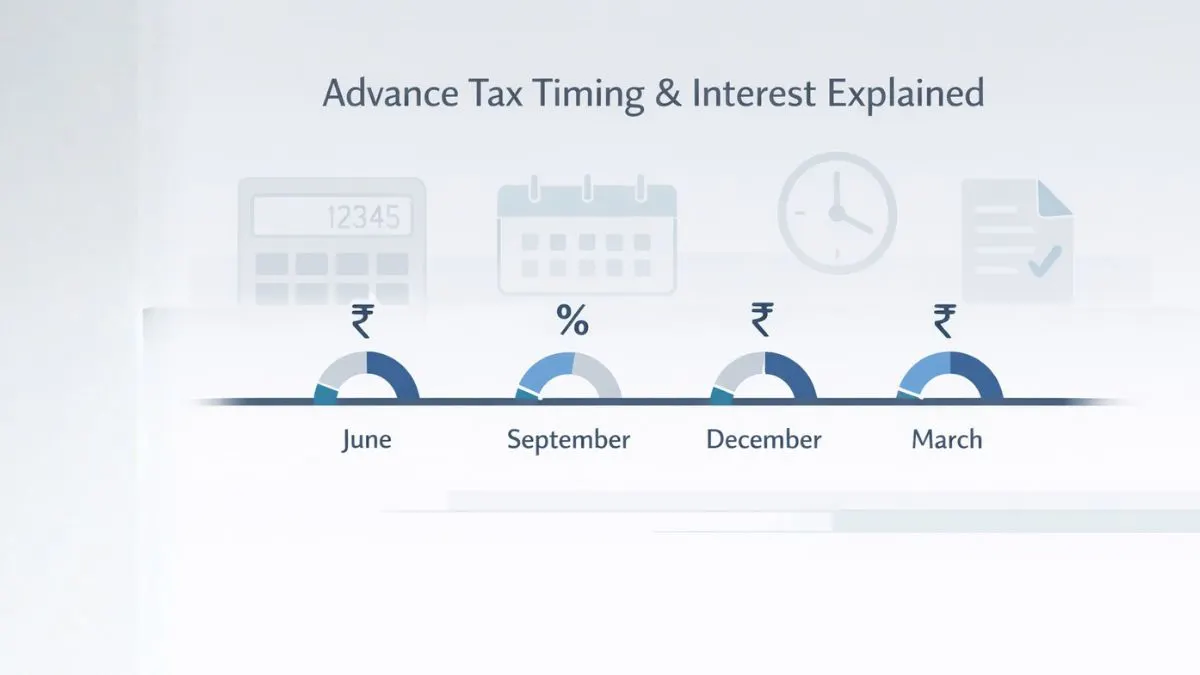
Advance Tax Due Dates (Very Important)
To understand Section 234C, you must understand the installment schedule.
For Individuals/Non-Corporates
|
Due Date |
Minimum Advance Tax to Be Paid |
|
15 June |
15% |
|
15 September |
45% |
|
15 December |
75% |
|
15 March |
100% |
If you miss any one of these milestones, Section 234C can trigger.
What Exactly Triggers Interest Under Section 234C?
Interest is charged when there is:
- Deferment (payment made late), or
- Shortfall (payment made but less than required)
Interest is calculated installment-wise, not annually.
This is where most taxpayers get caught.
Rate of Interest Under Section 234C
The rate is simple and non-negotiable:
👉 1% per month or part of a month
Even a delay of a few days counts as a full month.
Section 234C Calculation
Let’s take a realistic example.
Scenario:
- Total tax liability for the year: ₹120,000
- Required advance tax by 15 September: 45% = ₹54,000
- Tax actually paid by 15 September: ₹40,000
Shortfall:
₹54,000 – ₹40,000 = ₹14,000
Interest Period:
- For June & September installments → 3 months
Interest:
₹14,000 × 1% × 3 = ₹420
This ₹420 is added automatically under Section 234C.
Another Example: December Instalment
Required by 15 December:
75% of ₹120,000 = ₹90,000
Tax paid till 15 December:
₹80,000
Shortfall:
₹10,000
Interest Period:
3 months (Dec–Mar)
Interest:
₹10,000 × 1% × 3 = ₹300
Each installment is calculated independently.
Important: Section 234C Is Different from 234B
Many people confuse these two.
Quick Difference
|
Section |
When It Applies |
|
234C |
Installment-wise delay or shortfall |
|
234B |
Overall shortfall in advance tax by year-end |
You can be charged both, and that happens more often than people realize.
Are There Any Exceptions Under Section 234C?
Yes—and this is where some relief exists.
Interest under Section 234C is not charged for shortfall caused by:
- Capital gains
- Winning from lotteries, crossword puzzles, etc.
- Income from new business/profession started during the year
But only if advance tax on such income is paid in the remaining installments.
This exception recognizes that some incomes are unpredictable.
Presumptive Taxpayers: Special Rule
If you opt for presumptive taxation (44AD / 44ADA):
- You are allowed to pay 100% advance tax by 15 March
- No installment-wise requirement
In such cases, Section 234C usually does not apply—unless even the March payment is missed.
Why Section 234C Feels So “Silent”
Here’s the tricky part.
- No notice is issued when you miss an installment.
- No alert is sent mid-year
- Interest is calculated only at return filing time
So people often think they’ve done everything right—until the final tax computation shocks them.
Common Mistakes That Trigger Section 234C
From experience, these are the usual culprits:
- Relying only on Form 16 (ignoring other income)
- Forgetting interest, dividends, or capital gains
- Paying advance tax only in March
- Underestimating freelance or business income
- Assuming TDS covers everything
Section 234C punishes timing mistakes, not intention.
Can Section 234C Interest Be Waived?
Generally, no.
It is:
- Mandatory
- Automated
- Calculated by system
Waiver is extremely rare and only in exceptional CBDT-notified cases.
How to Avoid Section 234C Going Forward
Some practical habits help a lot:
- Estimate income conservatively
- Review income every quarter
- Pay a little extra rather than a little less
- Track installment dates like EMI due dates
- Use advance tax calculators
A small amount of planning saves unnecessary interest.
Is Section 234C a Penalty?
No.
It’s an interest, not a penalty.
That means:
- No prosecution
- No compliance violation
- Just additional cost
But cost, year after year, adds up.
Final Thoughts: Section 234C Is About Timing, Not Tax Evasion
Section 234C doesn’t accuse you of hiding income.
It simply says, “You paid late—so pay interest.”
It applies quietly, automatically, and mathematically.
Once you understand:
- Applicability and due dates
- Calculation method
- Exceptions
…it becomes predictable and avoidable.
And if you ever feel confused about advance tax planning, interest under Sections 234A, 234B, or 234C, or how to structure payments smartly, don’t guess based on WhatsApp forwards.
If you ever feel lost navigating tax provisions, installment rules, or interest calculations, the team at CallMyCA.com is always ready to guide you with real clarity and human support