Section 461—Why This One Section Creates So Much Confusion
If you’ve ever typed “section 461” into Google, you’ve probably seen a long list pop up—IPC, CrPC, punishment, bailable or not, BNSS, and even unrelated laws. At that point, most people pause and wonder:
“Which Section 461 is the real one?”
“Why are there so many versions of the same section number?”
You’re not alone. I’ve seen law students, young advocates, business owners, and even police trainees get confused here. And honestly, the confusion is understandable.
The truth is simple but important:
"Section 461" refers to different laws depending on the jurisdiction and specific statute. The most prominent meanings are found in the U.S. tax code and various Indian legal codes.
This blog will explain Section 461 in a completely human, non-technical way, just like someone experienced is calmly talking you through it. No robotic explanations. No unnecessary complexity. Just clarity.
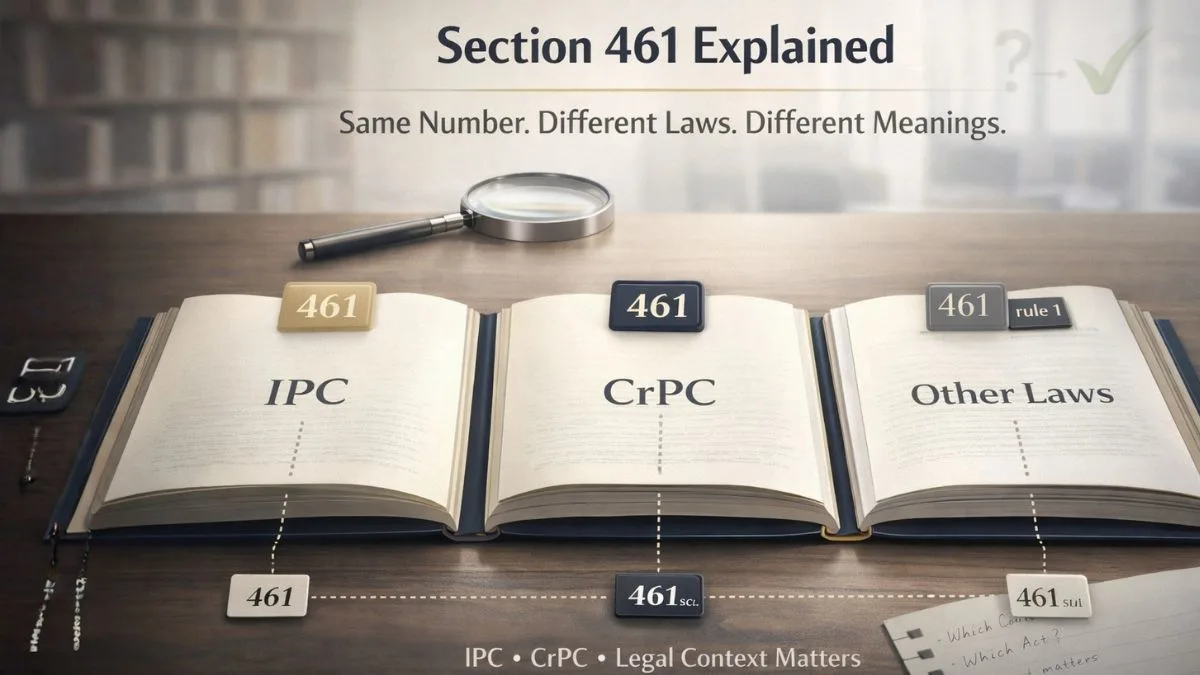
First Rule to Remember: Section Numbers Repeat
Before we even talk about Section 461 itself, here’s the most important thing you should know:
Section numbers are not unique.
The same number can exist in:
- Criminal law
- Civil law
- Municipal law
- Tax law
- Old laws and new laws
That’s why Section 461 IPC and Section 461 CrPC are completely different—even though the number is the same.
So whenever someone says “Section 461,” the first question should always be:
👉 Section 461 of which law?
Section 461 Under the Indian Penal Code (IPC)
Let’s start with the version most people search for.
What Is Section 461 IPC About?
Section 461 of the Indian Penal Code deals with dishonest or fraudulent use of false weights or measures.
In simple words:
- If someone knowingly uses incorrect weighing scales or measuring tools
- To cheat another person
- Especially during trade or business
That act becomes a criminal offense under the IPC.
This section exists to protect ordinary people from daily fraud—especially in markets and commercial transactions.
Real-Life Example of Section 461 IPC
Imagine this:
A shopkeeper uses a manipulated weighing scale so that every “1 kg” is actually only 900 grams. Customers don’t realize it, but over time, the shopkeeper makes extra money.
That is exactly the kind of behavior Section 461 IPC punishes.
Punishment Under Section 461 IPC
People often search:
- 461 ipc punishment
- 461 IPC: bailable or not
Under IPC:
- Punishment may include imprisonment, fine, or both
- The offence is generally considered minor but dishonest
- It is usually bailable, depending on facts and procedure
The intent matters a lot here. Accidental error is not the same as deliberate cheating.
Is Section 461 IPC a Serious Offense?
Legally speaking, it’s not among the most severe crimes—but socially, it matters.
Why?
Because:
- It affects trust in trade
- It harms consumers
- It damages market fairness
That’s why the law treats even “small cheating” seriously.
Section 461 Under the Code of Criminal Procedure (CrPC)
Now let’s move to the second commonly confused version.
What Is Section 461 CrPC?
Unlike IPC (which defines crimes), CrPC is about procedure—how courts function and how trials are conducted.
Section 461 CrPC talks about irregularities that make legal proceedings void.
In plain language:
If certain serious procedural mistakes are made by a court or authority, the entire proceeding becomes invalid.
That’s a big deal.
Why Section 461 CrPC Is Important
Section 461 CrPC protects people from illegal or unauthorized actions by courts or magistrates.
It ensures that:
- Courts follow proper legal boundaries
- No one is punished through improper procedure
If an act is listed under Section 461 CrPC and a magistrate commits it, the proceedings are automatically void—no debate.
Simple Example of Section 461 CrPC
Suppose:
- A magistrate who has no legal authority
- Conducts a trial or passes an order
Even if the intention was good, the law says:
❌ The process itself is invalid.
That protection comes from Section 461 CrPC.
Section 461 and BNSS (New Criminal Laws)
With the introduction of BNSS (Bharatiya Nagarik Suraksha Sanhita), many people are now searching:
- section 461 bnss
Here’s the key thing to understand:
The concept behind Section 461 CrPC continues under BNSS, though:
- Section numbers may change
- Language may be updated
- Principles remain similar
This again proves why blindly trusting section numbers without checking the law name is risky.
Section 461 Under Other Indian Laws
You might also see references like
- Section 461A of GHMC Act, 1955
- Section 461 in municipal or local laws
These have nothing to do with IPC or CrPC.
Each statute creates its own Section 461 for its own purpose.
That’s why one section number can mean:
- Criminal offence in one law
- Procedural safeguard in another
- Administrative power in a third
Why Google Searches Around Section 461 Are So Messy
Look at the typical search suggestions:
- section 461 ipc
- section 461 crpc
- 461 ipc punishment
- 461 IPC: bailable or not
- section 461 bnss
This tells us one thing clearly:
People are searching for answers without knowing which law they’re dealing with.
And that’s not their fault. Legal language isn’t designed for everyday understanding.
The Big Difference Between IPC 461 and CrPC 461
Let’s make this crystal clear.
|
IPC Section 461 |
CrPC Section 461 |
|
Defines a crime |
Defines procedural invalidity |
|
About dishonest conduct |
About court errors |
|
Focus on cheating |
Focus on legal authority |
|
Affects individuals |
Affects legal proceedings |
Same number. Completely different worlds.
Why Lawyers Always Ask “Which Act?”
This is exactly why experienced lawyers never react to just a section number.
They always ask:
- IPC or CrPC?
- Old law or new law?
- Central Act or State Act?
Because one wrong assumption can:
- Weaken a case
- Cause embarrassment
- Lead to wrong legal advice
Practical Advice for Non-Lawyers
If you’re not from a legal background, here’s how you can protect yourself from confusion:
- Always note the full name of the Act
- Don’t rely only on section numbers
- Check whether it’s criminal law or procedural law
- Understand the context, not just punishment
- Ask a professional when in doubta
Why Section 461 Is a Perfect Example of Legal Complexity
Section 461 shows us one important truth:
Law is not difficult because it is unfair.
Law is difficult because context matters.
The same number can mean:
- Consumer protection
- Court limitation
- Administrative power
And unless you read it carefully, confusion is guaranteed.
Final Thoughts: Don’t Fear Section Numbers, Understand Them
Section 461 is not dangerous.
Misunderstanding it is.
Once you understand that:
- Laws are separate systems
- Numbers repeat across statutes
- Meaning depends on the Act, not the number
Everything becomes clearer.
If you ever come across legal provisions that seem confusing—or if you’re dealing with criminal, procedural, or compliance-related issues—getting clarity early can save time, stress, and mistakes.
For reliable, practical legal guidance and clear explanations that actually make sense, you can confidently rely on callmyca.com, just like in our previous blogs—because law works best when it’s explained like a human, not a textbook.