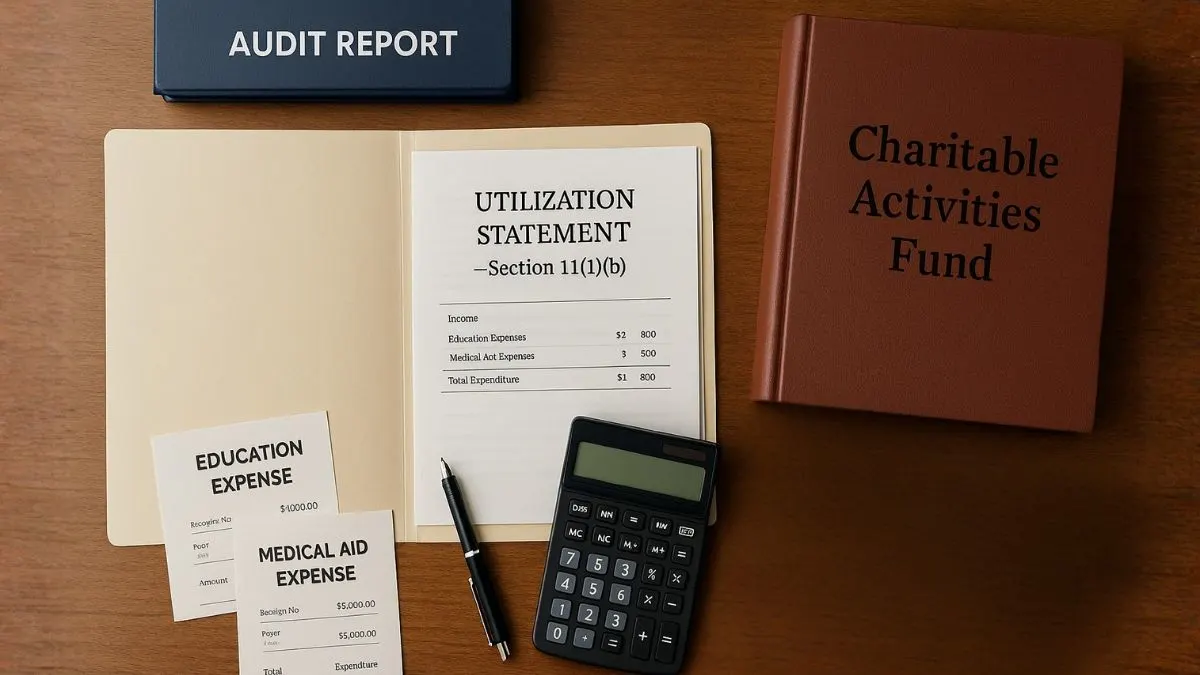
When a charitable or religious trust earns money — through rent, donations, or investments — it’s not treated the same way as business income. The government recognises that such organisations don’t operate for profit but for public good.
That’s why Section 11(1)(b) exists in the Income Tax Act.
This clause ensures that income from property held for charitable or religious purposes can remain exempt from tax as long as the organisation uses it properly. It’s one of the most vital parts of India’s tax law that encourages public service without creating loopholes for evasion.
What Section 11(1)(b) Actually Covers
Under this section, any income earned by a charitable or religious institution from its property is not taxable if it’s used for the intended purpose — education, medical relief, social welfare, or religious promotion.
It’s technically called “an exemption from tax for income derived from property under charitable trusts & institutions.”
So, if a registered trust earns rent from its building or interest from bank deposits and uses that money for community welfare or spiritual programs, that income is fully exempt — as long as the trust follows the compliance rules.
Key Condition — How Long Can Income Be Accumulated?
The law understands that every project can’t be executed within the same year. That’s why Section 11(1)(b) allows trusts to accumulate income for up to five years."
Let’s say a charitable foundation earns ₹50 lakh this year but plans to construct a hospital that will take time. It can set aside that amount, invest it safely, & spend it within the next five years.
However, income shall not be accumulated for more than five years — if it’s not used within this limit, it becomes taxable.
This keeps charitable work disciplined, ensuring that funds don’t sit idle under the shield of “future plans.”
Also Read: A Deep Dive into Charitable and Religious Income Exemptions
Example for Better Understanding
Imagine a religious trust owns property that earns ₹10 lakh annually. It uses ₹8 lakh for food distribution and keeps ₹2 lakh aside for future temple renovation. That ₹2 lakh can stay exempt for up to five years.
If not spent by then, it becomes part of taxable income in the sixth year.
This timeline ensures flexibility but also forces responsible planning — trusts can’t just pile up reserves & still enjoy full exemption.
Claiming Exemption Without a Revised Return
Sometimes a trust may forget to claim this exemption while filing its return. The good news? The courts have clarified that an additional claim is allowable even in the absence of a revised return.
This means that during assessment, if a trust provides valid documents — like financial statements and proof of application of funds — the assessing officer can still grant exemption.
It’s a fair and pragmatic interpretation, ensuring that procedural lapses don’t defeat the spirit of charity.
Legal Purpose and Spirit of the Law
The intention behind Section 11(1)(b) is not to grant blanket exemptions but to promote genuine charitable work.
The law wants to support organisations that use their assets & income for social or religious good, not for private gain.
By offering this relief, the Income Tax Act encourages philanthropy, education, healthcare, and community initiatives — but it also adds accountability by restricting how long income can remain unspent & by demanding clear documentation.
What Counts as “Property Held for Charitable or Religious Purposes”
The phrase “income from property held for charitable or religious purposes” includes not just real estate but also movable property — such as shares, bonds, or deposits — owned by the trust.
For example:
- Rent from a building used for social services.
- Interest from a bank deposit made using donations."
- Dividends from shares owned by a charitable institution.
All such income qualifies for exemption if applied within India & for approved objectives.
Also Read: Modes of Investment for Charitable & Religious Trusts
Compliance Requirements
Claiming exemption under Section 11(1)(b) isn’t automatic — trusts must meet specific conditions:
- Register under Section 12A or 12AB of the Income Tax Act.
- Apply income toward approved charitable or religious activities.
- File annual returns & maintain proper books of accounts.
- Disclose accumulated income in Form 10 & specify the project or purpose for which it’s being held.
- Ensure all investments are in approved modes under Section 11(5).
If any of these conditions are violated, the exemption can be withdrawn for that assessment year.
The Five-Year Cap — Why It’s Important
Without a time cap, trusts could claim exemption forever while keeping money idle.
By enforcing that income shall not be accumulated for more than five years, the law makes sure that funds reach the ground — building hospitals, schools, or community centers — instead of remaining locked in accounts.
This not only maintains financial discipline but also restores public faith in charitable organisations that enjoy tax benefits.
How This Section Differs from Section 11(1)(a)
While Section 11(1)(a) deals with income actually applied during the same financial year, Section 11(1)(b) focuses on income set aside for future charitable or religious purposes.
Think of it this way:
- 11(1)(a) = money spent now.
- 11(1)(b) = money saved for a purpose, to be spent later (within five years).
Together, these subsections ensure that charities can manage both short-term activities & long-term projects efficiently while staying within legal boundaries.
Judicial Precedents and Practical Application
Over the years, courts have repeatedly emphasised that tax exemptions for charities must be interpreted liberally but responsibly.
The judiciary recognises that most trusts are run by volunteers, not tax experts, and mistakes in paperwork should not lead to denial of genuine benefits.
That’s why the principle that additional claim is allowable even in the absence of revised return has become a cornerstone of fair assessment.
If the trust’s purpose & fund usage are clear, the exemption stands.
Real-World Scenario
Suppose an educational trust earns ₹30 lakh in rent & donations in FY 2024–25. It uses ₹25 lakh for running schools & plans to save ₹5 lakh for building a library. The trust declares this accumulation properly and invests it in a nationalized bank.
Five years later, it completes the library using those funds — all fully exempt under Section 11(1)(b). But if it fails to use that ₹5 lakh within the allowed period, it must pay tax on the unused portion.
This mechanism promotes steady, purposeful spending without misuse.
Also Read: How Business Undertakings Held by Charitable Trusts Are Taxed
Scientific Research and Broader Impact
Interestingly, the Income Tax Act also supports similar public-benefit goals beyond charity. It allows for deductions while computing taxes for expenses relating to scientific research & provides for a deduction of expenses incurred on scientific research and development activities, including expenditure of a capital nature on scientific research.
These provisions mirror Section 11’s intent — encouraging socially beneficial investments, whether in research, education, or religion. They reflect the government’s broader philosophy: to reduce tax burdens on activities that serve the nation.
Importance for Trustees and Auditors
For trustees, knowing how to apply Section 11(1)(b) correctly can make or break their financial health. Proper record-keeping, timely filing, & documented application of income are essential. Auditors play a key role too — verifying how much income has been accumulated, where it’s invested, and whether it’s spent within the allowed timeframe.
Transparency in these records not only ensures exemption but also strengthens donor confidence.
Final Thoughts
Section 11(1)(b) of the Income Tax Act is more than a tax relief provision — it’s a framework that balances generosity with governance. It gives charitable & religious trusts breathing room to plan long-term projects while making sure public money isn’t locked away indefinitely. The allowance that additional claim is possible even without a revised return makes it humane and realistic, protecting genuine trusts from technical disqualification. When applied properly, this section turns legal compliance into a tool for social development rather than bureaucracy.
If your organisation earns income from property held for charitable or religious purposes and wants to claim an exemption from tax for income derived from property under charitable trusts & institutions, our experts at CallMyCA.com can guide you.
We help trusts and nonprofits file returns, manage accumulation timelines, and maintain full compliance so that your resources serve society — not the tax department.