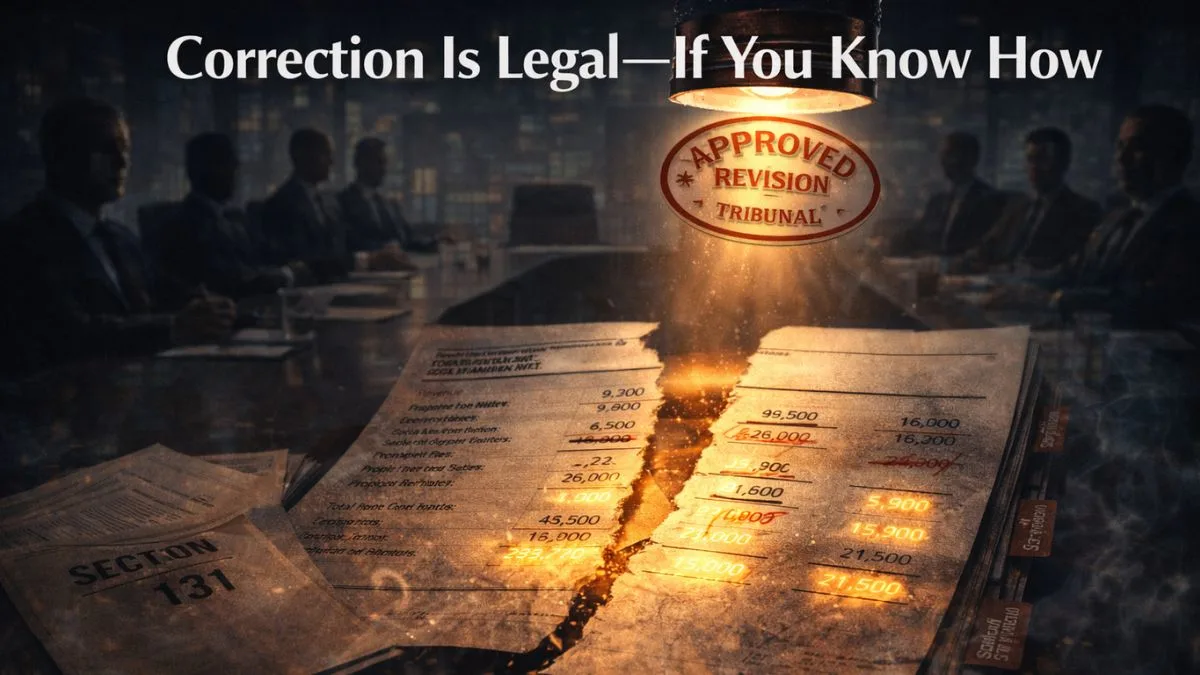
Corporate transparency is important. Like, really important. You can’t just file your accounts and hope no one notices. That’s where Section 131 of the Companies Act 2013 comes in. This one is interesting because it allows directors to revise previously filed financial statements or board reports for up to three preceding financial years. Mistakes happen. Sometimes you miss a disclosure or a number is off. Section 131 gives companies a legal way to fix that.
So what does Section 131 actually cover? Well, it lets you:
-
Revise financial statements if there were errors or omissions.
-
Update the Board’s Report, like management discussion, governance details, or related party disclosures.
-
Do all this for the past three financial years.
And yes, it’s voluntary. Directors are encouraged to act in good faith. That’s the spirit of the law.
Process to Revise Financial Statements
You can’t just change numbers on a whim. There’s a method:
-
Identify errors or non-compliance in old statements or reports.
-
Get approval from the Board of Directors — accountability matters.
-
Sometimes, apply to the NCLT for permission if required.
-
File revised statements and reports with the Ministry of Corporate Affairs.
-
Mention revisions in your next annual report so shareholders and regulators know.
This makes sure revisions are legit and transparent.
Why Section 131 Matters
Here’s the thing — mistakes in accounts happen. Section 131 lets companies correct them without facing penalties right away. It builds trust with investors. It prevents legal headaches later. And it makes sure financial statements and Board Reports comply with Sections 129 and 134.
Role of the Tribunal
The NCLT is involved in some cases. They check:
-
If revisions are genuine.
-
If directors aren’t trying to mislead anyone.
-
And then authorize the filings if all’s good.
This balances flexibility with regulatory oversight.
Practical Examples
-
Accounting errors: Misclassified expenses? Fix it with Section 131.
-
Omitted disclosures: Missed related party info in your Board Report? Can revise.
-
Policy changes: Depreciation method changed? Update your statements safely.
Benefits of Revising Statements
-
Accuracy: Correct financial data.
-
Transparency: Shareholders trust you more.
-
Proactive governance: Shows you care about compliance.
-
Legal protection: Reduces risk of penalties or disputes.
Compliance Checklist
-
Conduct internal audits for past mistakes.
-
Get Board approval before revising anything.
-
Document everything.
-
File revised statements with MCA promptly.
-
Disclose revisions in next annual report.
Consequences of Non-Compliance
-
Penalties under Sections 129 and 134.
-
Regulatory scrutiny.
-
Legal disputes.
-
Investor confidence takes a hit.
Strategic Importance
Companies that revise statements proactively:
-
Show transparency.
-
Build investor confidence.
-
Align with statutory rules.
-
Look credible for funding or partnerships.
Key Takeaways
-
Section 131 of Companies Act 2013 allows revising financial statements or Board Reports for past three years.
-
Ensures compliance with Sections 129 and 134.
-
Requires Board approval, documentation, sometimes NCLT permission.
-
Benefits: transparency, accuracy, trust, reduced legal risk.
-
Proactive use shows strong governance and ethical management.
For professional help on revising financial statements or Board Reports under Section 131, visit Callmyca.com to get expert guidance and stay compliant.