Salary income may sound straightforward: you work, you get paid, you pay tax. But when you step into the legal and compliance side, especially as a salaried individual planning tax filings, you quickly realise that salary is not taxed simply on payment. It is taxed on a principle defined in the law.
Section 15 of Income Tax Act lays this foundation. It is the starting point of the salary chapter & tells us when salary becomes taxable. Whether you are a full-time employee in a company, serving notice period, retired and receiving arrears, or switching jobs, this provision tells you how salary gets taxed in India.
What Section 15 Covers
Section 15 deals with the basis of charge for salary taxation. In simple language, it determines the timing of taxability: when does salary become taxable in your hands?
It covers three situations:
- Salary due from an employer or former employer (even if not received)
- Salary received in advance
- Salary received in arrears
So the rule is clear: salary is taxed either when it is due or when it is received, whichever happens earlier. You cannot defer taxation simply because payment is delayed.
For example, if your March salary is credited in April, it is still taxable in the previous year, because it became due in March.
This provision ensures transparency & uniformity across employers & employees.
Also Read: The Standard Deduction for Salaried Individuals
Components Falling Under Section 15
Section 15 applies to the full scope of salary. This includes:
- Basic salary
- Allowances
- Bonus and incentives
- Advance salary
- Arrears
- Leave encashment (subject to specific rules)
- Salary from former employer during notice/settlement period
And yes, sometimes taxpayers are surprised to learn that any salary due from an employer or a former employer to an assessee in the previous year is taxable even if delayed.
The rule avoids ambiguity & helps prevent tax deferral practices.
Salary vs. Employment Relationship
Salary taxation exists due to an employer–employee relationship. For someone earning as a consultant, freelancer, or gig worker, Section 15 does not apply. They fall under business or professional income, not salary income.
This is where the person definition in income tax section becomes important because categorisation depends on your relationship with the payer. Employees fall under salary rules; independent professionals do not.
Filing Salary Income – Compliance View
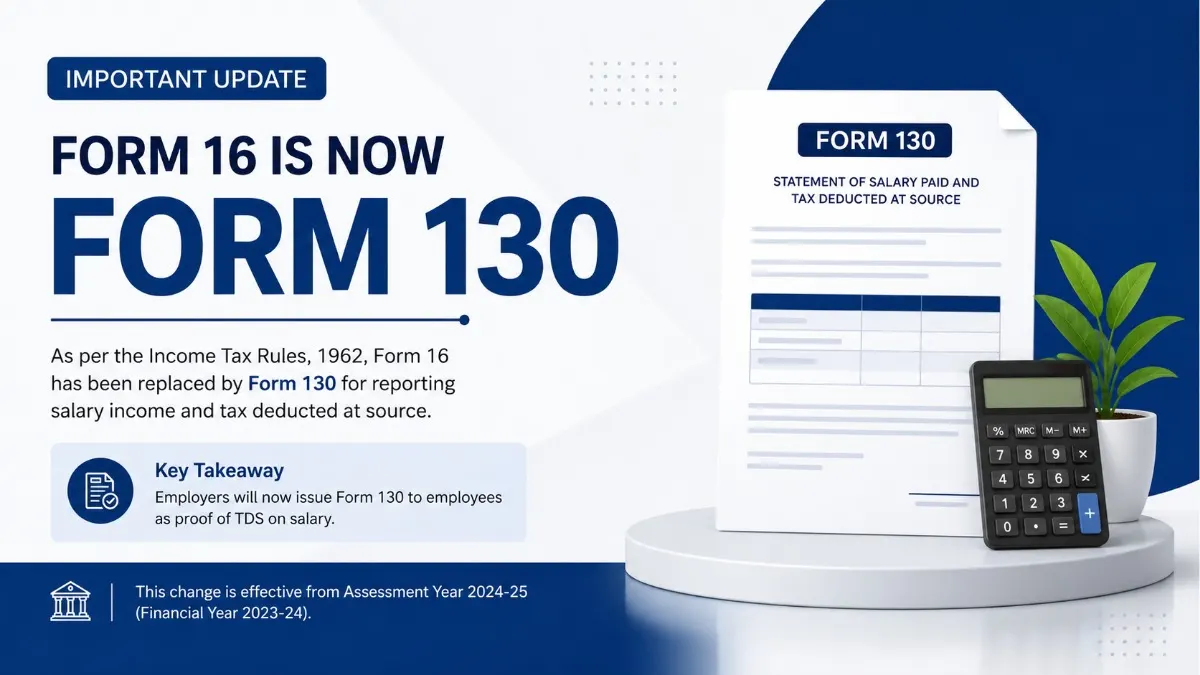
Salary earners must report income every year. Today, technology has simplified this. You can efile income tax return on your income from salary by logging into the Income Tax portal, downloading Form 26AS / AIS, and matching it with Form 16.
Filing on time is important because:
- It avoids late fees
- It enables refunds without delay
- It allows carry-forward of certain losses
- It prevents future tax notices
Employers already deduct TDS under Section 192, but your job doesn't end there. Salaried taxpayers must still file their returns unless exempt under threshold / notification rules.
Also Read: The Unsung Tax Relief for Salaried Professionals
Advance Salary & Arrears – Special Situations
Section 15 ensures that both advance & arrears of salary are covered.
- Advance salary → taxed in the year you receive it
- Arrears of salary → taxed when due, unless relieved under Section 89"
It prevents timing-based tax manipulation.
If you received arrears and it pushes you to a higher slab, Section 89 relief may help reduce the burden. Many taxpayers forget to apply it; professionals never should.
Why This Timing Rule Exists
The tax system follows fairness & certainty. If salary is taxed only when received, delays or manipulation can affect collections. If taxed only when due, people receiving advance pay may slip through without compliance.
Thus, the “due or received, whichever earlier” rule provides:
- Certainty
- Equity
- Prevents avoidance
- Predictable collection for the Government
Connection to Research & Economic Purpose
While Section 15 focuses on salary timing, the Income Tax Act also recognises salaried professionals contributing to knowledge sectors like science, medicine, and technology.
This is supported by research incentives elsewhere in law. The Income Tax Act allows for deductions while computing taxes for expenses relating to scientific research. It also provides for a deduction of expenses incurred on scientific research & development activities, including expenditure of a capital nature on scientific research, under a provision that allows taxpayers to claim deductions for expenses incurred in scientific research & development.
Though separate in application, both themes reflect a single legislative philosophy: tax fairly, support growth and innovation.
Real-Life Scenarios
Let’s make this practical. Below are situations where Section 15 applies naturally:
|
Situation |
Tax View |
|
March salary paid in April |
Taxable in March year (when due) |
|
Joining bonus received upfront |
Taxed when received |
|
Arrears received after promotion |
Taxed; Section 89 relief possible |
|
Salary from previous employer during switch |
Still salary income |
|
Notice-pay settlement |
Taxable as salary |
Most salaried individuals see at least one such scenario across their careers.
Also Read: Perquisites in Salary: What Employees Must Know
Relationship With Salary Slips & Form 16
Your salary slip reflects amounts due or credited. Form 16 summarises them for tax deduction. Section 15 ensures both documents align in principle. Every salaried person should verify:
Small discrepancies can lead to mismatch notices later. Filing returns with accurate income recognition avoids disputes.
Common Mistakes Made By Salaried Taxpayers
Despite simplicity, mistakes happen:
- Misclassifying arrears
- Ignoring previous employer salary
- Missing relief-89 calculation"
- Not reporting advance salary
- Assuming TDS filing = return filing
Even when your employer handles tax deductions, responsibility lies with you to file & report correctly.
Conclusion
Section 15 of Income Tax Act sets the base rule for salary taxation in India. It ensures that salary is taxed fairly, when due or received, and keeps the system transparent. It also protects employees from confusion during job switches, arrears, or advance salary situations. For anyone earning through employment, understanding this section is fundamental to clean tax compliance. Combined with online filing options and a clear filing trail, it gives salaried individuals clarity & control over their tax year.
If you are a salaried professional & want your ITR filed accurately — including arrears, advance pay, Form 16 adjustments, and deductions — you can connect with our expert CA team at CallMyCA.com. Your salary deserves expert-level tax clarity.