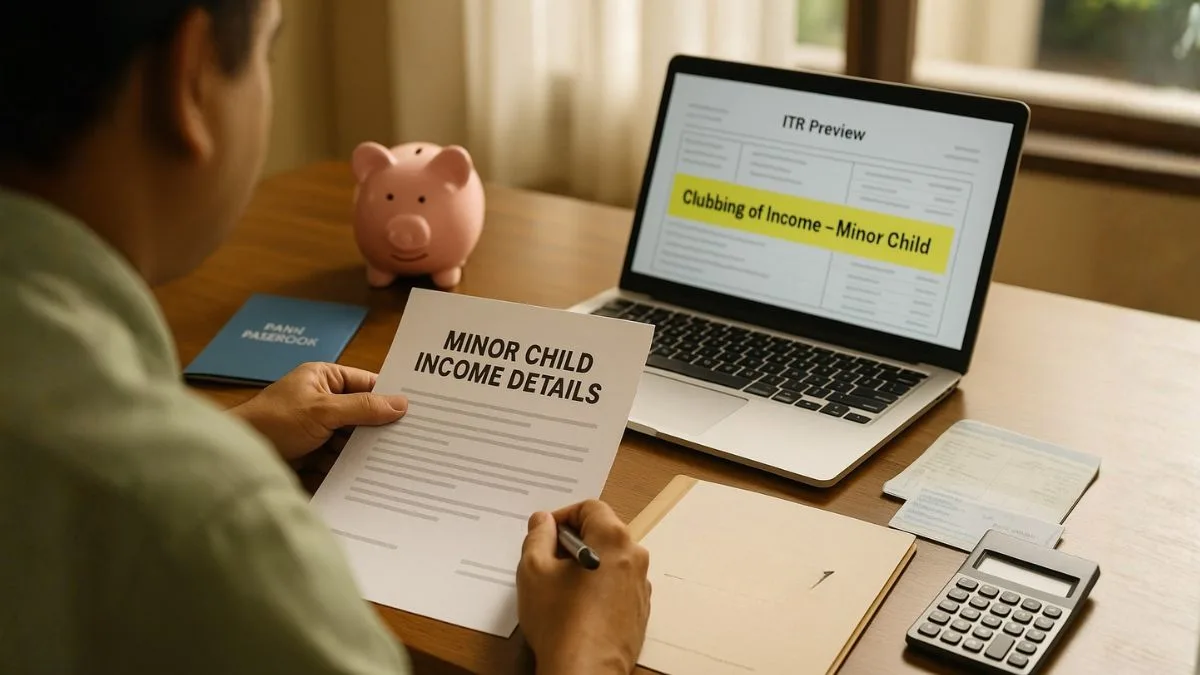
When people think about income tax, they often think only about their own income. But the law doesn’t stop there. Sometimes, the income of one person must be added to the income of another—especially within a family. Section 64(1A) is one of the clearest examples of this. It prevents individuals from taking advantage of lower tax slabs by shifting income to a minor child.
In earlier years, many families used to transfer investments, deposits, or business earnings in the name of a minor to reduce tax liability. It reduced the tax paid but was unfair to the system. To stop this, the Income Tax Act introduced a special clubbing provision so that the income of a minor child is clubbed with the income of his/her parent. This ensures fairness, transparency, & prevents misuse of tax slab benefits.
Understanding Section 64(1A) – What the Provision Actually Says
Section 64(1A) of the Income-tax Act deals with the clubbing of income of a minor child with the income of their parent.
This means:
➡️ If a minor child earns income, that income is added to the income of the parent who has the higher taxable income.
➡️ The primary purpose is to prevent tax avoidance by individuals from splitting their income to take advantage of lower tax slabs.
➡️ The law treats this clubbing as necessary because minors generally cannot independently manage or control income-producing assets.
So, the income earned by the child is clubbed in the income of the parents. And naturally, the income of the higher-earning parent is chosen so that there is no artificial attempt to place income in a lower slab.
Why Clubbing of Minor’s Income Happens – Real Intention Behind the Rule
Clubbing provisions are not punishments. They’re safeguards. They prevent individuals from reducing taxable income by shifting assets to family members. A minor child cannot be expected to understand investments, manage interest-bearing deposits, or run businesses. So if a child earns income—especially from assets transferred by parents—tax law assumes that the parent is the real beneficiary.
Clubbing rules ensure the following:
✔ The correct person pays tax
✔ Families cannot misuse age-based tax benefits
✔ Income splitting does not distort the tax system
✔ Investment manipulation is minimized
This keeps the system balanced & reduces unfair tax advantages.
Also Read: Exemption on Income from Minor Children
What Types of Income of a Minor Child Get Clubbed?
Not all income of a minor gets clubbed. Only incomes that arise due to:
- investments made by parents,
- gifted assets,
- deposits,
- interest-earning instruments,
- rental income from property owned due to transfers,
- business income in certain cases,
- or income earned without the child’s own physical activity.
In simple terms, if the income is generated passively—whether from money, property, or investments—the law clubs it with the income of the parent.
Example
A parent invests ₹5 lakh in a fixed deposit in the name of their minor.
The minor earns ₹30,000 in interest.
This income gets added to the income of the parent who earns more.
Are There Any Exceptions to Clubbing Under Section 64(1A)?
Yes. This is important because many parents misunderstand the rule. Income of a minor child is not always clubbed. Certain categories are exempt.
- Income Earned from Personal Skill, Talent, or Manual Work
If the child personally earns income using:
- talent (singing, dancing, acting),
- specialized skills (coding, sports, design),"
- manual work
then that income is not clubbed.
- Income of a Disabled Minor (Section 64(1A) Proviso)
If the minor is suffering from a disability as defined under Section 80U, then the clubbing provision does not apply.
- Income From Inherited Property (Certain Cases)
Not all inherited incomes are clubbed if they meet specific legal conditions.
These exceptions ensure fairness & recognize the child's own contribution or special circumstances.
To Whose Income Is a Minor’s Income Added?
Section 64(1A) is very clear:
➡️ The income is added to the parent whose total income is higher.
This removes manipulation.
If the clubbing was optional, taxpayers would always choose the parent with the lower taxable income.
Example
Father’s taxable income: ₹10,00,000
Mother’s taxable income: ₹7,00,000
Minor’s FD income: ₹40,000
Income is clubbed with the father, since he has the higher income.
Also Read: Section 64 of the Income Tax Act – Clubbing of Income Explained Simply
Tax Treatment After Clubbing – Does the Parent Get Any Relief?
Yes.
Parents get a special exemption under Section 10(32).
Relief Available
Parents can claim ₹1,500 exemption per child for each minor child whose income is clubbed.
This may be small, but at least a fixed relief exists.
Illustration
Minor earns ₹20,000 interest.
Taxable amount = ₹20,000 – ₹1,500 = ₹18,500
This amount is added to the parent’s income.
Why Section 64(1A) Matters for Financial Planning
Families frequently invest in the names of their children, assuming it saves tax. But Section 64(1A) makes it clear that:
- Children’s FD interest is taxable in parent’s hands
- Mutual fund gains of minors get clubbed
- Rental income from property gifted to a minor is clubbed
- Bank interest, bond interest, & dividend income get clubbed
This affects:
✔ tax planning
✔ parents’ slab rate
✔ investment decisions
✔ long-term financial strategies
Parents must plan intelligently, knowing which incomes will be clubbed & which won’t.
Also Read: The Hidden Tax Rule That Clubs Your Spouse’s Income With Yours
Common Mistakes Parents Make (And Should Avoid)
❌ Investing in child’s name thinking it reduces tax
Section 64(1A) prevents this.
❌ Ignoring clubbing while filing ITR
Non-disclosure can trigger notices.
❌ Assuming gifts to children are always tax-free
Gifting is tax-free, but income generated from gifts is taxable through clubbing.
❌ Not using Section 10(32) exemption
Many parents forget to claim the ₹1,500 benefit.
Avoiding these errors can save both money & legal trouble.
A Simple Example Explaining Section 64(1A)
Suppose parents invest ₹3 lakh in equity mutual funds in the name of their minor daughter. The fund grows and earns a long-term capital gain of ₹25,000.
This income gets clubbed with the parent who earns more."
If the mother’s income is higher, the daughter’s ₹25,000 gain is added to the mother’s taxable income.
However, if the daughter participates in a TV show & earns ₹2,00,000 through her own talent, that income is NOT clubbed.
This difference is crucial.
Impact on High-Net-Worth Individuals and Business Families
HNIs often create structures that include minor children for estate planning. Section 64(1A) prevents misuse by ensuring minors’ passive incomes do not create tax loopholes. Business families must ensure:
- correct ITR reporting
- no artificial income transfers
- proper documentation
- correct beneficiary disclosures
This keeps assessments clean & compliant.
Also Read: Minor Child Income & Tax Rules: Know How to Claim Exemption Legally
Conclusion – Section 64(1A) Ensures Fair Taxation
Section 64(1A) of the Income-tax Act ensures that families cannot reduce tax by diverting income into the names of minor children. The rule deals with the clubbing of income of a minor child with the income of their parent, adding or including the income of another person—usually the child—into the income of the parent who earns more. The income earned by the child is clubbed in the income of the parents to prevent tax avoidance while still allowing reasonable exceptions.
Understanding this provision helps families plan better & avoid mistakes.
Want expert guidance on clubbing provisions, investment planning, or filing clean ITRs? Visit CallMyCA.com — India’s trusted CA platform to simplify your taxes and avoid penalties!