Valuation is one of the most sensitive areas in taxation. Whether it’s transferring shares, receiving gifts, investing in startups, or complying with angel tax rules — the value you assign can affect how much tax you pay. That’s why the government created a structured system to ensure transparency & fairness.
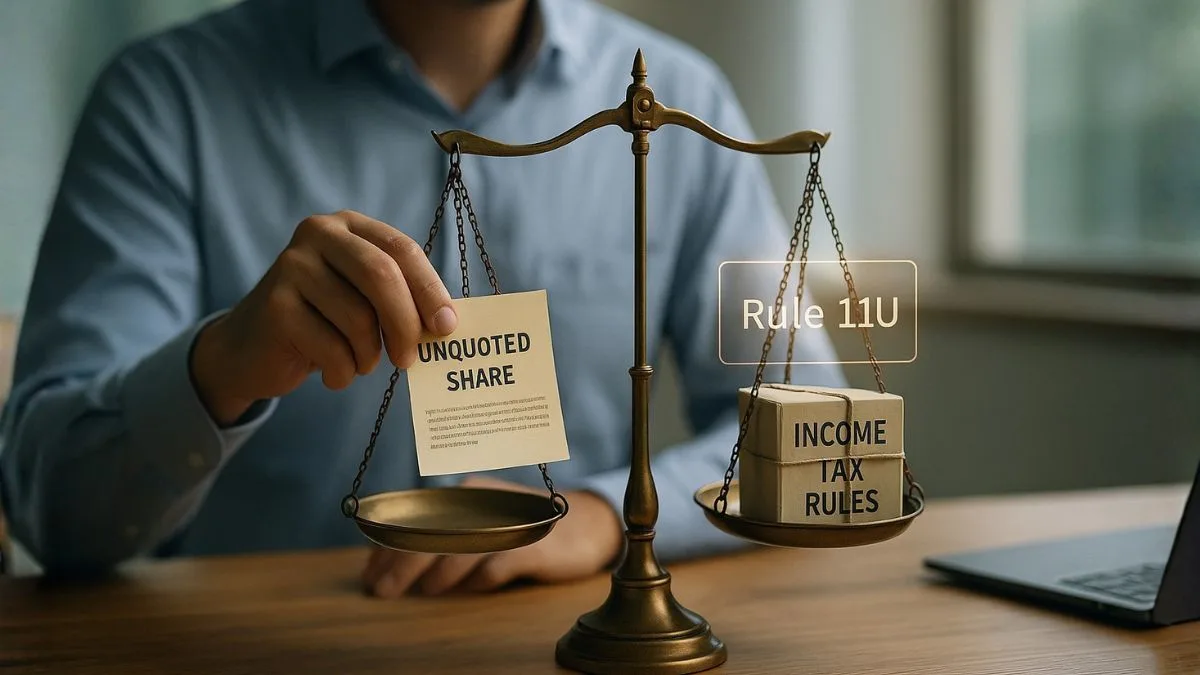
Rule 11U provides the meaning of expressions used in determination of fair market value. It defines terms used in determining the fair market value of property & outlines the method for valuing unquoted shares.
In simple words: it provides the language and definitions that make Rule 11UA (the valuation formula section) work correctly.
What Is Rule 11U of the Income Tax Rules, 1962?
Think of Rule 11U as the “dictionary” for valuation.
When the law needs to determine FMV — especially for unlisted shares, immovable property, and certain financial instruments — it needs standard terminology.
Without it, valuation would be messy, inconsistent, & open to manipulation."
In simple terms, Rule 11U defines all the key terms used in valuation under the Income Tax Act — especially for Rule 11UA.
It ensures everyone speaks the same valuation language, from taxpayers to valuers to assessing officers.
Why Rule 11U Matters So Much
If you’re dealing with:
- Startup valuation
- Angel tax compliance
- Buyback of shares
- Transfer of unquoted equity
- Gift taxation
- Business restructuring
- Family settlements
- Investments in private companies
…Rule 11U silently influences the numbers you finally report.
A friend once told me while trying to value shares of his private company:
"One valuer quoted double, another quoted half. I didn’t know what the tax department would accept."
That’s when he discovered Rules 11U & 11UA — and suddenly the fog lifted.
Also Read: The Rule That Blocks Low-Value Share Deals: Section 50CA Uncovered
Key Expressions Defined in Rule 11U
Rule 11U provides meaning of expressions used in determination of fair market value, including:
- Balance sheet date
- Book value of assets
- Liabilities
- Unquoted shares
- Valuation date
- Merchant banker
- Accounting policies
- Loans & advances
- Tax paid but not yet adjusted
These definitions prevent taxpayers from inflating or deflating values by tweaking accounting entries.
Example
If someone tries to artificially increase asset value by revaluing machinery just before valuation, Rule 11U clarifies what “book value” actually means — preventing manipulation.
Rule 11U and Unquoted Shares (Where it matters most)
One of the core uses of Rule 11U is that it outlines the method for valuing unquoted shares — especially when read along with Rule 11UA.
Unquoted shares include:
- Private limited company shares"
- Family-owned company shares
- Shares not listed on stock exchanges
- Startup shares
These don’t have a market price, so valuation must be done scientifically.
The valuation often uses:
- Net Asset Value (NAV) method, or
- Discounted cash flow (DCF) method, certified by a merchant banker
Rule 11U ensures all the terms used in these methods are standardized.
Rule 11U and Fair Market Value of Property
Apart from shares, the rule also affects FMV of:
- Land
- Buildings
- Jewelry
- Artwork
- Securities
- Other assets covered under Section 56(2) & Section 50CA
Whenever FMV is required under law, Rule 11U ensures consistent interpretation.
How Rule 11U Supports Rule 11UA
- Rule 11UA is the “calculation” section.
- Rule 11U is the “definitions” section.
Without Rule 11U, Rule 11UA would be confusing & open to argument.
Example:
Rule 11UA says “book value of liabilities will exclude certain items.”
But how do we know what “liabilities” include or exclude?
Rule 11U defines it.
This prevents valuation disputes.
Also Read: Capital Gains, Property Sales & Real Value Rules
Real-Life Scenario: Why This Rule Matters
A startup founder was recently issued a notice because the tax department questioned the valuation of shares issued to an investor.
The founder used a valuation report.
The department used NAV computation.
Both sides cited Rule 11UA.
The clarity came only when Rule 11U definitions were applied.
In the end, the founder’s method was correct — but without Rule 11U, proving that would’ve been much harder.
How Professionals Use Rule 11U
Valuers, merchant bankers, and CAs use this rule to:
- Ensure valuation consistency
- Avoid overstatement or understatement
- Maintain fairness for investors
- Comply with angel tax provisions
- Handle corporate actions like mergers & buybacks
Tax officers often refer to Rule 11U during assessments because definitions are where most disputes begin.
Why Taxpayers Should Care
Even if you aren’t a valuer, Rule 11U impacts you if you:
- Receive shares as a gift
- Transfer shares to relatives
- Invest in a private company
- Sell shares of a family business
- Receive property at undervalued rates
- Go through company restructuring
Whenever FMV applies — Rule 11U is silently working behind the scenes.
Also Read: Sold Your Property? The Govt May Tax You on a Higher Price Than You Received
Key Takeaways About Rule 11U
- Provides meaning of expressions used in FMV determination
- Defines terms used in determining the fair market value of property
- Outlines the method for valuing unquoted shares (through Rule 11UA linkage)
- Ensures clarity, consistency, and fairness in valuation
- Essential for startup valuation, share transfers, & angel tax cases
- Prevents manipulation of asset value
- A foundational rule for valuation-based taxation
Conclusion
Rule 11U may look like a simple “definitions” rule, but it plays a powerful role in India’s valuation ecosystem. Whether you are valuing unquoted shares, dealing with property FMV, or complying with angel tax provisions, this rule ensures that the process remains structured, fair, and transparent. Understanding it is a huge advantage — especially in a world where valuation mistakes can lead to major tax consequences.
And if you ever feel uncertain about valuation rules, FMV requirements, or tax compliance, the experts at CallMyCA.com are always ready to guide you with clarity & confidence.