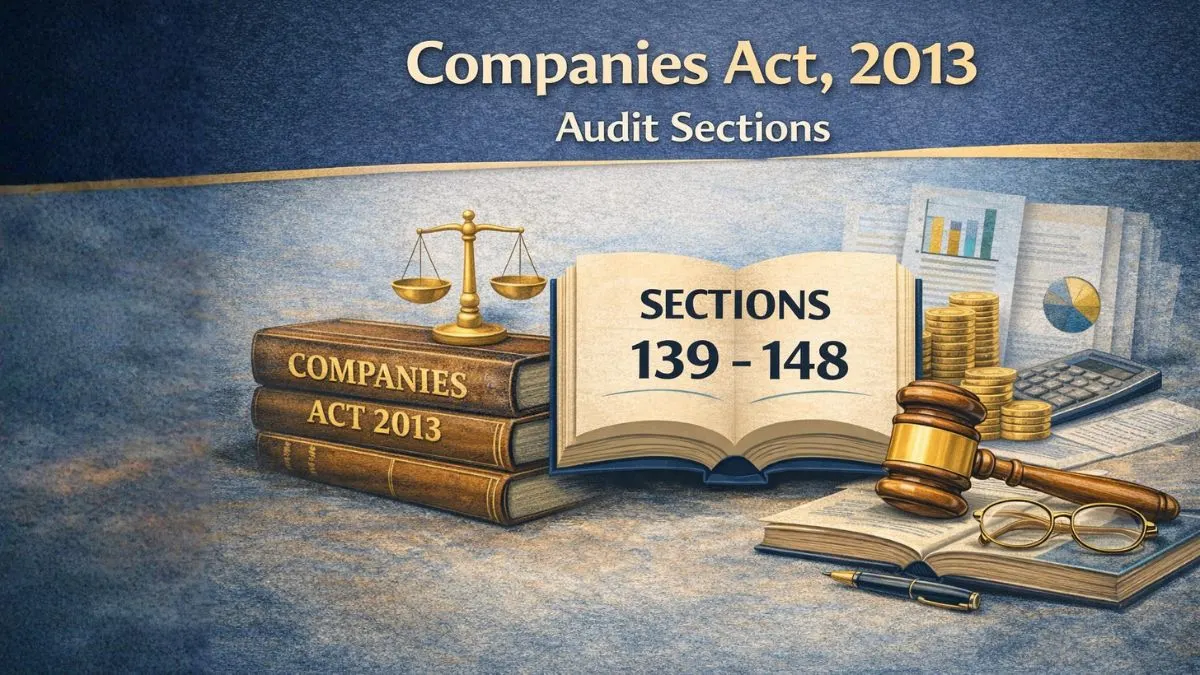
Companies Act 2013 Audit Sections:
If you’re a company director or founder, there’s one compliance you can never escape—even if your company didn’t do much business this year.
👉 Audit.
I’ve seen many first-time directors say:
“Sir, the company is small… is audit still necessary?” ”
Short answer?
Yes. Absolutely. No exceptions.
Under the Companies Act, 2013, an audit is not about size, turnover, or profit. It’s about credibility and accountability.
And that’s why the Act dedicates a full block of sections—Sections 139 to 148—only to audit and auditors.
Why Audit Is Taken So Seriously Under Companies Act
Many people think an audit is just
- CA signing balance sheet
- filing AOC-4
- compliance done, move on
But legally, audit means:
- verifying whether company records are reliable
- checking if money is being used properly
- protecting shareholders, lenders, and the public
That’s why the law says:
Every company must compulsorily get their annual accounts audited each financial year.
Even if:
- there is no turnover
- business is inactive
- company is newly incorporated
Where Are Audit Rules Written in the Companies Act?
When people search for the Companies Act 2013 audit section, they’re usually referring to:
👉 Sections 139 to 148 of the Companies Act, 2013
These sections together explain:
- who appoints the auditor
- how long an auditor can continue
- what powers auditors have
- what they must report
- what happens if they fail
Think of these sections as the rulebook for financial honesty.
Key Audit Sections Explained Simply
Let’s go section by section—only what actually matters in real life.
Section 139 – Appointment of Auditors
This is where the audit begins.
Section 139 explains:
- how the first auditor is appointed
- how auditors are appointed later
- how long they can stay
In simple words:
- First auditor → Board appoints within 30 days
- Later auditors → shareholders appoint in AGM
Also:
- Individual auditor → max 5 years
- Audit firm → max 10 years
This prevents “permanent auditors” and keeps things independent.
Section 140 – Removal or Resignation of Auditor
This section exists because:
Auditors should not be removed just because they asked tough questions.
Under Section 140:
- removing an auditor before term is difficult
- special resolution is required
- Central Government approval may be needed
So no, you can’t just “change CA” because you didn’t like the audit questions.
Section 141 – Who Can (and Cannot) Be an Auditor
This section answers:
“Who can be appointed as an auditor?”
Under Section 141:
- only a Chartered Accountant or CA firm can be an auditor.
- Certain people are disqualified, like
- someone in full-time employment elsewhere
- someone already handling too many audits
- someone having financial interest in the company
- someone in full-time employment elsewhere
This keeps audits unbiased.
Section 142 – Auditor Fees
Sounds simple, but it matters.
Section 142 says:
- auditor remuneration must be approved properly
- includes audit fees and expenses
- excludes fees for other services
This avoids hidden arrangements and conflicts.
Section 143 – Powers & Duties of Auditors (Most Critical Section)
If there is one section directors should actually read, it’s this.
Section 143 gives auditors:
- full access to books
- right to ask explanations
- power to report truthfully
And imposes duties:
- check whether accounts show a true and fair view
- verify compliance with accounting standards
- review internal controls
Fraud Reporting (Very Serious Part)
If auditors find fraud:
- above threshold → report to Central Government
- below threshold → report to Audit Committee / Board
This is why auditors today are extremely careful—and rightly so.
Section 138 – Internal Audit (Not for Everyone)
Many people mix this up with a statutory audit.
Section 138 talks about internal audit, which applies only to:
- listed companies
- large public companies
- companies crossing certain limits
Internal audit helps management, not shareholders.
Section 144—What Auditors Are NOT Allowed to Do
This section protects auditor independence.
Auditors cannot provide services like
- accounting
- internal audit
- management consultancy
- investment advisory
Simple rule:
You cannot audit your own work.
Section 147 – Punishment for Auditor Misconduct
Audit responsibility goes both ways.
If an auditor:
- acts negligently
- colludes
- commits fraud
Section 147 allows:
- heavy penalties
- fines
- even imprisonment in serious cases
This ensures audits are not taken lightly.
Section 148 – Cost Audit (Industry-Specific)
Not every company needs this.
Section 148 applies mainly to:
- manufacturing
- regulated industries
Cost audit focuses on:
- production cost
- pricing discipline
Role of Audit Committee (Section 177)
For certain companies, law requires an audit committee.
Its job is to:
- oversee financial reporting
- interact with auditors
- strengthen governance
This adds one more layer of checks.
Directors Often Make This Mistake…
Many directors believe:
“Audit CA ka kaam hai.”
Legally, that’s not true.
- Auditors report independently
- Directors are responsible for records
- Wrong books = director liability
Understanding the Companies Act 2013 audit section helps directors:
- answer audit queries confidently
- avoid red flags
- stay on the right side of the law
Common Audit Problems I See in Practice
Some very common mistakes:
- late appointment of auditor
- ignoring audit observations
- treating audit like formality
- hiding information
- misunderstanding fraud reporting
These lead to:
- qualified audit reports
- ROC scrutiny
- loss of trust
Companies Act Audit vs Income Tax Audit (Big Confusion)
Let’s clear this quickly.
- Companies Act audit → mandatory for all companies
- Income tax audit → depends on turnover/income
They are not interchangeable.
One-Line Takeaway
If you remember only one thing, remember this:
Sections 139 to 148 of the Companies Act, 2013, form the backbone of statutory audit, defining auditor appointment, duties, powers, and accountability.
Simple Summary (No Legal Language)
- Audit is compulsory every year
- Sections 139–148 govern audit under Companies Act
- Section 139 → auditor appointment
- Section 143 → auditor powers & fraud reporting
- Section 138 → internal audit
- Section 147 → penalties
- Audits protect company, directors, and shareholders
Final Thoughts (Honest Talk)
Audit is not about fear.
It’s about discipline and trust.
A company that respects audits:
- grows faster
- faces fewer notices
- earns long-term credibility
If you’re unsure about:
- audit applicability
- auditor appointment
- handling audit issues
- understanding your responsibilities
Getting proper guidance early saves you from much bigger problems later.
For reliable support on statutory audit and Companies Act compliance, visit callmyca.com.