Anyone who has ever received a notice under Section 147 will agree—nothing unsettles a taxpayer faster than a reassessment notice. Most people aren't anxious about the tax amount at first; it’s the uncertainty, the multiple follow-ups, and the fear of the case dragging on for months or even years.
Section 153(2) was introduced precisely to address this gap. It acts as a strict boundary line, ensuring the Assessing Officer (AO) cannot keep a reopened case pending indefinitely. On the surface, it may look like a simple procedural clause, but in practice, it is one of the most powerful protections available to taxpayers facing reassessment.
What Section 153(2) Really Means
Section 153(2) of the Income Tax Act sets the statutory time frame within which the AO must complete reassessment or recomputation under Section 147.
The rule is clear & absolute:
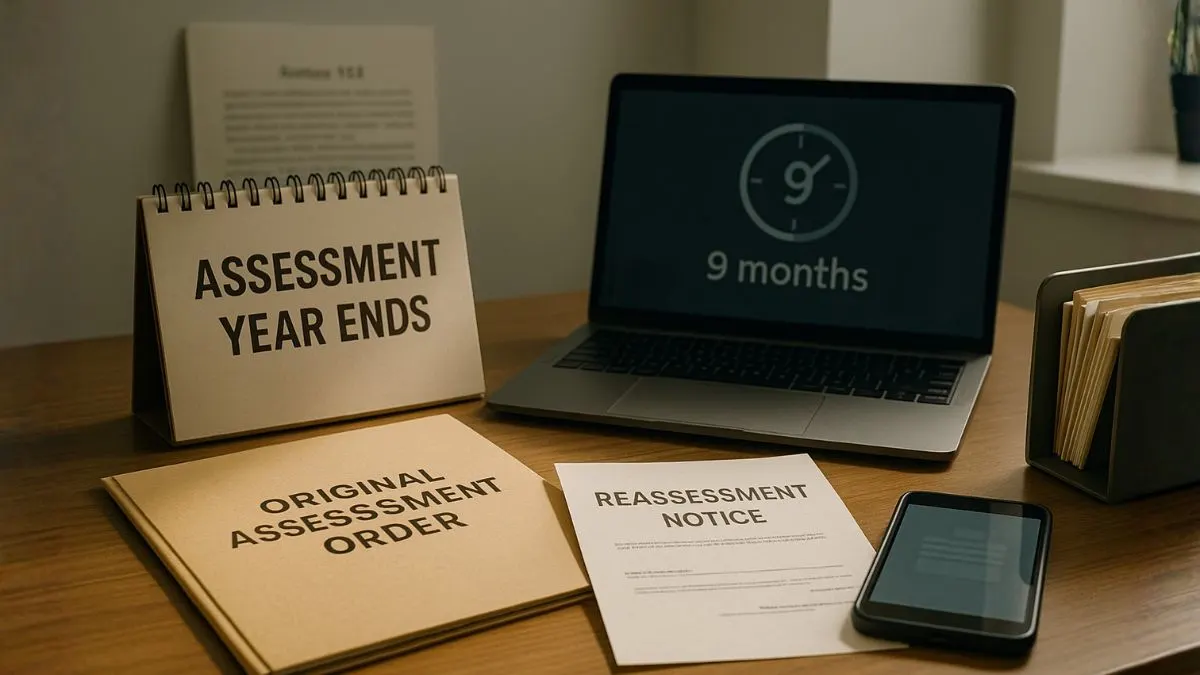
When the department reopens a case because income has escaped assessment, the AO gets only one year—from the end of the financial year in which the Section 148 notice was issued—to complete the reassessment.
If this one-year period expires, the reassessment order becomes invalid, irrespective of the accuracy of the AO’s findings.
The section also reinforces that no order of assessment shall be made under Section 143 or Section 144 once the statutory timeline has lapsed. In simple language, the AO loses all authority to pass a reassessment order after the deadline.
Why This Time Limit Matters for Taxpayers
A reassessment notice reopens your financial past. Without a strict time limit, the process could drag forever. Section 153(2) ensures that does not happen.
Here’s why it matters:
- ✔ Protection from endless scrutiny
You get closure within a predictable, legally defined period." - ✔ Administrative accountability
The AO must work within fixed deadlines. - ✔ Invalidates delayed reassessments
Any reassessment order passed after the deadline becomes unenforceable." - ✔ Safeguards taxpayer rights
Your assessment cannot remain open-ended unless permitted by law.
This single provision brings balance to the reassessment framework.
Also Read: Faceless Assessments, Powers, and Best Judgment Explained
How the One-Year Timeline Is Calculated
Understanding the timeline is easier when broken into stages:
- A notice under Section 148 is issued.
- The financial year in which the notice was issued ends.
- From the end of that financial year, the AO gets a full one-year period to complete reassessment.
Example
If a Section 148 notice is issued on 10 December 2024:
- Financial year ends: 31 March 2025
- AO’s deadline: 31 March 2026
Any reassessment order passed after 31 March 2026 becomes time-barred & invalid.
Link With Other Assessment Provisions
Section 153(2) interacts closely with:
- Section 147 – Income escaping assessment
- Section 143 – Regular assessment
- Section 144 – Best-judgment assessment
Even if the AO applies the Section 143 or Section 144 framework during reassessment, the outer time limit under Section 153(2) remains unchanged.
This prevents confusion or misuse of overlapping timelines.
Practical Tips for Taxpayers Facing Reassessment
If you receive a reassessment notice:
✔ Track the notice date carefully
Everything—your rights, the AO’s powers, and the reassessment validity—depends on this.
✔ Respond within deadlines
Non-response may lead to a best-judgment order under Section 144.
✔ Keep old records accessible
Reassessment often involves older transactions or missed disclosures.
✔ Verify the final order date
If the order is issued after the statutory deadline, it may be invalid.
✔ Consult a CA
Timeline errors, procedural lapses, & documentation gaps often create strong grounds for relief.
Also Read: Section 144A – Power of Joint Commissioner to Issue Directions in Certain Cases
Why Section 153(2) Matters Even More Today
With the rise of AIS tracking, GST–Income-Tax data integration, & reporting from banks, registrars, and mutual funds, cases under Section 147 have increased significantly.
In this evolving environment, Section 153(2):
- prevents prolonged reassessment cycles
- promotes transparency"
- protects taxpayers from delayed demands
- ensures procedural fairness
It acts as a legal shield, especially when technology-driven alerts can trigger more frequent reassessment proceedings.
Conclusion
Section 153(2) of the Income Tax Act is one of the most important guardrails in India’s reassessment system. It sets a clear one-year time limit for completing assessment, reassessment, or recomputation under Section 147—ensuring both transparency and accountability. Once the deadline passes, the AO cannot issue a valid reassessment order, and taxpayers gain certainty, protection, & closure. If you understand this section well, you are better equipped to handle notices, challenge invalid reassessments, & protect your rights under the law.
Need expert handling of a Section 148 notice or reassessment case? Our Chartered Accountants at CallMyCA.com specialise in scrutiny replies, reassessment defence, & procedural reviews.