Filing an income tax return is already a nerve-wracking task for many people. With countless numbers, forms, and documents to keep track of, small mistakes are natural. But the good news is—you can fix them. The law gives you two powerful options: Rectification under Section 154 for obvious, clear errors, & Revised Return under Section 139(5) for larger mistakes or omissions.
Understanding the difference between the two can save you time, avoid unnecessary notices, and ensure your tax record stays accurate. And in a world where most processes are now digital, correcting a return is easier than ever.
What Does Rectification Really Mean?
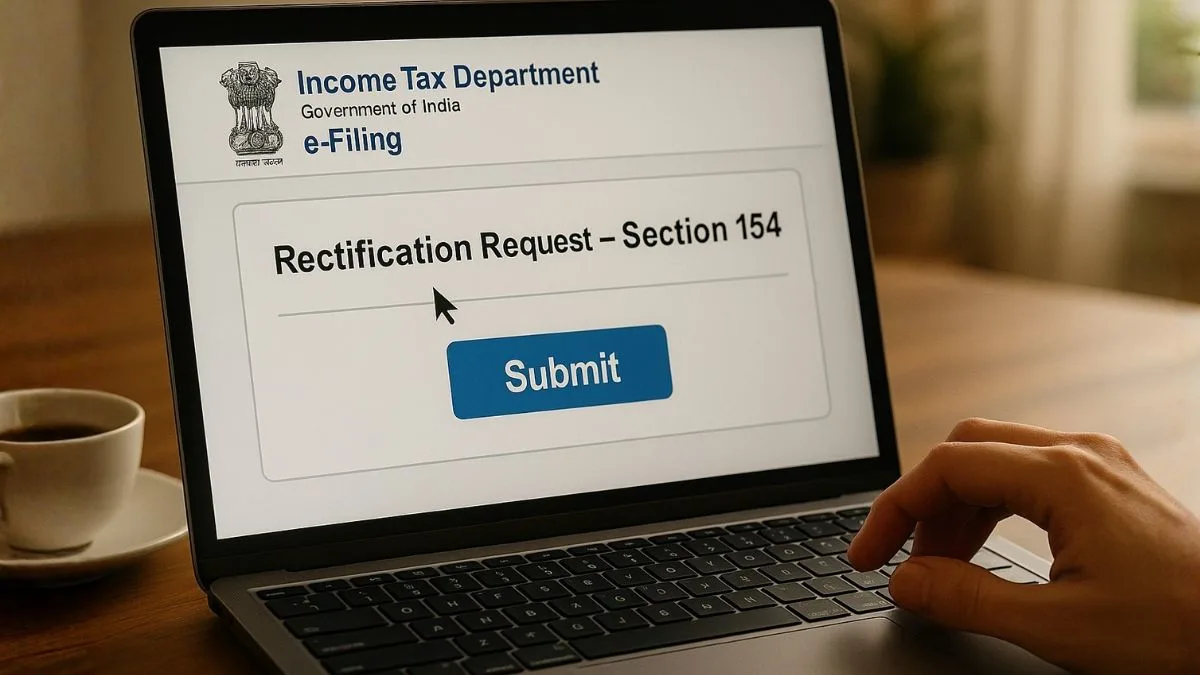
Rectification is not a redo of your entire return. It is simply a correction of mistakes apparent from the record, handled under Section 154 of the Income Tax Act, 1961.
Mistakes that qualify for rectification:
- Calculation errors
- Incorrect gender selection
- Wrong tax computation by CPC
- Mismatch in TDS amounts
- Apparent clerical or arithmetic mistakes
These are the kinds of errors that can be easily identified without deeper investigation.
Section 154(1): The Heart of Rectification
Section 154(1) specifically allows both the taxpayer & the Assessing Officer to initiate rectification.
This can include:
- Rectifying errors in assessment orders
- Correcting mistakes in the intimation received under Section 143(1)
- Adjusting tax calculations where information already exists on record
A simple example?
Let’s say you had ₹10,000 TDS showing in your Form 26AS, but only ₹6,000 was considered during processing. That’s a classic Section 154 correction.
Also Read: Revised Return Filing by Successor Entities
When You Should NOT File a Rectification
Not all mistakes fit into Section 154. Sometimes the error is deeper than a simple calculation.
Rectification is not the right choice if:
- You forgot to report additional income"
- You need to add a missing deduction
- You entered incorrect bank details
- You made a mistake in income categories
- You want to change residential status or major fields
These errors require a Revised Return under Section 139(5).
Revised Return vs. Rectification: Know the Difference
A Revised Return is like rewriting your homework; rectification is like erasing a spelling mistake.
-
File a Rectification when:
- The error is obvious
- All facts were already submitted
- You’re correcting system-related mismatches
-
File a Revised Return when:
- There was an omission
- Income or deduction details were missing
- You need to replace or update entries
Think of rectification as a “light correction” and a revised return as a “complete correction.”
A Simple Real-Life Example
A young designer from Pune told me she accidentally entered her TDS twice. The CPC flagged her return & raised a mismatch notice. She felt overwhelmed, thinking she would have to redo the entire ITR.
But the error was obvious and appeared on the face of the record—perfect for Section 154.
Within minutes, she filed a rectification request online.
Error fixed. Refund processed. Anxiety gone.
Also Read: Director's Liability for Company Tax Dues
How to File Rectification Online: Step-by-Step
The Income Tax Portal makes the process smooth:
- Login to your account on the portal
- Go to Services → Rectification
- Select the relevant assessment year
- Choose “Rectification of Income Tax Return”
- Pick the appropriate mistake category
- Upload supporting documents (if needed)
- Submit & track the status
In most cases, rectification updates are processed quickly, especially when they are arithmetic or data-based.
Time Limit for Filing Rectification
A rectification request must be made:
-
Within 4 years from the end of the financial year in which the original intimation/order was passed.
But always file earlier—waiting too long increases the risk of delays & complications.
What Happens After You File a Rectification?
Once the request is submitted, the CPC or Assessing Officer reviews the error.
Possible outcomes:
- Revised intimation
- Adjustment in tax payable or refund
- Acceptance or rejection of rectification request
If rejected, you can still file a revised return (if within time limit) or use other remedies like appeal or grievance redressal.
Also Read: How Shipping Companies Are Taxed Without PAN in India?
Why Rectification Matters
A small mistake can lead to:
- Wrong tax demand
- Loss of refund"
- Unnecessary notices
- Delayed processing
Rectification ensures your tax record is accurate & protects you from future complications.
It’s one of those quiet but powerful provisions that saves taxpayers from big headaches.
Conclusion
Mistakes in ITR filing aren’t the end of the world. Whether it’s a mismatch or an overlooked figure, Section 154 makes it easy to fix errors apparent from the record, while Section 139(5) gives you room to correct bigger omissions.
Understanding when to use rectification and when to revise empowers you to stay compliant, confident, and stress-free. And if all this still feels overwhelming, the experts at Callmyca.com can guide you every step of the way.