
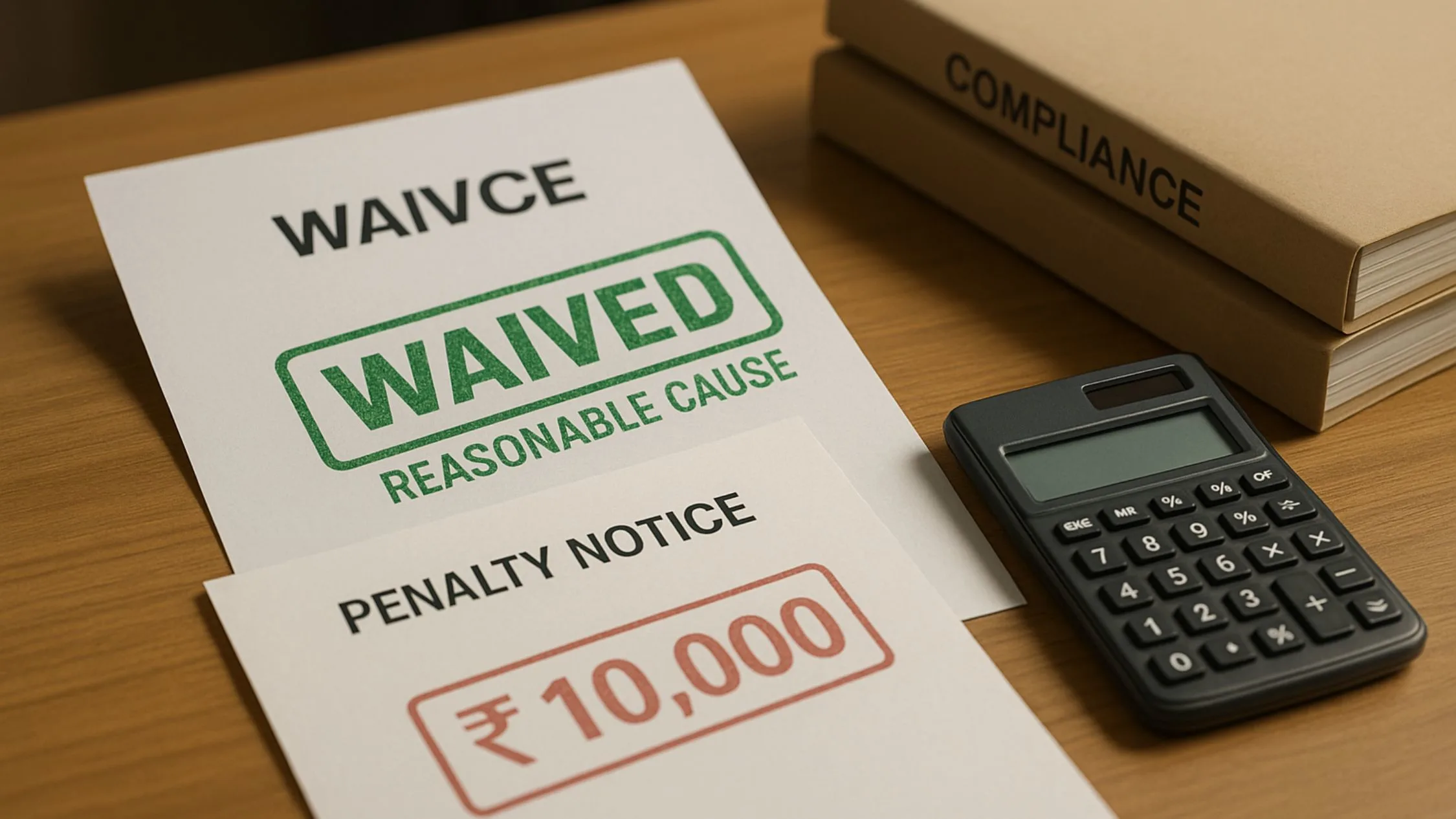
The Indian Income Tax Act includes numerous penalty provisions to ensure compliance. However, lawmakers understood that not every default arises from willful negligence. Sometimes taxpayers fail to comply because of genuine reasons beyond their control. To address this, the law introduced Section 273B of the Income Tax Act, which says that penalty not to be imposed in certain cases if the assessee can demonstrate reasonable cause.
This provision strikes a balance between strict compliance & fairness. It acknowledges that errors can happen due to circumstances such as illness, natural calamities, technical failures, or lack of clarity in law. Let’s break down the concept, applicability, and importance of Section 273B in simple terms.
What is Section 273B of the Income Tax Act?
Section 273B acts as a protective shield for taxpayers. It states that penalty not to be imposed in curtain case where the assessee proves there was a reasonable cause for any failure.
This means that if you miss a due date, fail to file a return, or commit another default under certain provisions, you may not be penalized provided you can justify your lapse with acceptable reasons.
For example:
- If a taxpayer fails to file their return by the deadline due to hospitalization, the penalty may be waived.
- If a company misses compliance because of unavoidable technical glitches, Section 273B can save them from harsh penalties."
Late filings, missed compliance, or wrong claims don’t always mean penalties are final. With the right approach, you may get relief. 👉 click here
Objective of Section 273B
The intent of this section is not to encourage negligence but to provide relief in genuine cases. It ensures that penalties are not imposed mechanically but only when there is willful default.
The objectives are:
- To protect honest taxpayers from undue hardship.
- To recognize genuine difficulties like illness, financial crisis, or unavoidable circumstances.
- To differentiate between deliberate evasion & genuine failure.
Situations Covered Under Section 273B
The Income Tax Act prescribes many penalties, but Section 273B provides relief in several of them. Some key examples include:
- Section 271F – Failure to file income tax return.
- Section 271B – Failure to get accounts audited.
- Section 271D/271E – Penalty for accepting or repaying loans or deposits in cash.
- Section 271C – Failure to deduct TDS.
- Section 271G – Failure to furnish documents for international transactions.
In all these cases, no penalty shall be levied u/s 271F of the Act & similar provisions if the assessee demonstrates a valid, reasonable cause.
Also Read: Penalty for Concealment or Misreporting
Meaning of “Reasonable Cause”
The term “reasonable cause” is not strictly defined in the Act. Instead, it is interpreted on the basis of facts & circumstances of each case.
Some commonly accepted reasonable causes include:
- Serious illness or death of key personnel.
- Natural calamities such as floods, earthquakes, or fire destroying records.
- Genuine difficulty in obtaining documents from third parties."
- Technical glitches in the government portal.
- Lack of clarity due to frequent amendments in law.
The burden of proof lies on the assessee, who must establish that the failure was unintentional & unavoidable.
Judicial View on Section 273B
Courts have consistently supported the taxpayer-friendly nature of this section. They have held that if the taxpayer acts in good faith & there is evidence of a genuine reason, penalties should not be levied.
For instance:
- In cases where delays were caused by natural disasters, courts have ruled in favor of taxpayers.
- Where companies provided documentary proof of unavoidable technical delays, penalties were dropped.
This reflects the principle that law should serve justice, not merely revenue collection.
From filing applications to handling hearings, we manage the complete process of penalty waiver under Section 273B.👉 click here
Examples to Understand Section 273B
Example 1: Illness
Mr. Sharma, a salaried individual, could not file his return by the due date because he was hospitalized. When he later filed the return & explained the cause with medical proof, the penalty was waived under Section 273B.
Example 2: Technical Issue
XYZ Pvt Ltd tried filing its TDS returns on time, but the government portal was non-functional on the due date. With screenshots of failed attempts, the company avoided penalty under this provision.
Example 3: Natural Disaster
A flood in Kerala destroyed the books of accounts of a small trader. He could not get his accounts audited on time. The authorities accepted this as a reasonable cause & did not levy a penalty.
Importance of Section 273B
- Taxpayer Protection
It ensures taxpayers are not punished unfairly for genuine lapses. - Encourages Honesty
Honest taxpayers feel secure knowing the law recognizes their difficulties. - Balances Rigor with Fairness
It shows that compliance is important but not at the cost of humanity and practicality." - Promotes Goodwill
Such provisions enhance trust between taxpayers & authorities.
Key Takeaways
- Penalty not to be imposed in certain cases is the essence of Section 273B.
- The assessee must prove reasonable cause for any failure.
- Provides if the assessee shows reasonable cause for the failure to comply, then penalty may be waived.
- No penalty shall be levied u/s 271F of the Act & several other penalty sections, if reasonable cause is shown.
- The provision reflects a taxpayer-friendly and balanced approach in Indian taxation.
Conclusion
The Income Tax Act is strict in enforcing compliance, but it also respects genuine hardships. Section 273B is a shining example of this balance. By allowing taxpayers to justify their defaults with reasonable causes, the law ensures fairness. It sends a clear message: penalties are meant for willful defaulters, not for those who make mistakes due to circumstances beyond their control.
So, if you ever face a situation where compliance seems impossible due to genuine reasons, remember that Section 273B can protect you—provided you have proper evidence & explanations.
👉 Want to know how Section 273B can help you save penalties? Explore practical tax solutions at Callmyca.com and let experts guide you through stress-free compliance.









